Rebuilding George Pocock's Workshop, One Rib at a Time
Rebuilding George Pocock's Workshop
There's an old photograph from 1923. It shows a long, narrow loft above the University of Washington shell house, and in it, a rowing shell half-built on a strongback. That loft was George Pocock's workshop. The boats he built there carried UW crews to fame, including the 1936 Olympic gold medal crew made famous by the book and movie The Boys in the Boat.
Now the shell house is being restored, and Pocock's shop is coming back to life. Port Townsend boatbuilder Steve Chapin has been hired to recreate the boat in that photo. To get the shape right, he's turning to a tool George Pocock never could have imagined: a 3D scanner.


A seaplane hangar turned boat shop
The ASUW Shell House started life as a World War I seaplane hangar. The war ended before it
was ever used, so it was handed to the University of Washington and became home to the rowing
team.
Upstairs, a mezzanine loft about 70 feet long and 20 feet wide became George Pocock's shop. He
built boats there for 27 years. The only way in was a small man door, a regular walk-in door in a
building made for seaplanes. So how did a finished 62-foot eight get out? The crew took the
window apart and handed the boat out and down. Nobody wrote down exactly how they
managed it.
The building is now being restored to code with seismic upgrades. It will tell the story of its
many uses over the years, and the Pocock shells are a big part of that. Visitors will be able to
climb up to George's workshop and see what he was working on in 1923.
Part of an oral tradition
The Pocock way of building boats goes back generations on England's Thames River. George
and his brother Dick learned from their father, who was taught by their mother's father, and so on
back. When the brothers came to the United States about 115 years ago, they brought that
tradition with them. The University of Washington recruited them to build its boats.
Pocock never had line drawings, manuals, or instructions. Nothing was ever written down. In
1947 George hired a builder named Bob Brunswick, and Steve learned from Bob how to build a
Pocock single.
"I'm part of that oral tradition," Steve says.
The forms for the Pocock single nearly disappeared. About ten years after George's son, Stan
Pocock, sold the family company, the new owners decided to stop building the wooden single.
The usual practice was to destroy the forms so no one could use them to build fake Pococks.
Stan had been watching Steve and Jim Buckley fix up old Pocock shells in Port Townsend. He
worried that the long tradition of building in wood would be lost as rowing moved to composite
boats. So instead of letting the forms be destroyed, Stan persuaded the new owners to give them to Steve and Jim. Steve jumped at the chance and began building singles in collaboration with the Northwest Maritime Center.
Once Stan saw Steve's first single, he knew they were serious. He donated his remaining stash of
red cedar to the Maritime Center. A few years later, when the Maritime Center stepped back from
the project, it passed the rest of that cedar to Steve so he could keep building. The partnership
worked both ways: the Maritime Center's boathouse was designed to hold Pocock shells, and
Steve's passion for preserving them helped draw donors. Steve has carried that work forward
ever since.


A boat with no plans
The boat in the 1923 photo is an eight, about 62 feet long. For the display, Steve is building a
shorter version: a 40-foot four. And he's building just the frame on the strongback.
The shell house will show 8 to 10 finished historic boats, but you can't see inside a finished boat.
"What's really amazing about these boats is that they're so spare," Steve says. A bare frame lets
visitors see the structure that's usually covered.
There was one big problem. Steve has the forms for the singles, but the forms for the larger boats
were thrown out long ago. Pocock was secretive about his work. He didn't let just anybody into
the shop, and he never wanted lines taken off his boats.
With no drawings and no molds, Steve needed another way to get the shape. So he found a stand-
in:
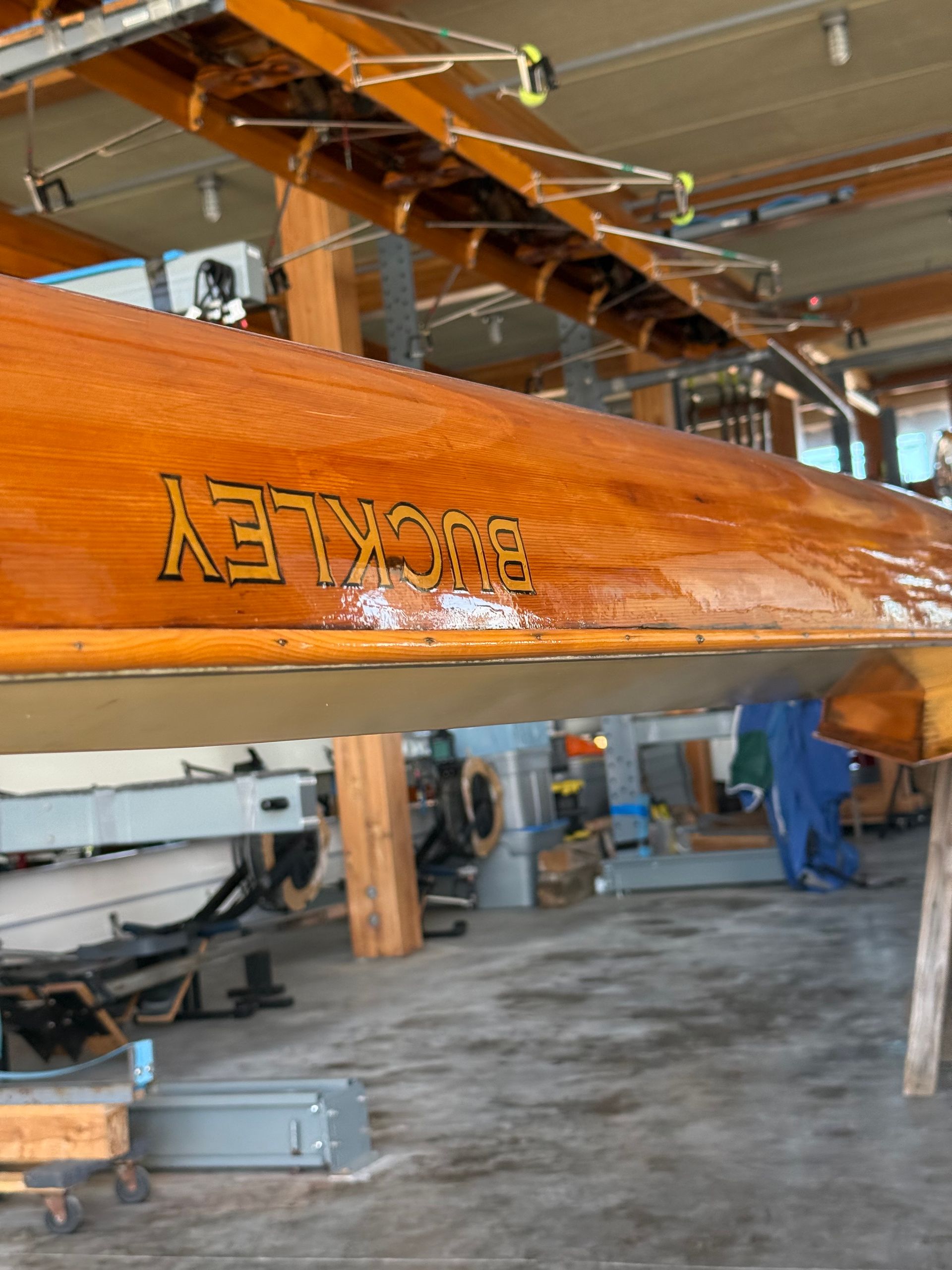
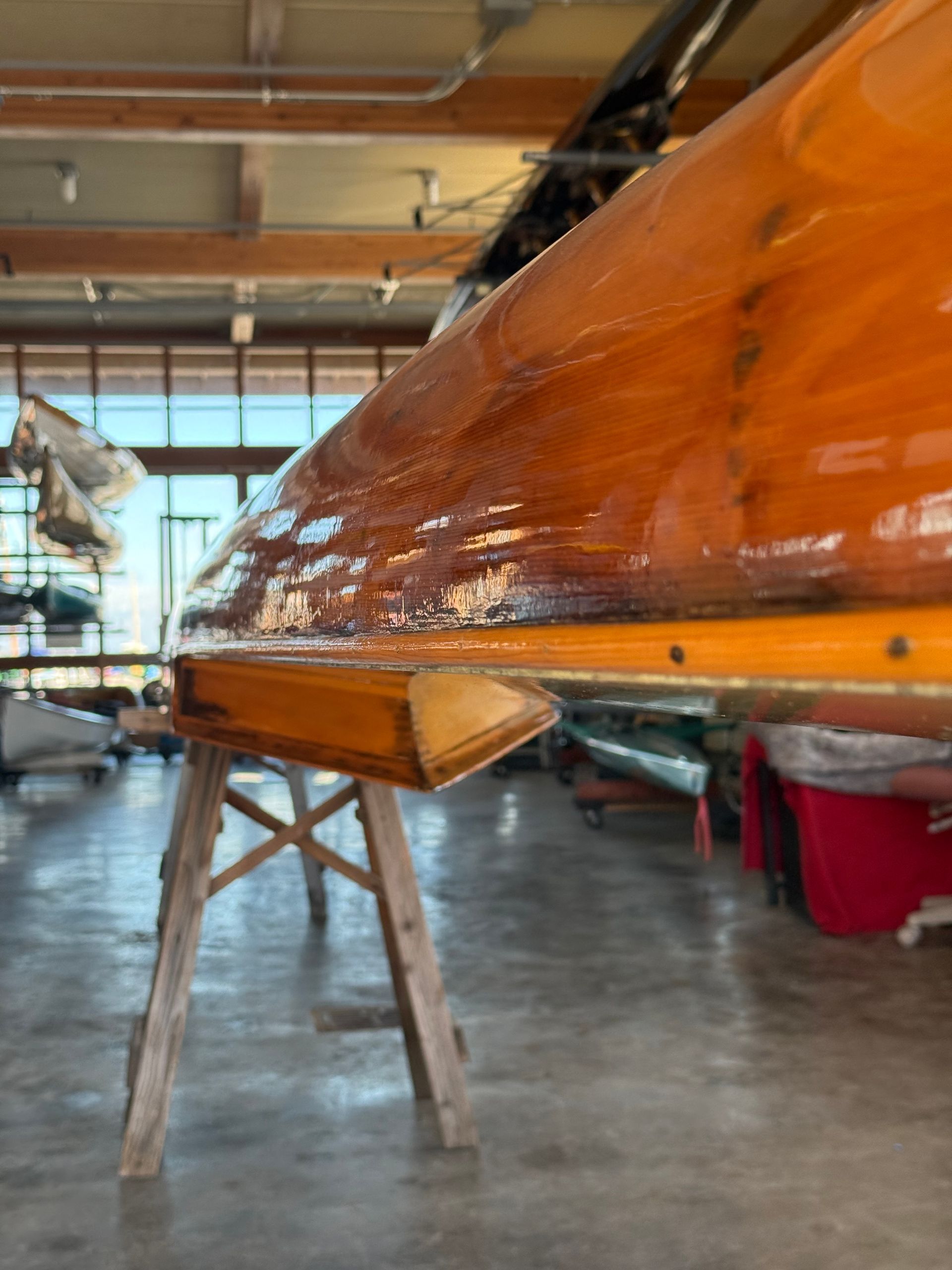
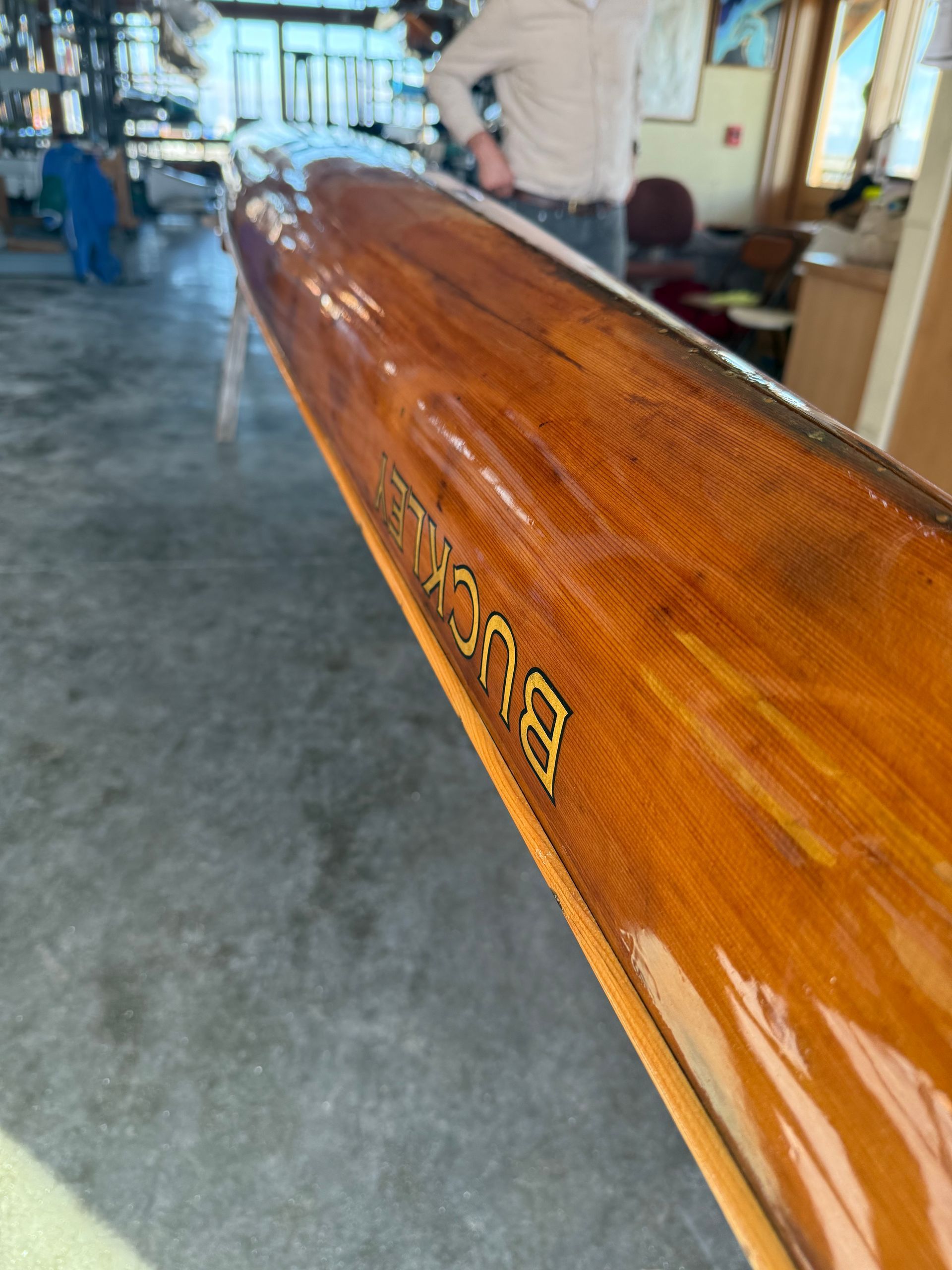
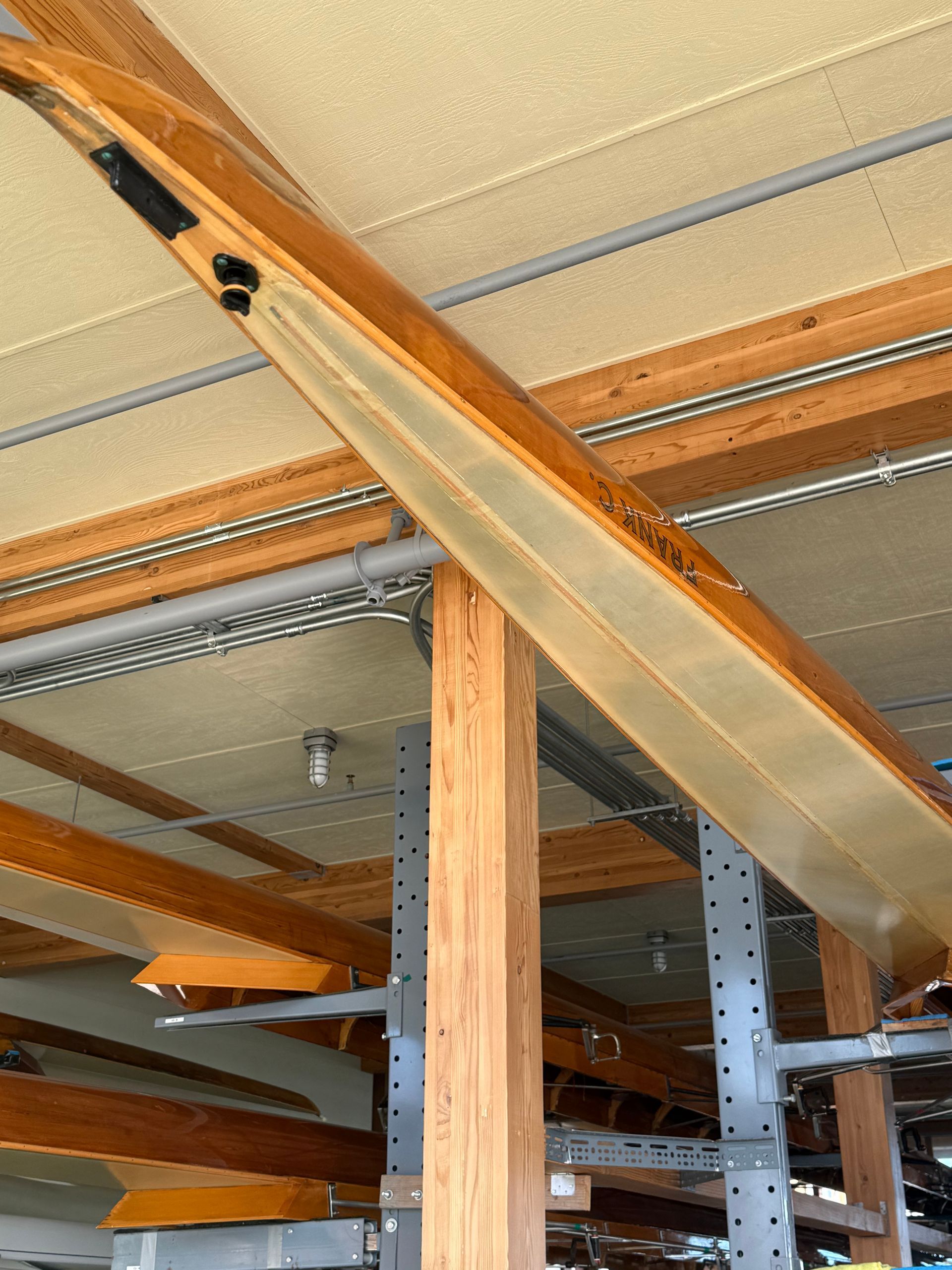
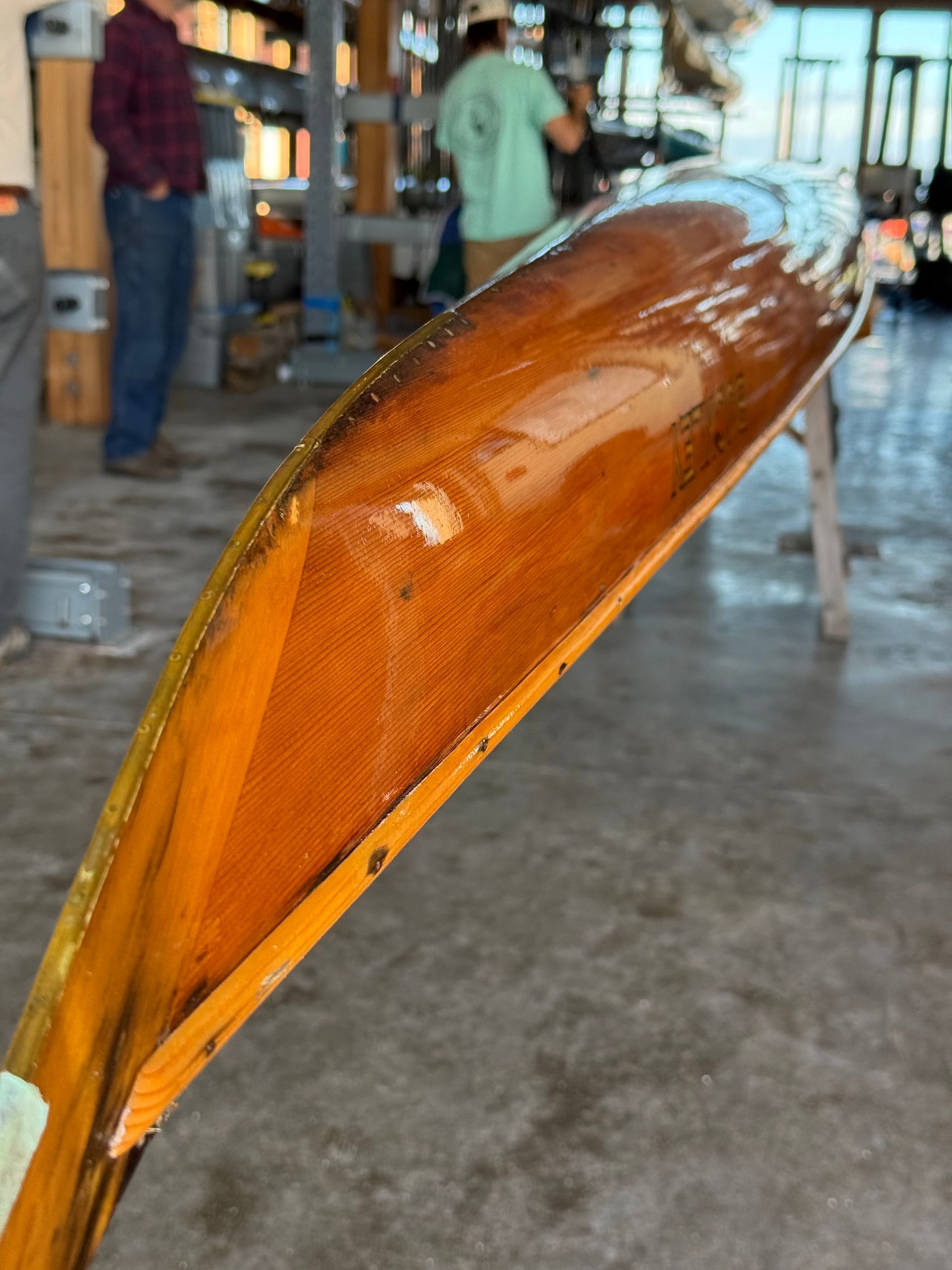
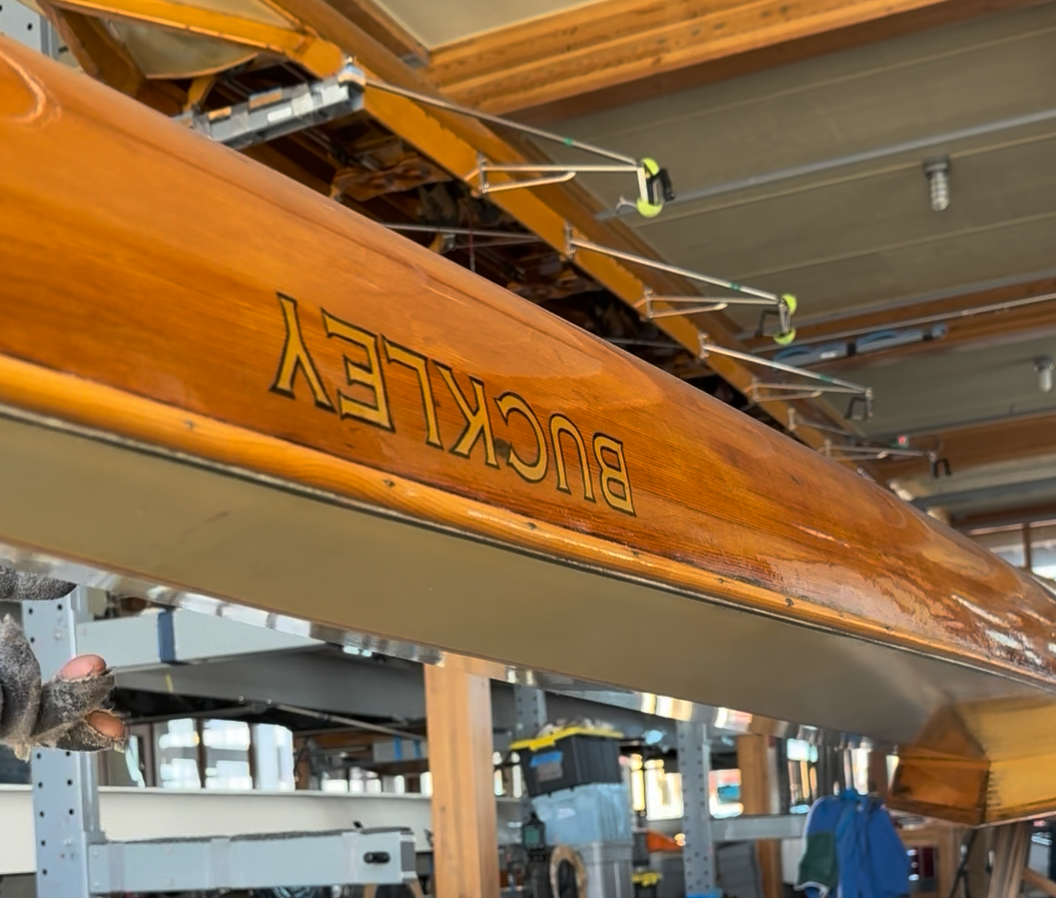
Buckley, a Pocock four built about 40 years after the photo was taken.

Scanning Buckley
Steve first planned to take the lines off Buckley the old-school way, measuring the hull's shape by
hand. But there was a twist. Peek inside Buckley's cockpit and you'll notice something surprising
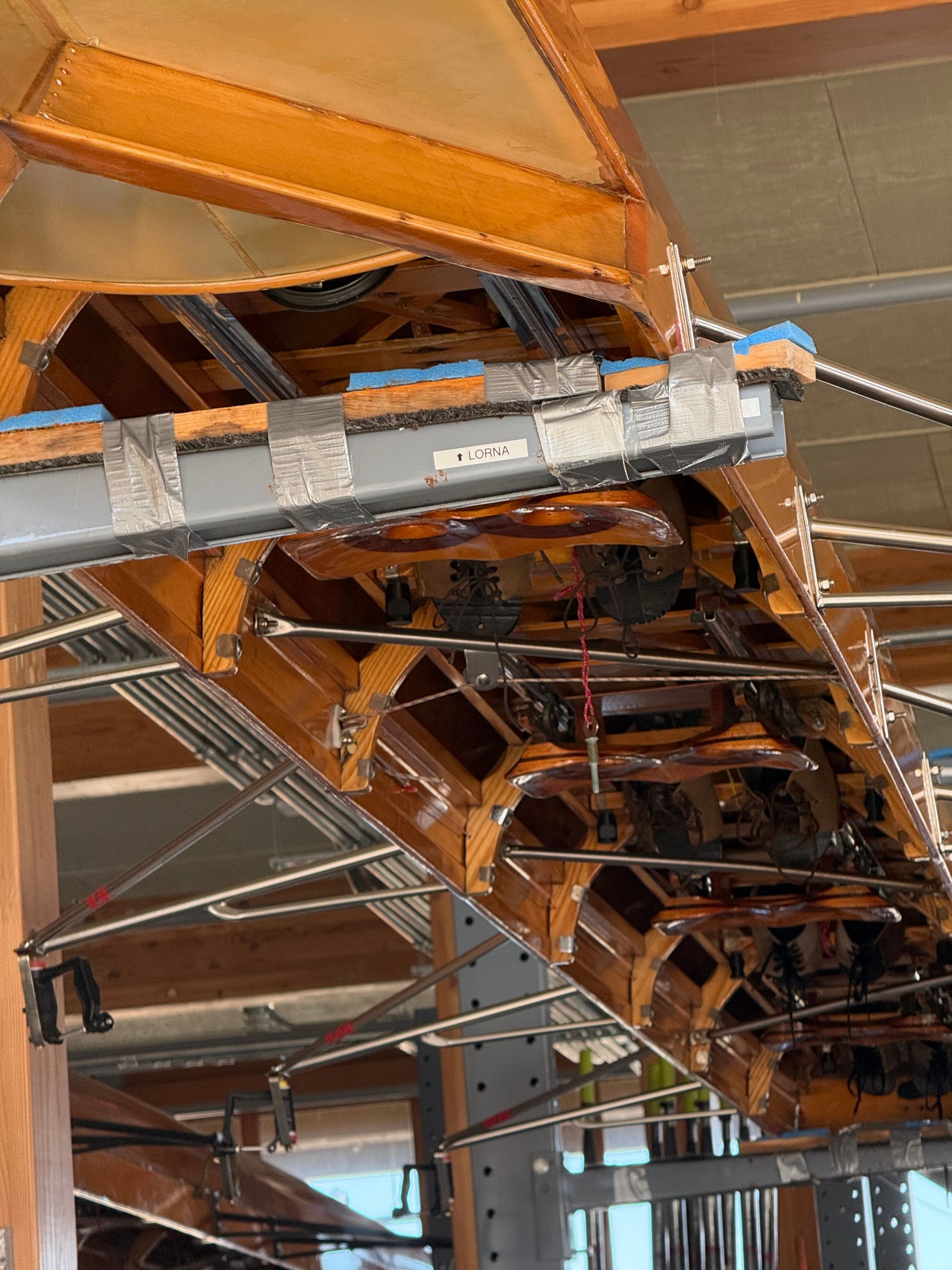
for a 1960s wooden racing shell: there are no ribs at all. Traditional wooden boats rely on a
skeleton of ribs running from the gunwales down to the keel to hold their shape. George and Stan
Pocock left them out of Buckley entirely. Instead, they relied on a continuous internal structure
and the natural arch of the curved cedar hull, creating a ribless shell that shed weight while
staying stiff on the water.
Without ribs to measure from, Steve is studying the old photos alongside Buckley's deck frames
to work out where they would have been. That gave him 37 pairs of rib positions, port and
starboard, where he needs the exact shape of the hull, plus 25 spots where he needs depth and
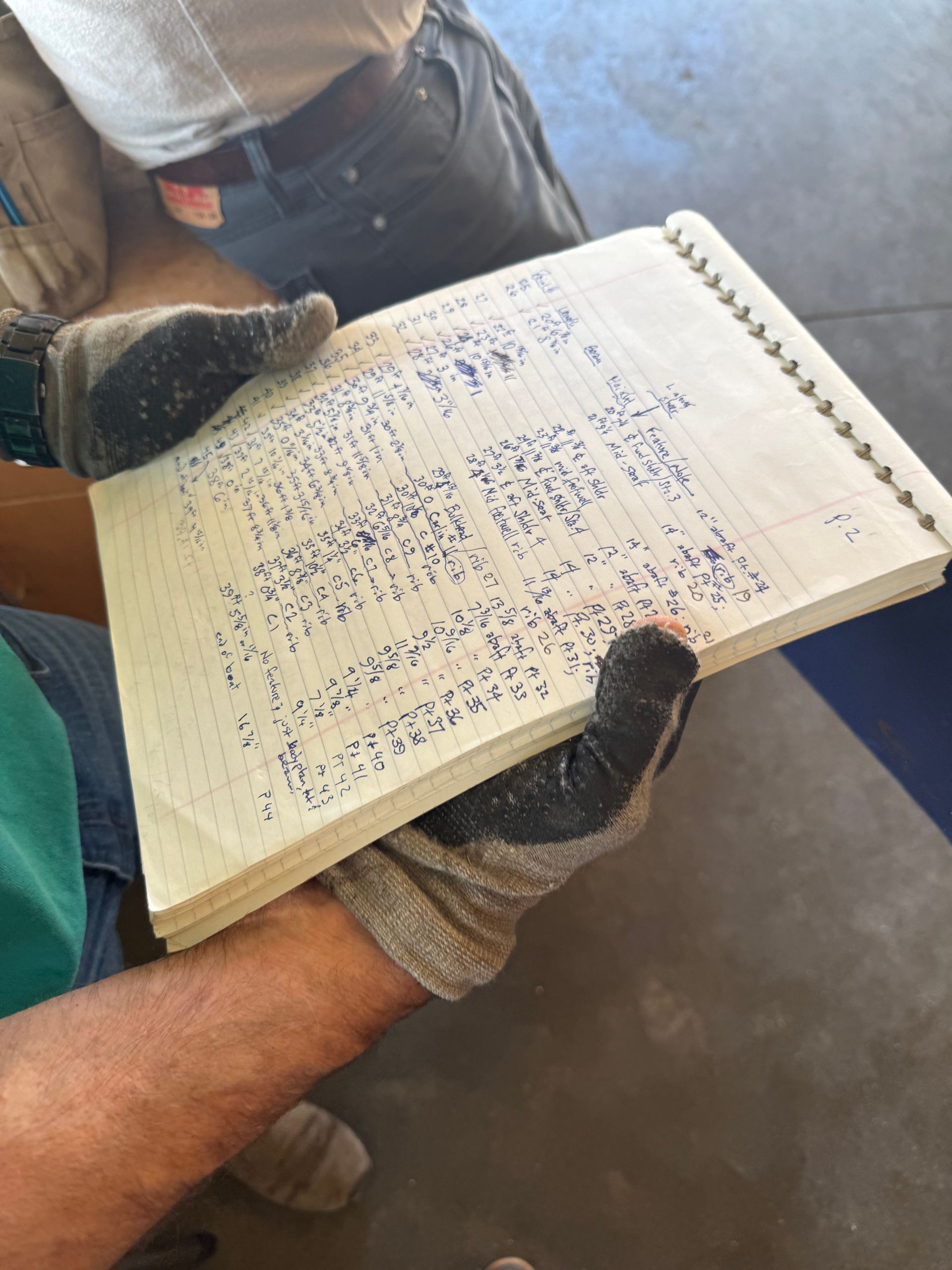
beam measurements for the strongback's stocks, which hold the keel and gunwales. He'd already started notes for a table of offsets, a grid of measurements that turns a boat's curved, three-dimensional hull into a precise list of numbers. "Doing that by hand is pretty tedious," he says.
Then Steve ran into some of the Port Townsend Shipwrights crew at the annual Boatyard
Barbecue. Griz, a partner member of the Shipwrights, asked what Steve was up to. Steve told
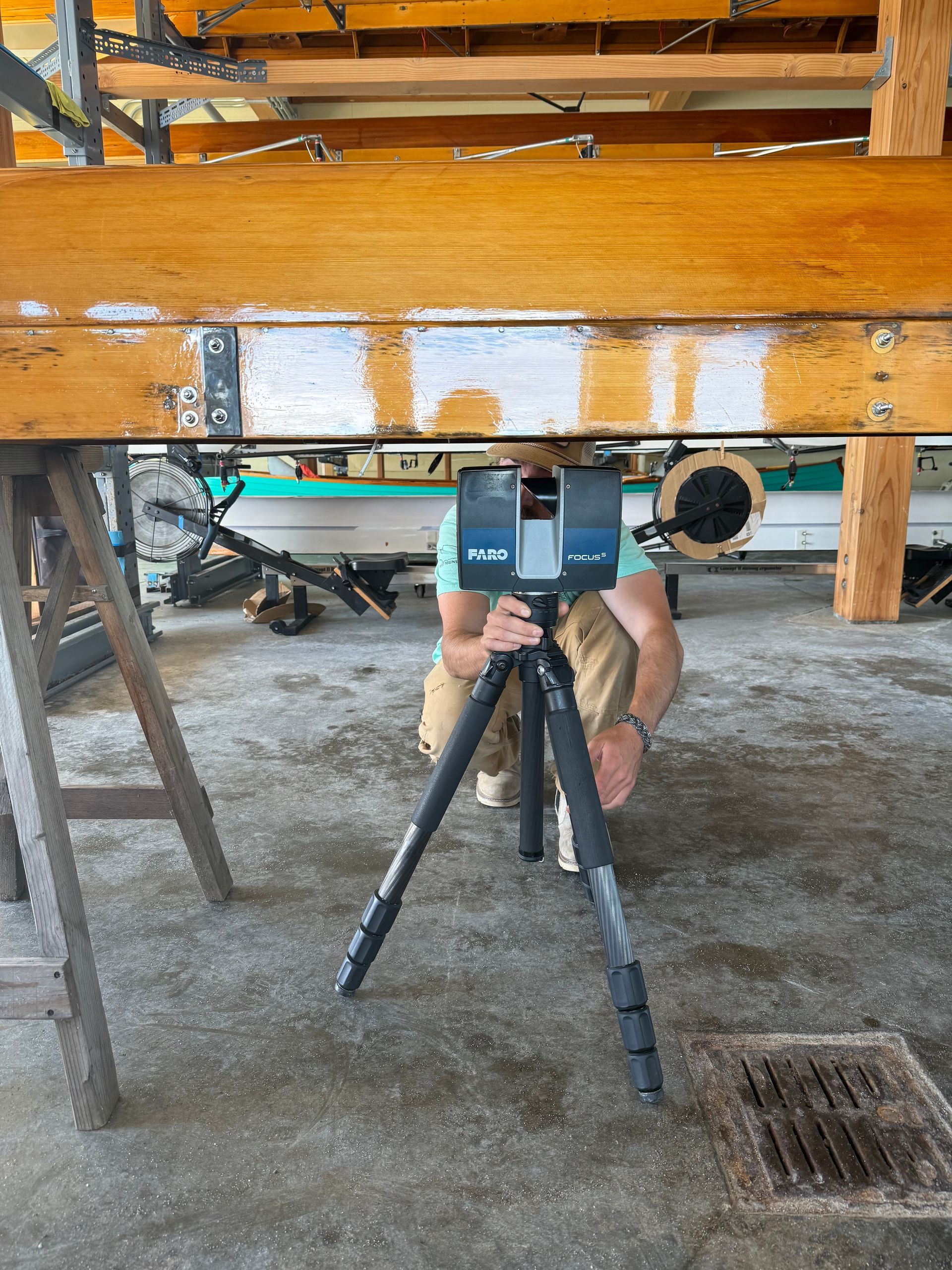
him about the project, and Griz said the shop had a 3D scanner that could do the job.
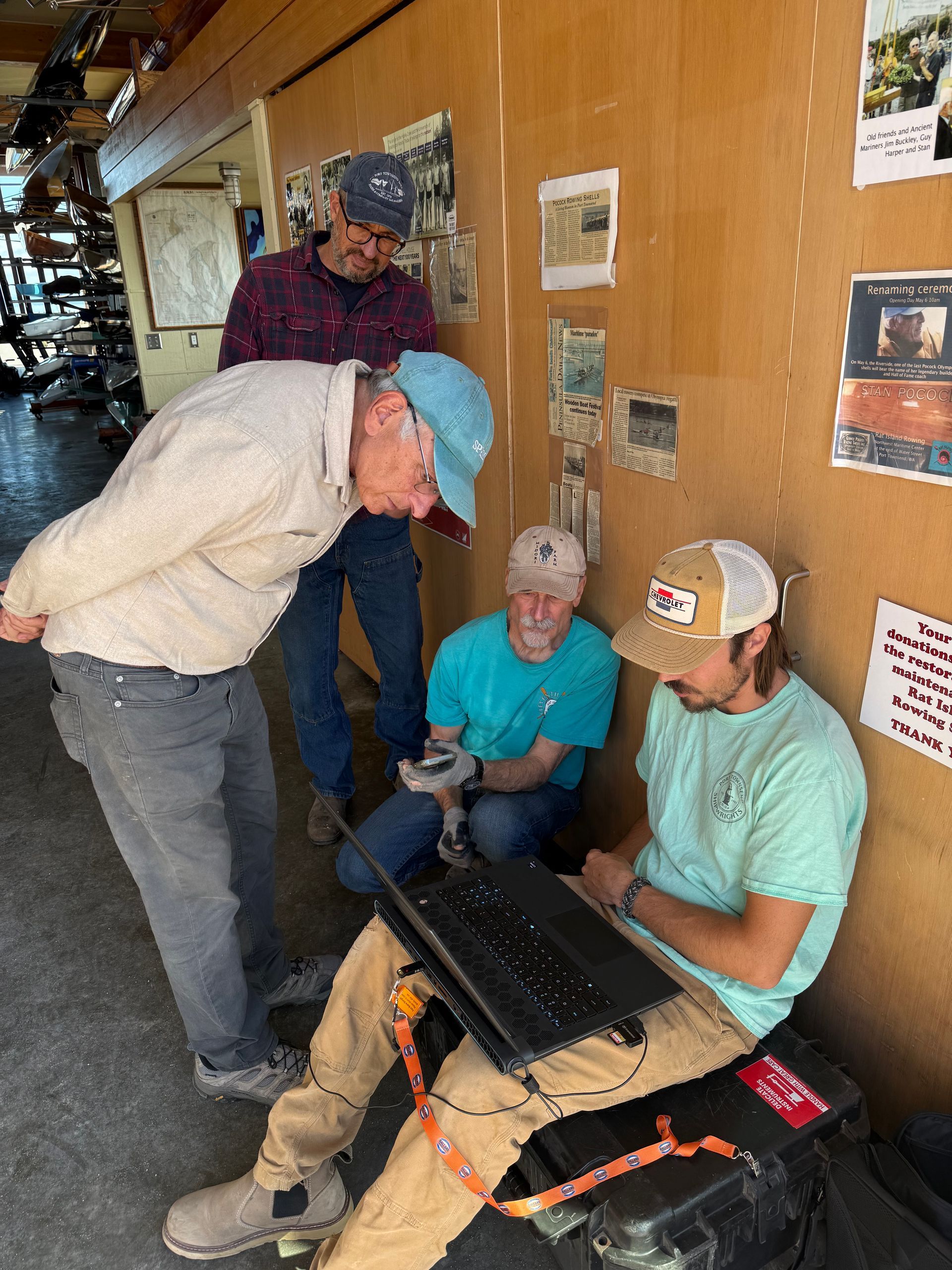
The shop has had the scanner for about a year. Griz coordinated the meetup, and Grayson,
another partner member of the Shipwrights, ran the scanner for Steve. In the Shipwrights shop,
Grayson has used it on a range of projects. He scans boat interiors to plan layouts and cut
patterns, designs fuel tanks that fit the available space exactly, and recently scanned a fishing
boat so a local designer could add a bulbous bow.
Grayson explains that hand lofting from a designer's drawing is very accurate, because someone
already designed the boat. But reverse engineering an existing hull is different, and that's where
the scanner shines. Without it, he says, you'd spend days pulling measurements.
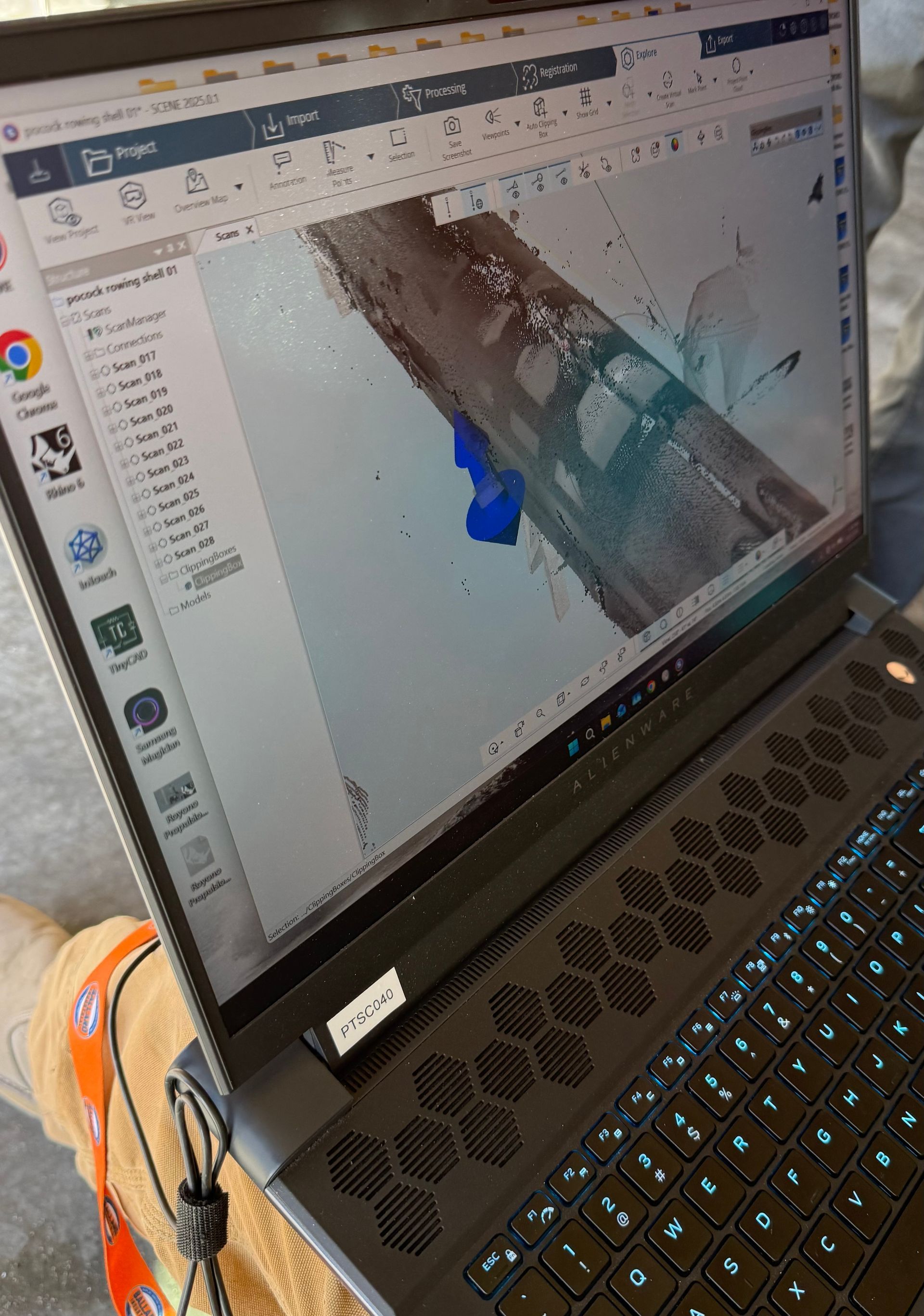
"The scanner doesn't replace a naval architect drawing a boat's lines, but for this kind of job it's
ideal," Grayson explains.
The scan gives Steve a table of offsets, the classic way of recording a hull's shape. And it leaves
behind something new: a complete record of a Pocock four, the kind of record Pocock himself
never had.

Nothing extra
A Pocock shell is built very lean, with just enough strength to do its job. Each side of the hull is a
single steam-bent cedar plank, about 3/16 of an inch thick on a four like Buckley, and just 3/32 of
an inch on a single. The two planks are sawn side by side from the same piece of wood, so the
grain on port and starboard is book-matched.
The decks are heat-shrunk, varnished Dacron, borrowed from aircraft building. It's light,
waterproof, and adds a little strength because it's pulled tight. Inside, the frame carries the load
from the riggers, which hold the oarlocks the rowers lever against.
"Everything in the boat serves a purpose," Steve says. "There's nothing extra in there."
These are flat-water racing shells. They're stored indoors, carried out to row, washed down after,
and put away. Noah Seixas, who recently served as president of Rat Island Rowing, jokes that
next to a modern carbon boat, a wooden Pocock is "a tank." But with eight rowers aboard, the
people weigh far more than the boat, and the old wooden shells still race in amateur regattas.
Keeping wooden shells on the water
Buckley belongs to Rat Island Rowing and Sculling Club in Port Townsend, and the club has its
own story. About 30 years ago, someone gave them one boat, Quinault, a late-1940s Pocock
eight that once carried a UW freshman crew to a national title in 1951. There was almost no rowing in town then. As they fixed it up, people came out of the woodwork to help and to row.
About ten years later, the club was officially born.
The club's boats have made some history of their own. At the 2014 Wooden Boat Festival, The
Boys in the Boat author Daniel James Brown climbed into Quinault, the club's very first boat,
rowing alongside Judy Rantz Willman, daughter of Joe Rantz, one of the 1936 gold medal crew.
The club has since donated Quinault to Bainbridge Island Rowing, and is now displayed at the Bainbridge Island boathouse.
Today the club takes in wooden shells that other clubs no longer want. Most rowers prefer
composite boats, and boathouse space is tight, so old woodies get cleared out. Rat Island fixes
them up and rows them. Steve has had a hand in restoring or building every wooden boat in their
fleet, and in teaching members to do the work.
Buckley came to the club with a story, too. George Pocock and his son Stan built her in the early
1960s for a college in California, where she was called the John Lusk. Today she's named for Jim
Buckley, a Rat Island rower who has led the effort to bring in most of the club's wooden shells.
The club restored Buckley in 2023 in a member's empty barn, with Noah among the volunteers
on the crew. They went over every square inch, inside and out, fixing the structure and
refinishing every surface.
"There are a lot more of these old boats than there are places interested in using them," Noah
explains. The club has three wooden quads and an eight, and people keep offering more. The
club wants to keep rowing them, but it can't take them all. Storage and upkeep are the limits.
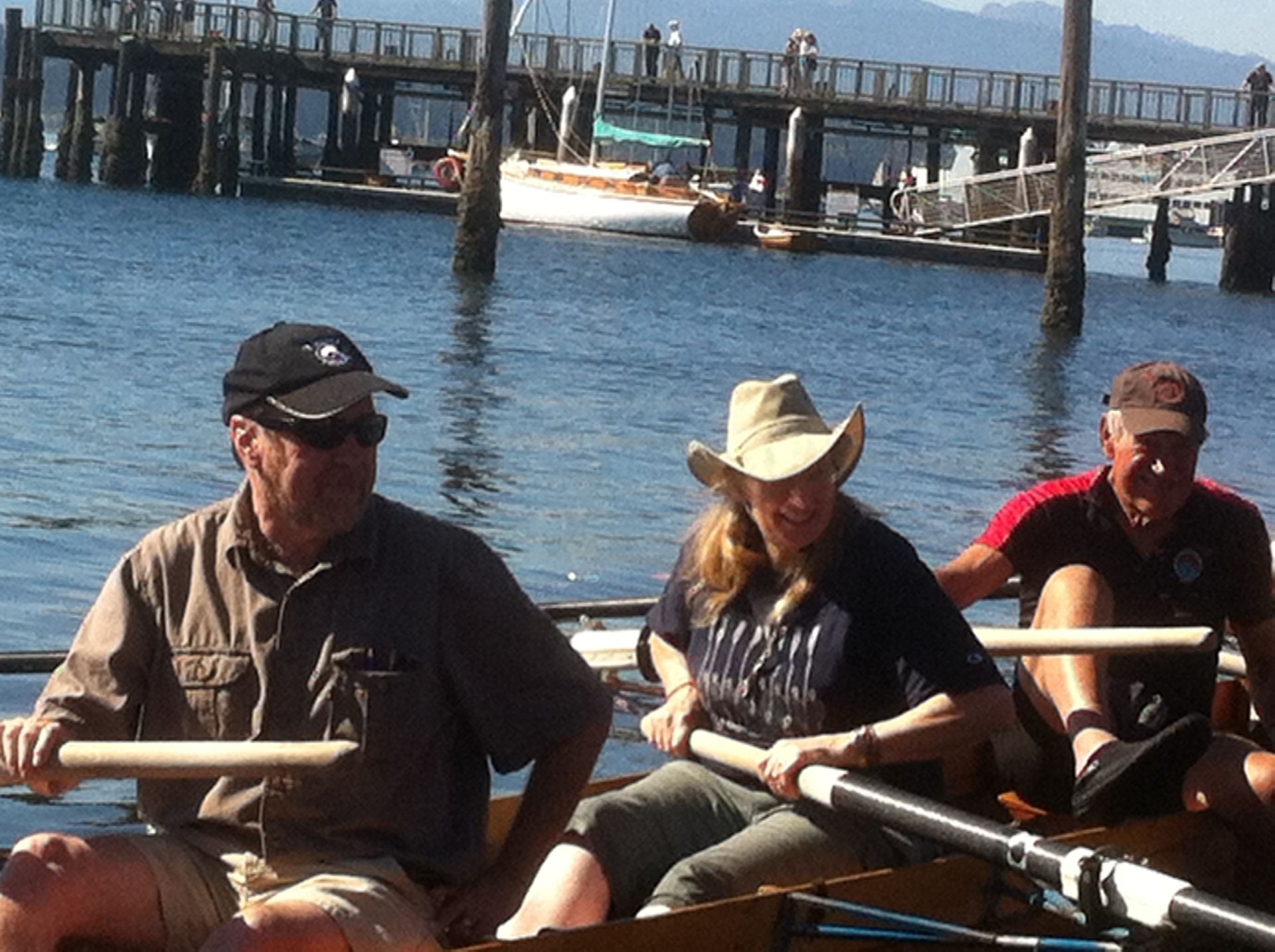
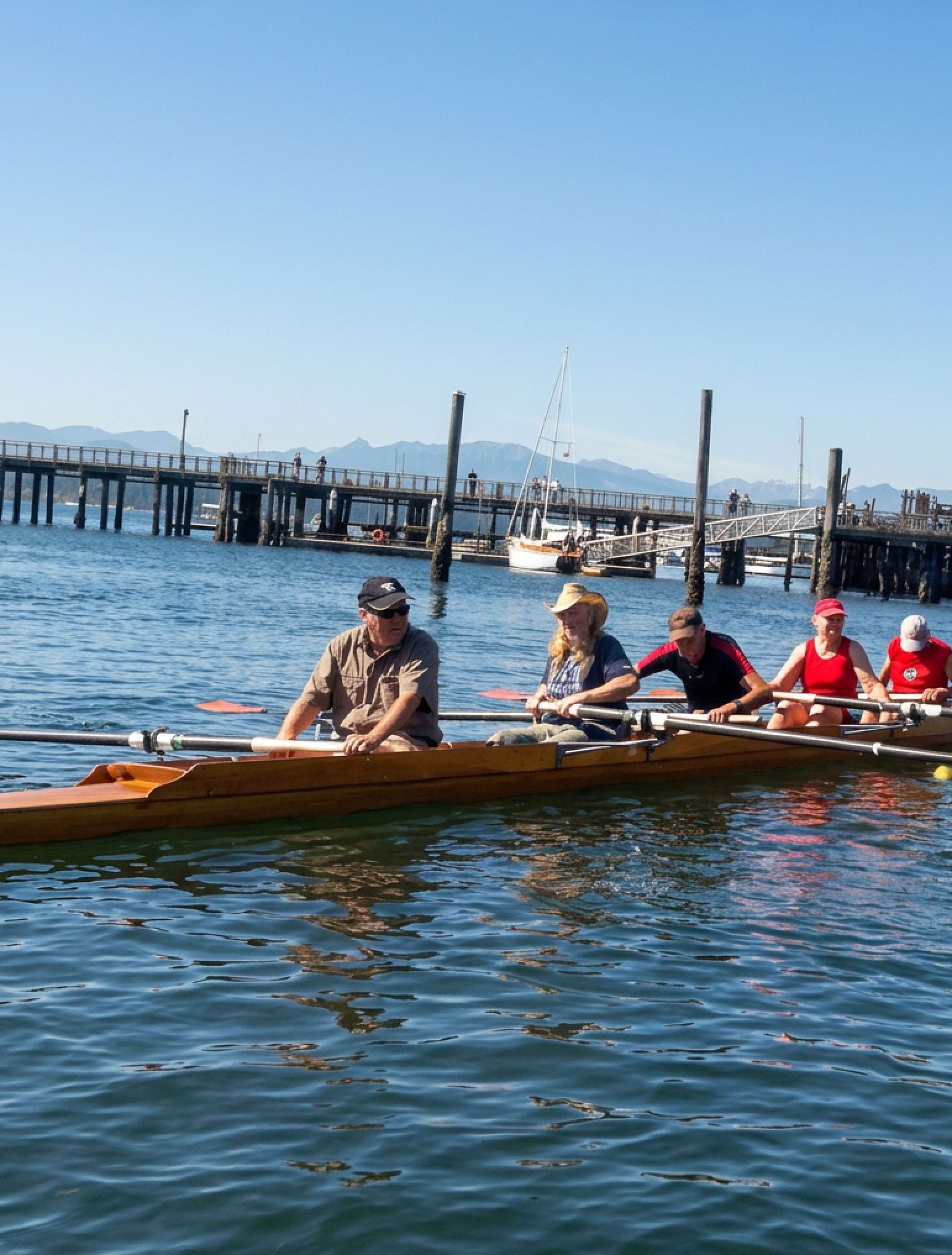
The Boys in the Boat author Daniel James Brown and Judy Rantz Willman row Quinault at the 2014 Wooden Boat Festival.
Photos courtesy of Jim Costello.
What's next
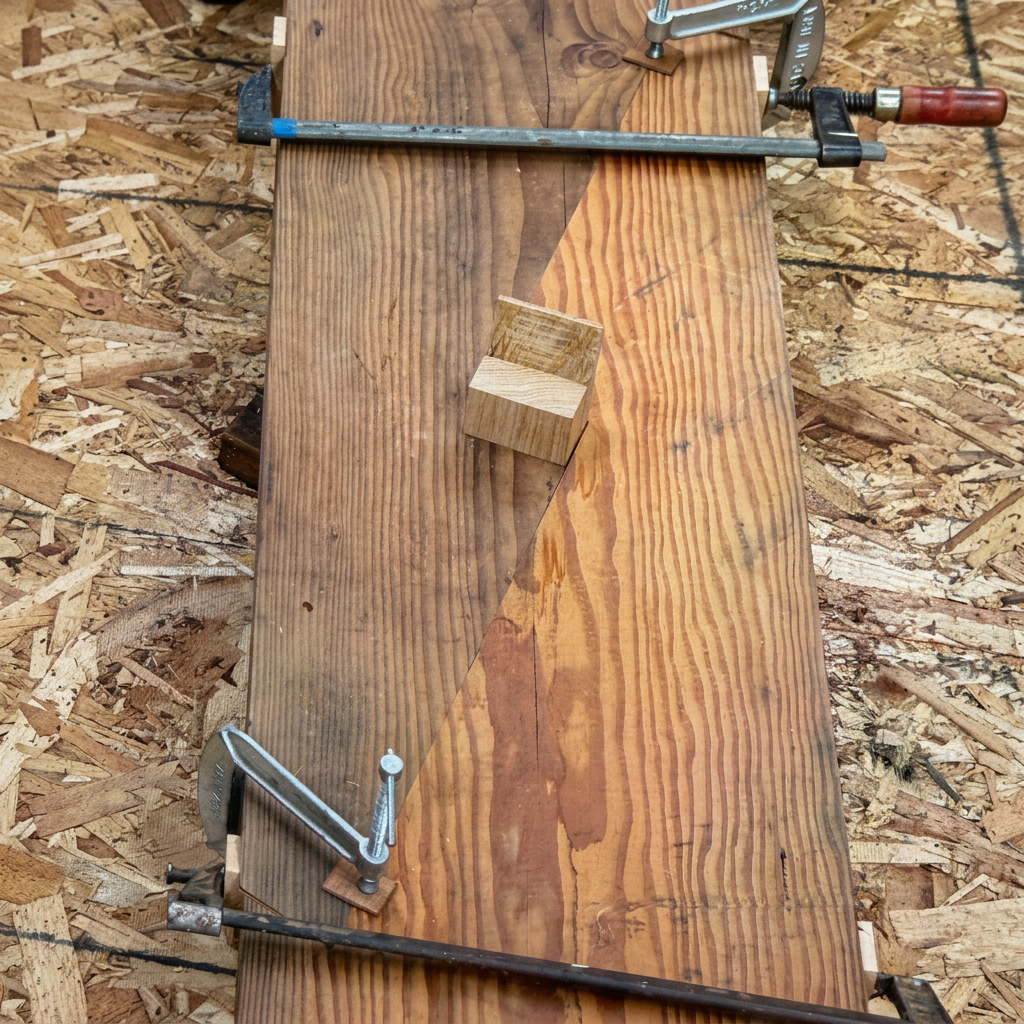
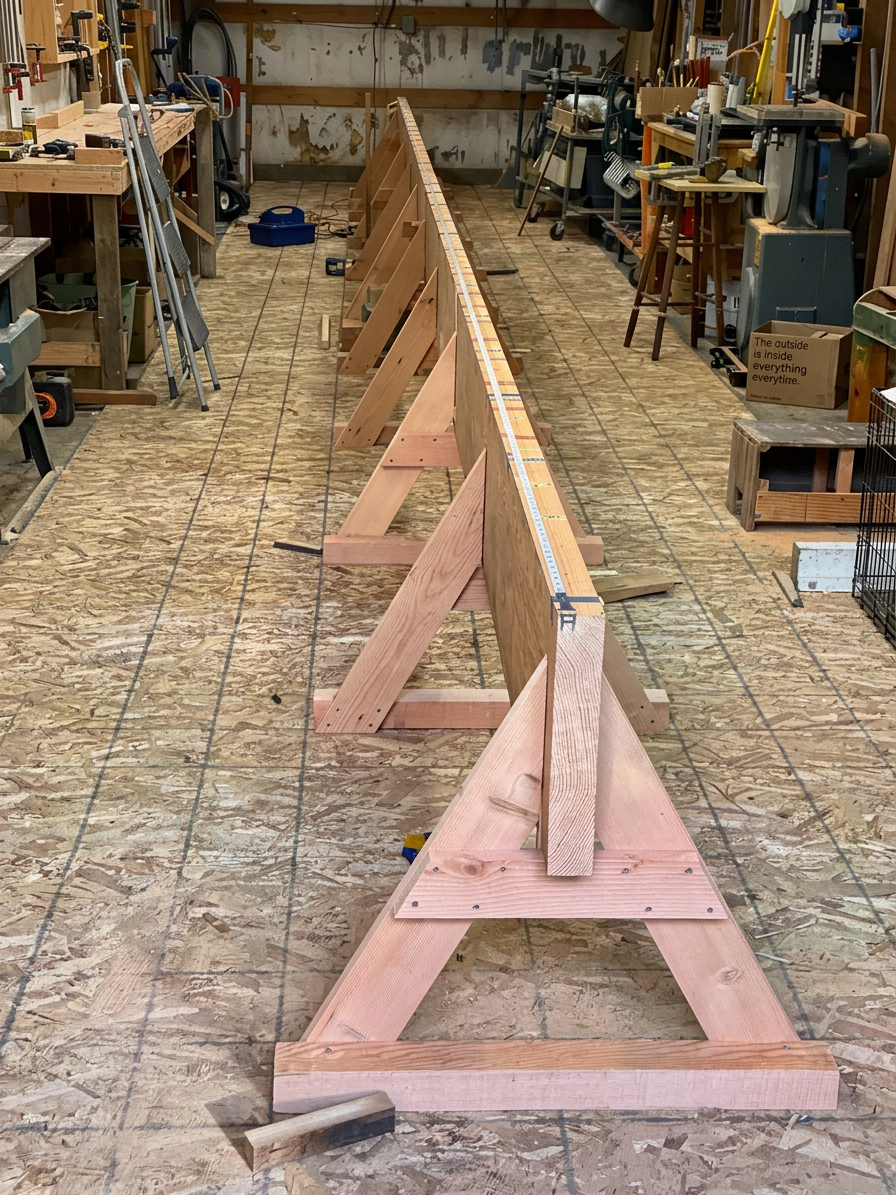
Steve has the strongback built in his shop. It's basically a 40-foot sawhorse that has to be
perfectly straight, flat, and level. He made it in two pieces, joined in the middle with a wedged
timber scarf joint, so it can be moved to the shell house with the frame when it is finished. Next, he'll use the measurements from Port Townsend Shipwrights' scan of Buckley to set up the stocks and shape the frame, which he hopes will help speed up the work.
The shell house crew is passing an eight and a couple of fours through that same old window this
fall, but with the boat frame not built yet, Steve has missed that window. His frame will have to
come off the strongback and be brought up through the small man door.
When it's done, the shell house will tie it all together. There will be displays about The Boys in
the Boat and even a 1936 radio playing a broadcast of the Berlin race.
As for Steve, stopping at the frame may be the hardest part of the job. Once the ribs are up and the shape is right there in front of him, he admits it will be hard to put down his tools. "I just want to keep going and build the whole boat," Steve says. We'll be following along as the frame takes shape!
Shop photos courtesy of Steve Chapin. Historic photo: MOHAI, PEMCO Webster & Stevens Collection, 1983.10.2608.3.
Want to be a part of bringing George Pocock's workshop back to life? Take a Virtual Tour or
Support the ASUW Shell House Restoration.