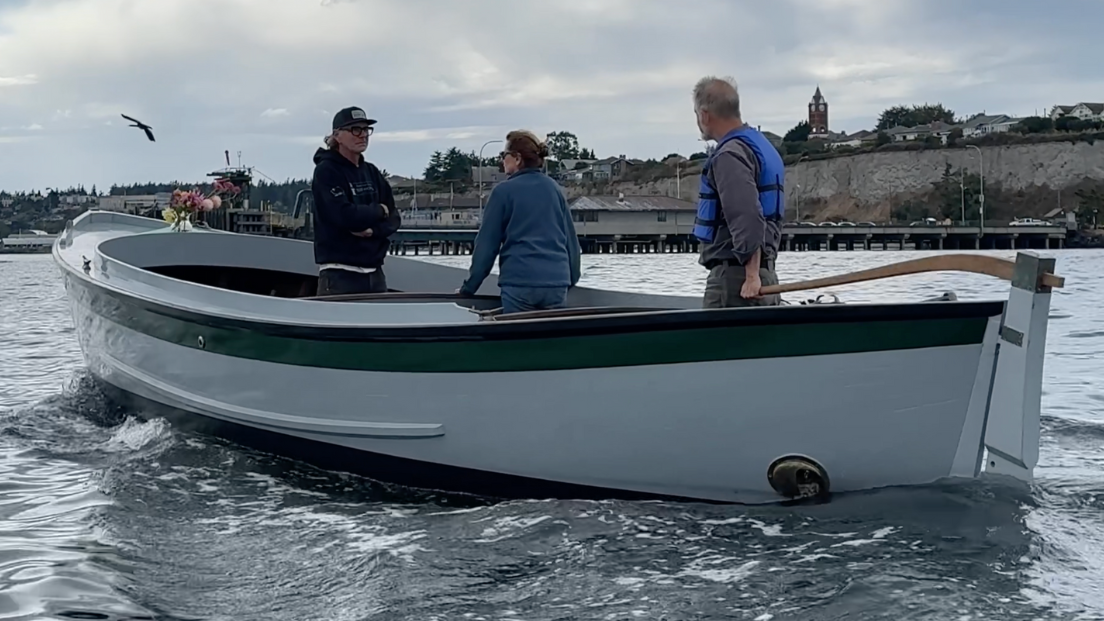
Alma: A Wooden Boat Through the Northwest Passage
Following Amundsen's route across the top of the world, with an emergency stop in Port Townsend
Some boats come into the yard with a story. Alma came in with an epic one.
The 45-ton wooden vessel sailed from Norway, across the top of the world through the Northwest Passage, and down the coast after a grounding in the Arctic. She limped roughly 3,000 miles with a damaged propeller and steering system to reach Port Townsend. Her crew needed a fast turnaround to keep a tight schedule. Our shipwrights got to work.
Voyage photos courtesy of Amundsen Adventure.
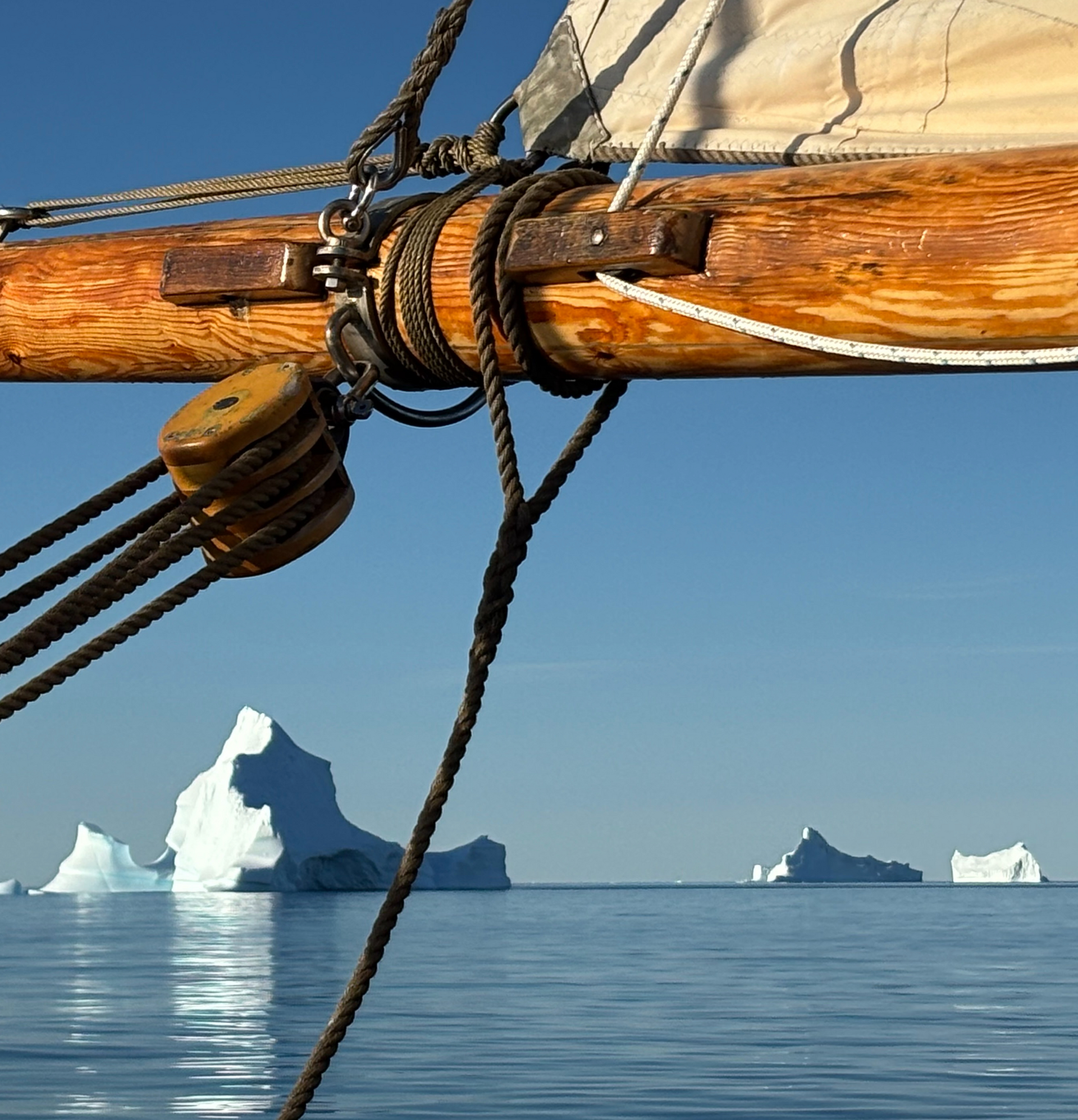
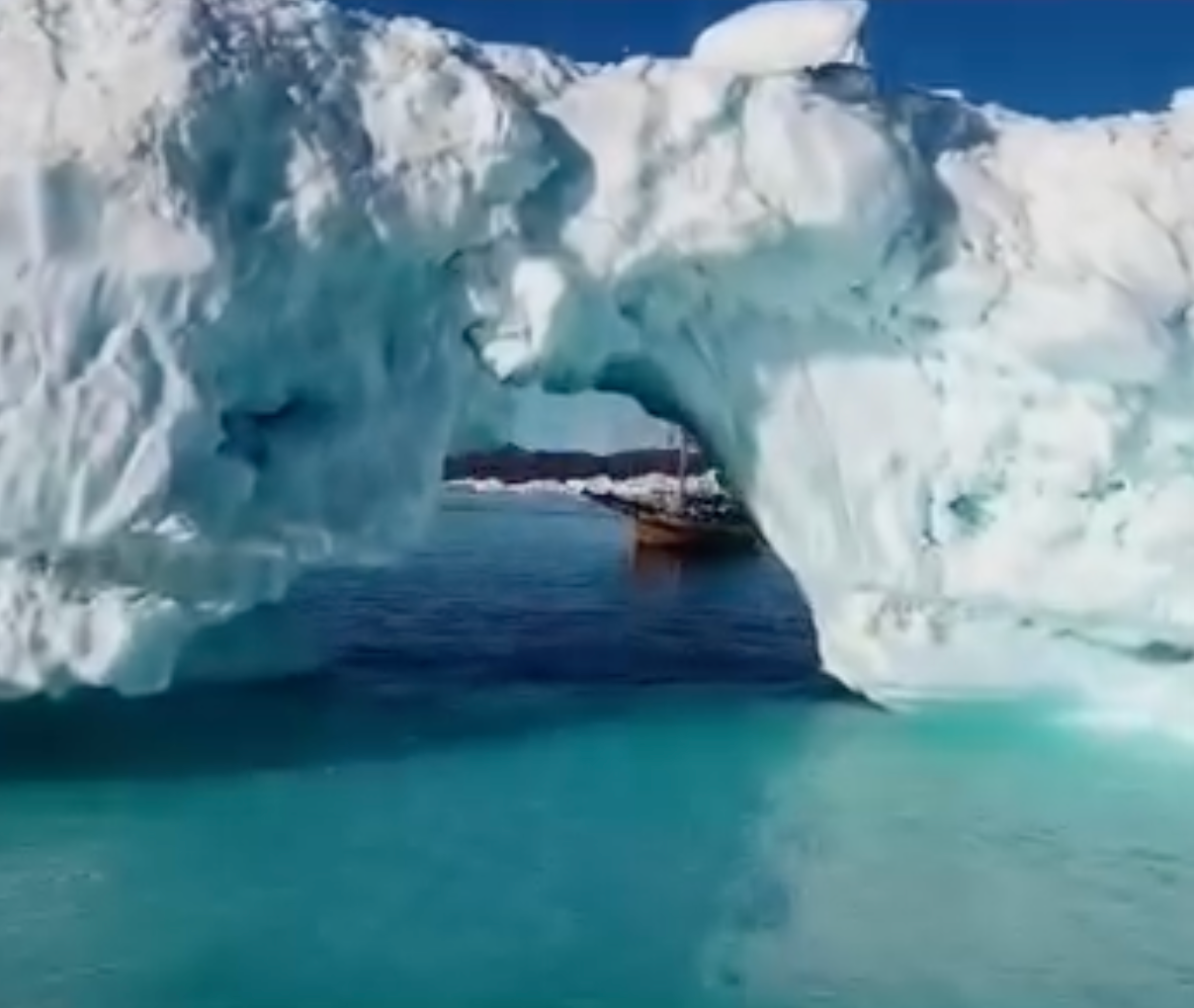
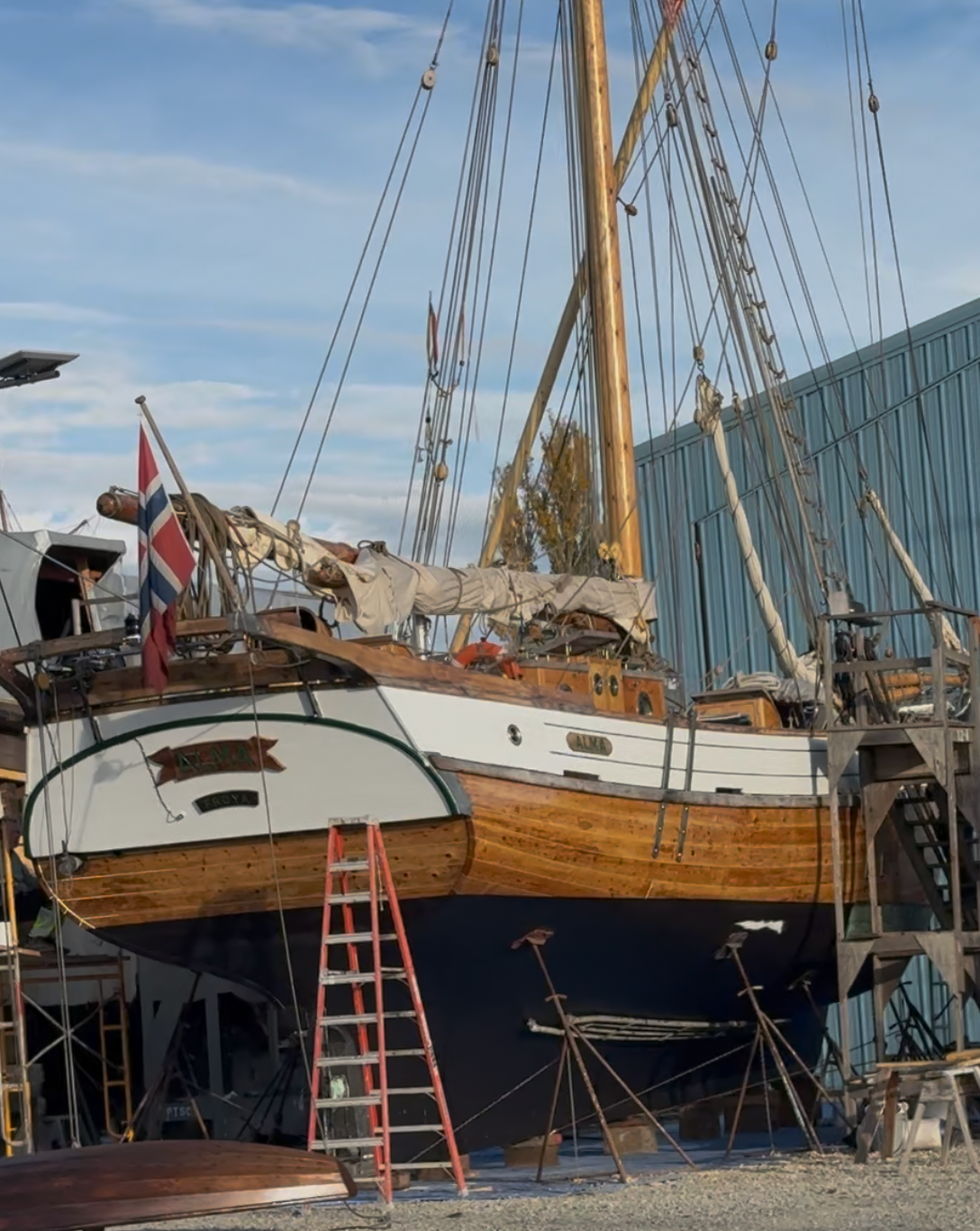
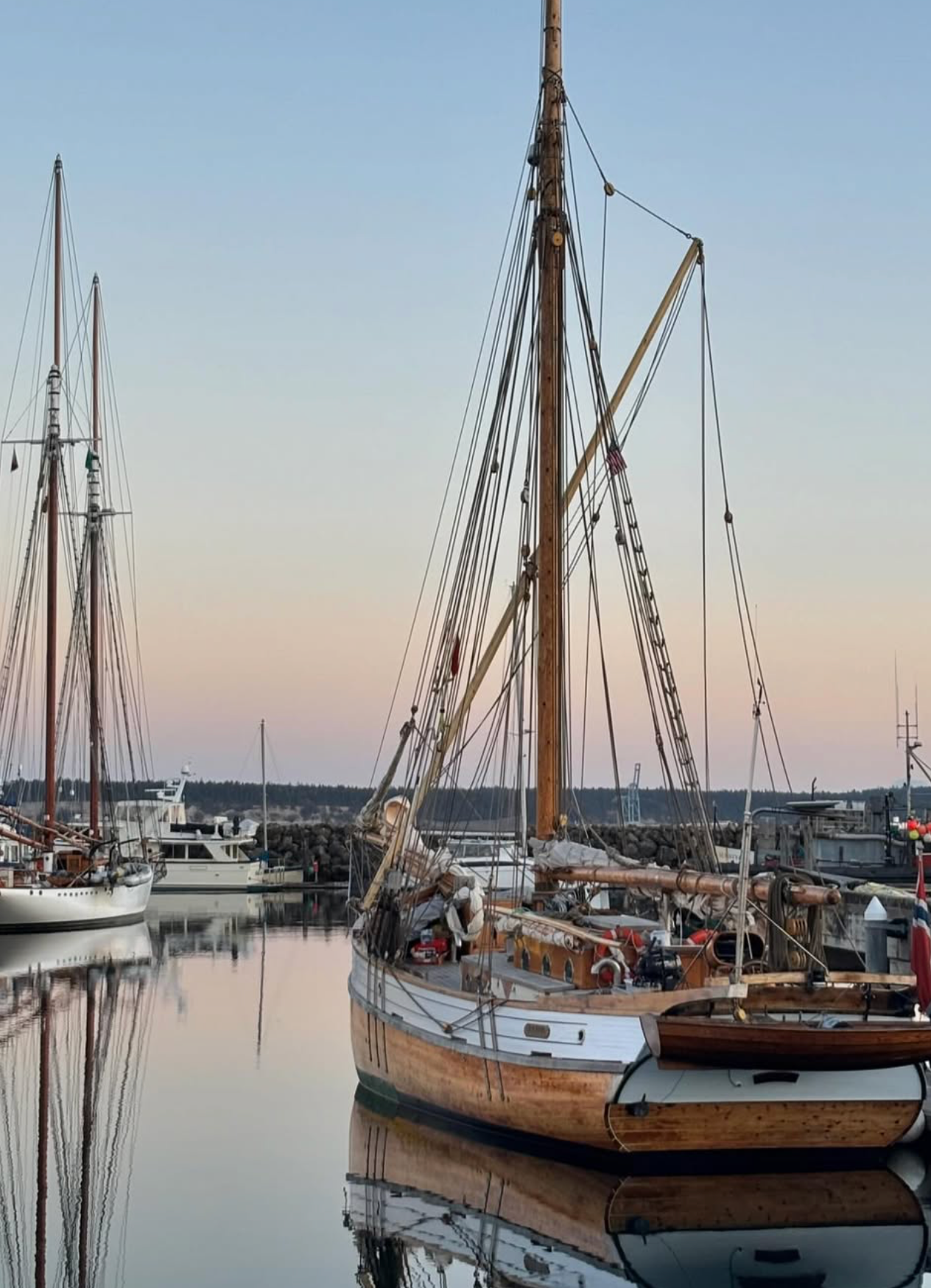
Built by Harald Sørensen over 12 years
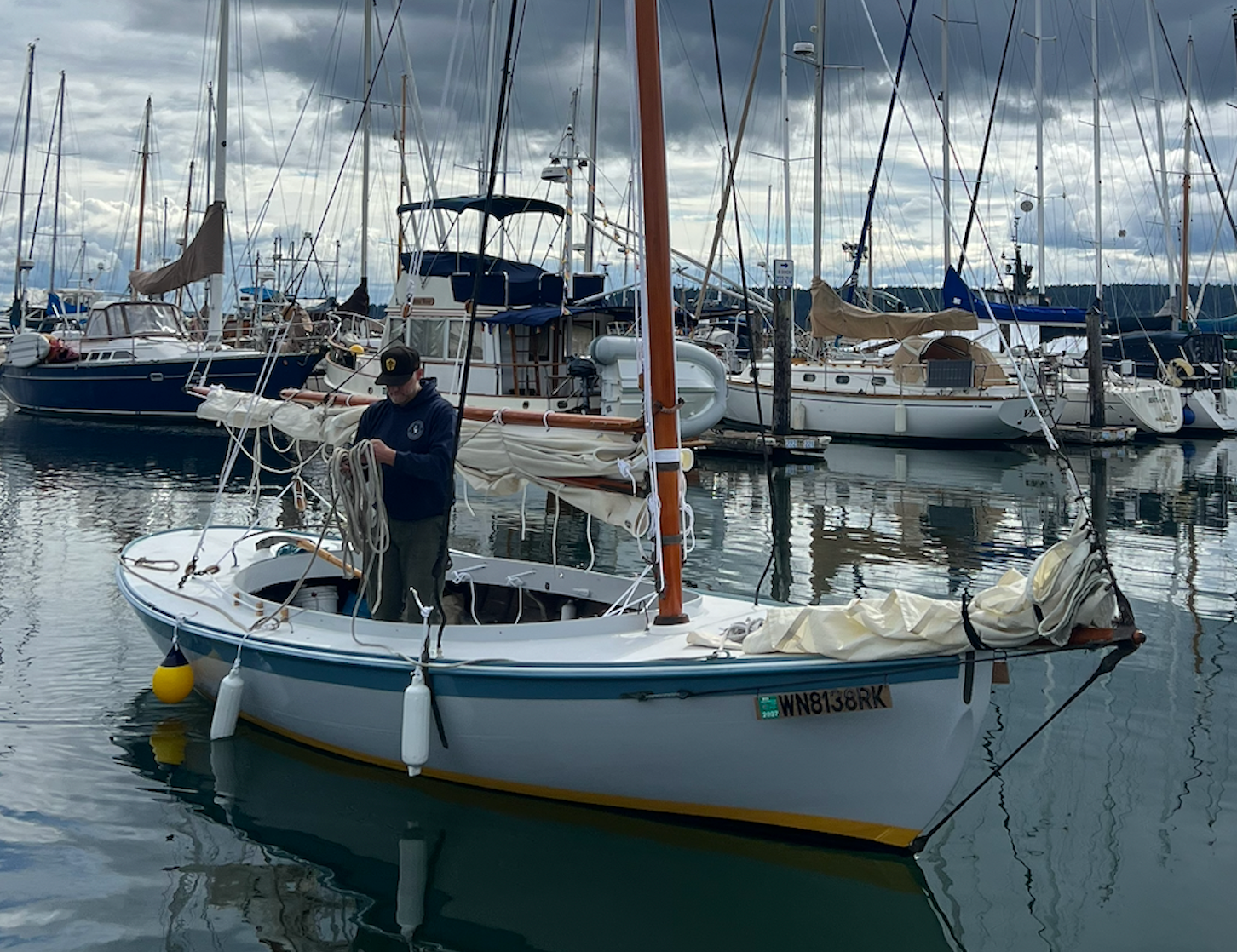
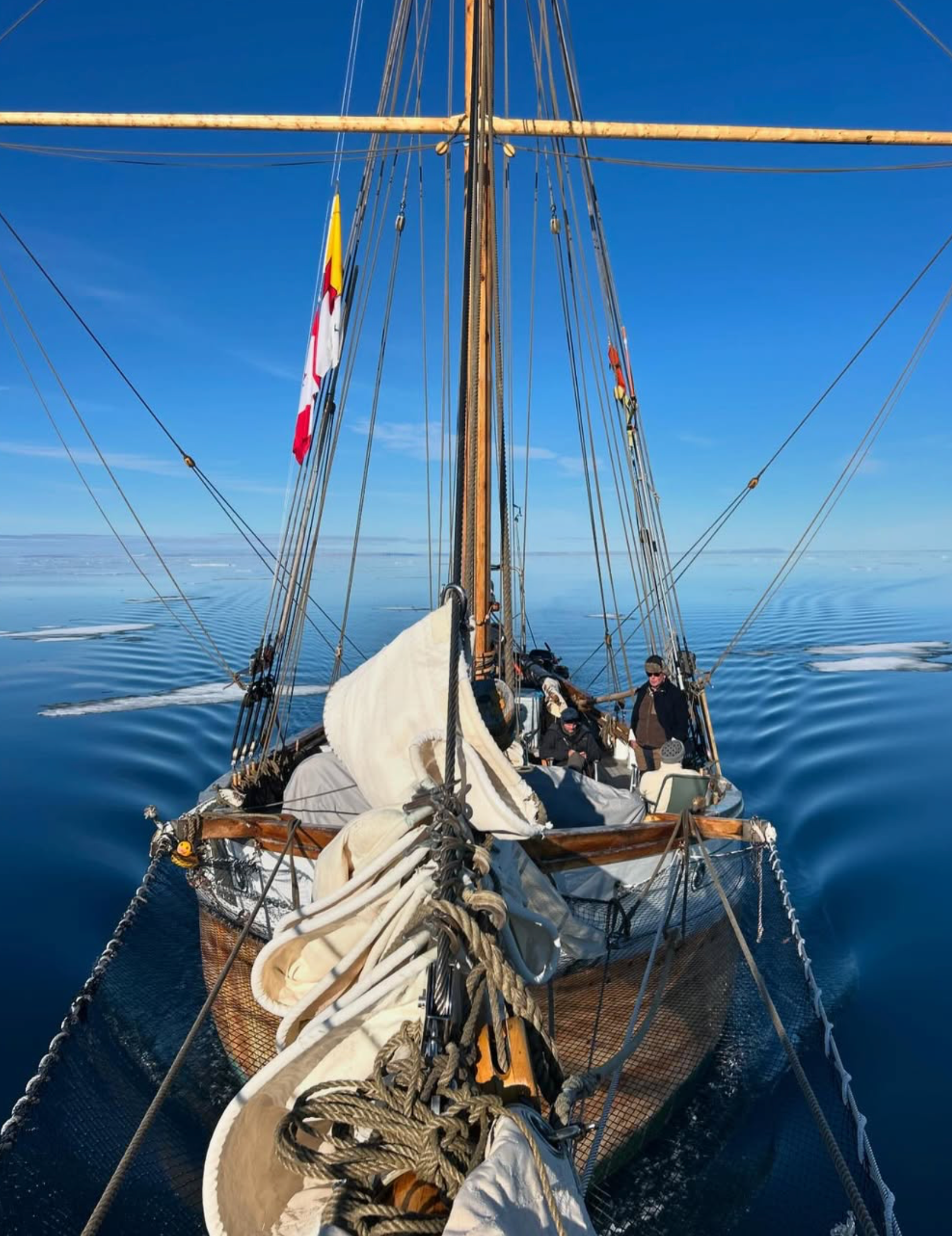
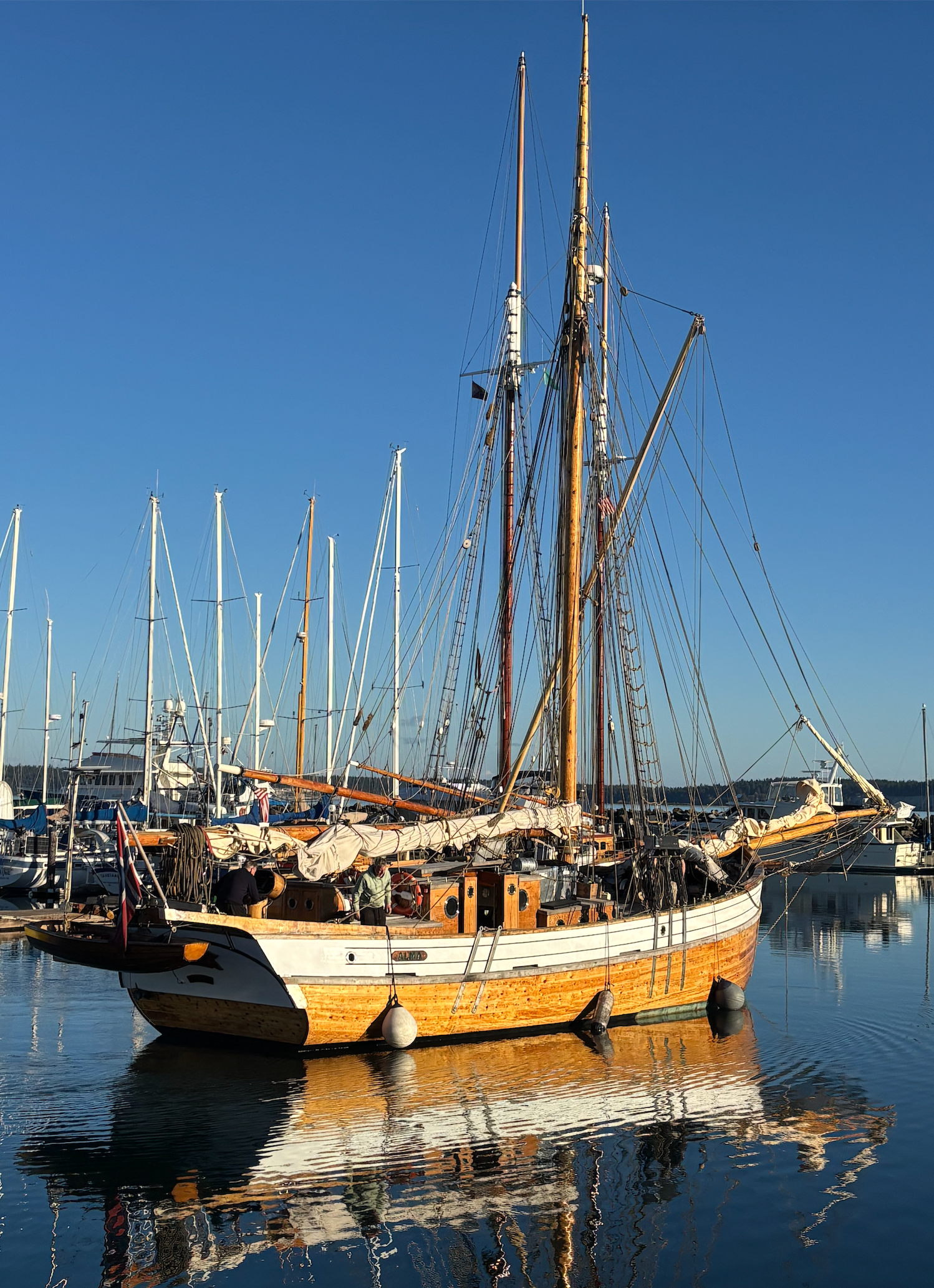
Alma looks like she sailed out of the 1800s, but she's a young boat. She was built from the drawings of a classic Norwegian Hardangerjakt, the herring boats that worked Norway's coast in the 1800s and early 1900s. She measures 52 feet on deck and about 75 feet overall, and weighs 45 tons.
Her full name is Alma af Frøya. Norwegian boatbuilder Harald Sørensen built her between 2000 and 2012, completing her to a very high standard. Right after her launch, the Municipality of Karmøy, on Norway's southwest coast, put her to work as a school ship. She served in that role from 2012 to 2021, and about 90 students took part in the program aboard her. That work kept her in immaculate condition.
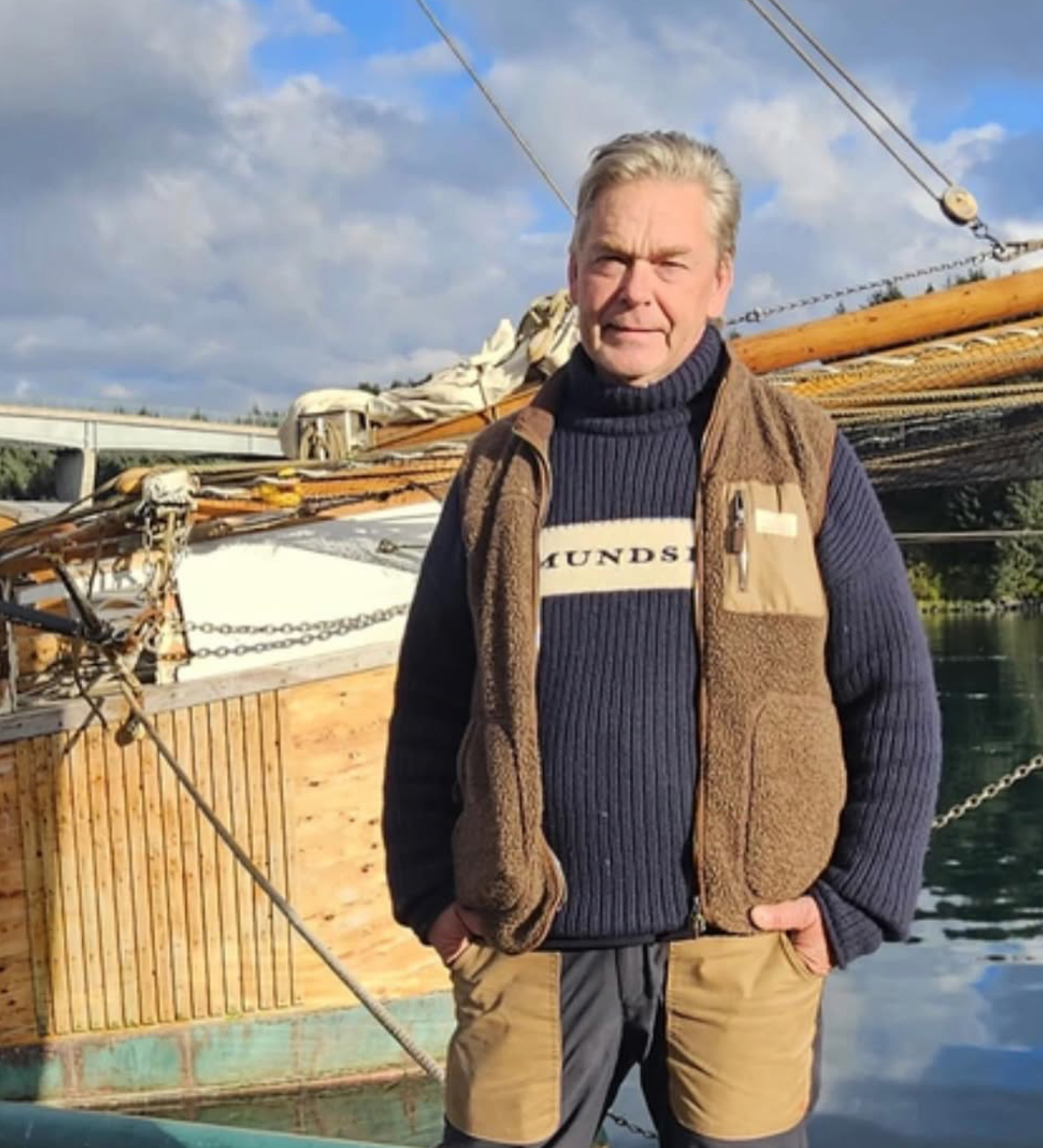
She was originally designed to cruise Norway's islands. When COVID forced the municipality to cut its budget, the boat went up for sale. Captain Terje Andre Pedersen, who had always loved this kind of boat, bought her in 2021. He then refit her for the Arctic with ice sheathing, a watermaker and other modern equipment. Today she's owned by Amundsen Adventure and sails from her home port on the island of Frøya in central Norway, taking guests on expeditions in northern Norway, Iceland and Greenland.
A boat with soul, and a legendary route
Terje named the boat for his grandmother, Alma. His grandparents lived in Tromsø, and his grandfather worked a similar boat, sailing into the ice to hunt seal. Terje says he likes that alma means "soul" in Spanish. He added, "anyone who walks past her in the yard can feel it."
The voyage itself was inspired by Roald Amundsen, a legend in Norway. Amundsen made the first transit of the Northwest Passage in 1903–1906 aboard Gjøa, which was also a herring boat. Alma is strikingly similar.
"We'd been talking about it, but it wasn't realistic," Terje says. "When I bought the boat, I said, okay, that's actually realistic to do. So now we've done that."
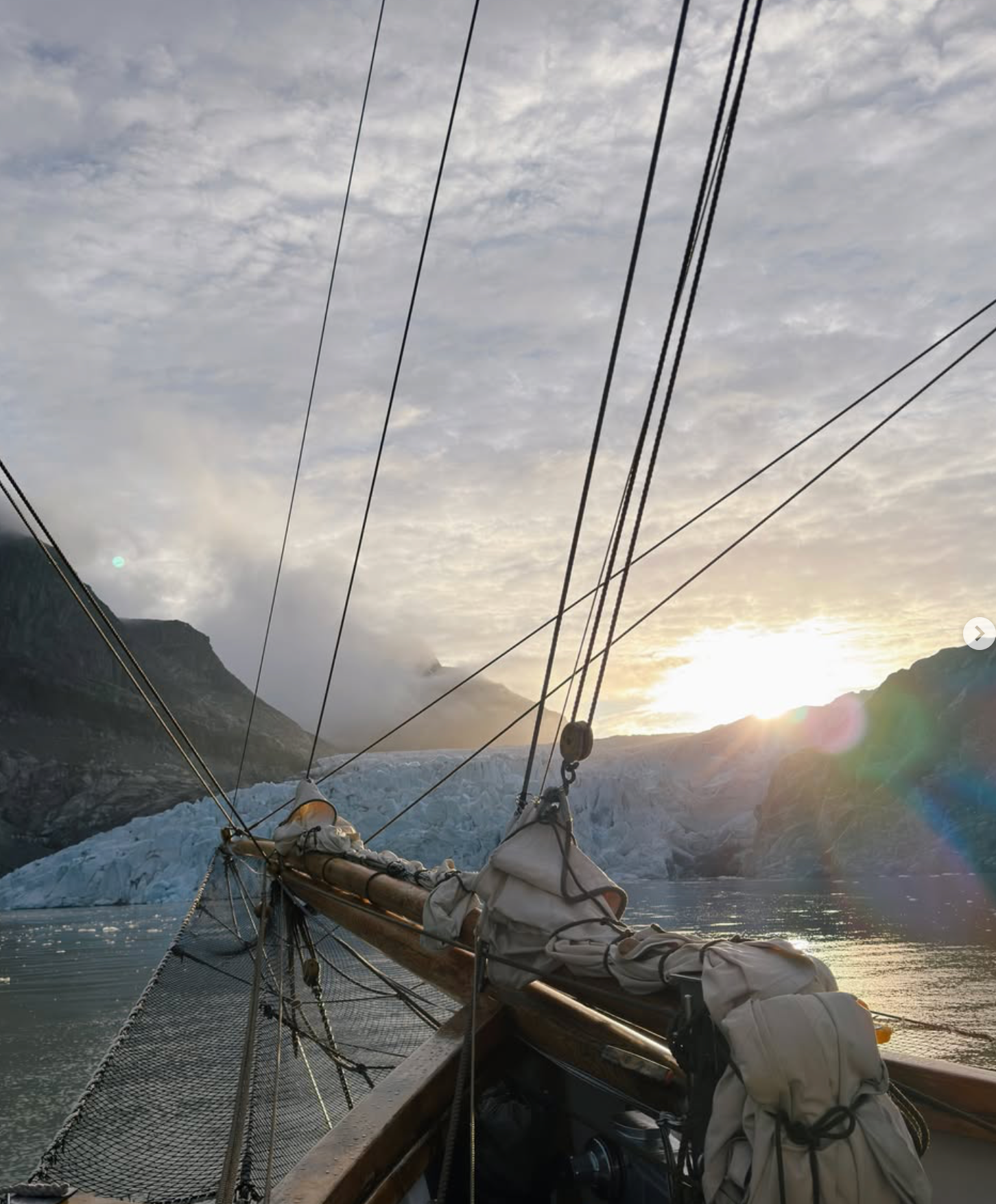
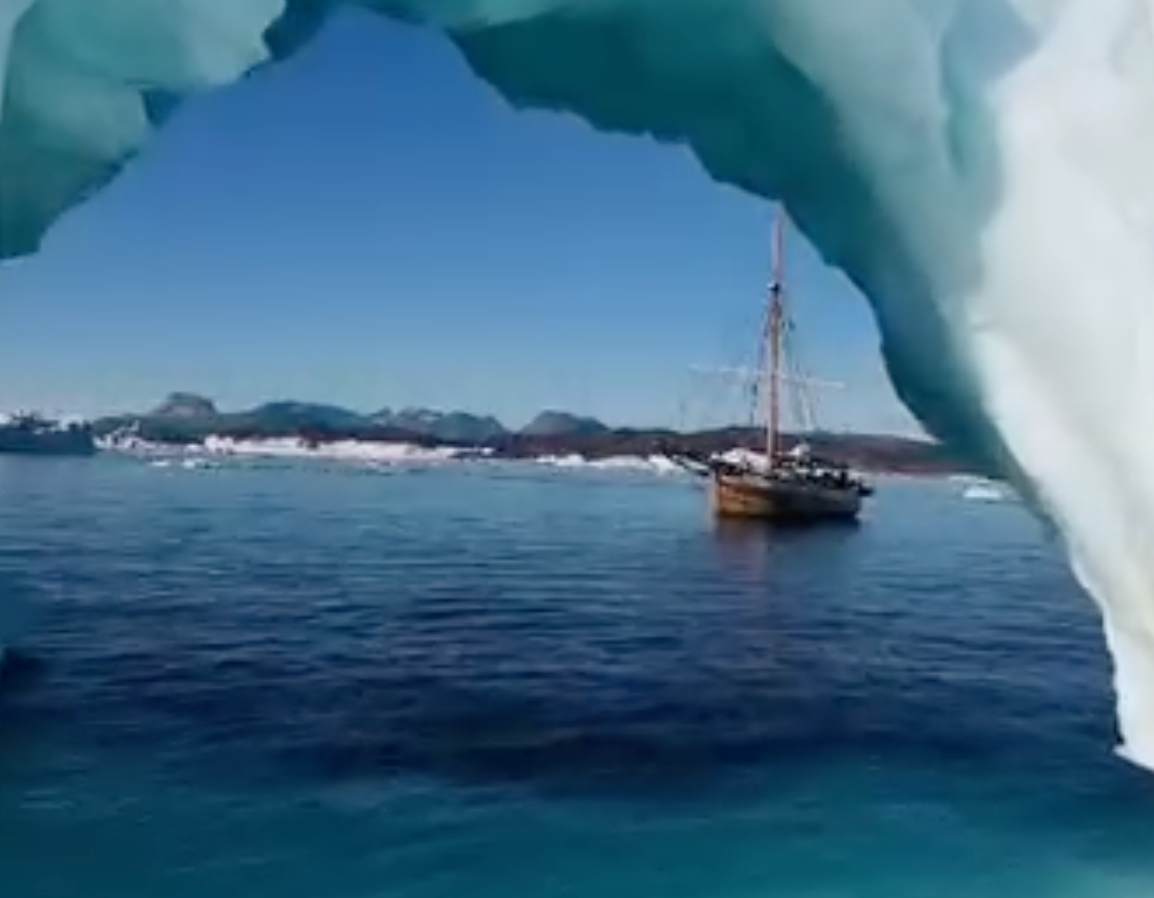
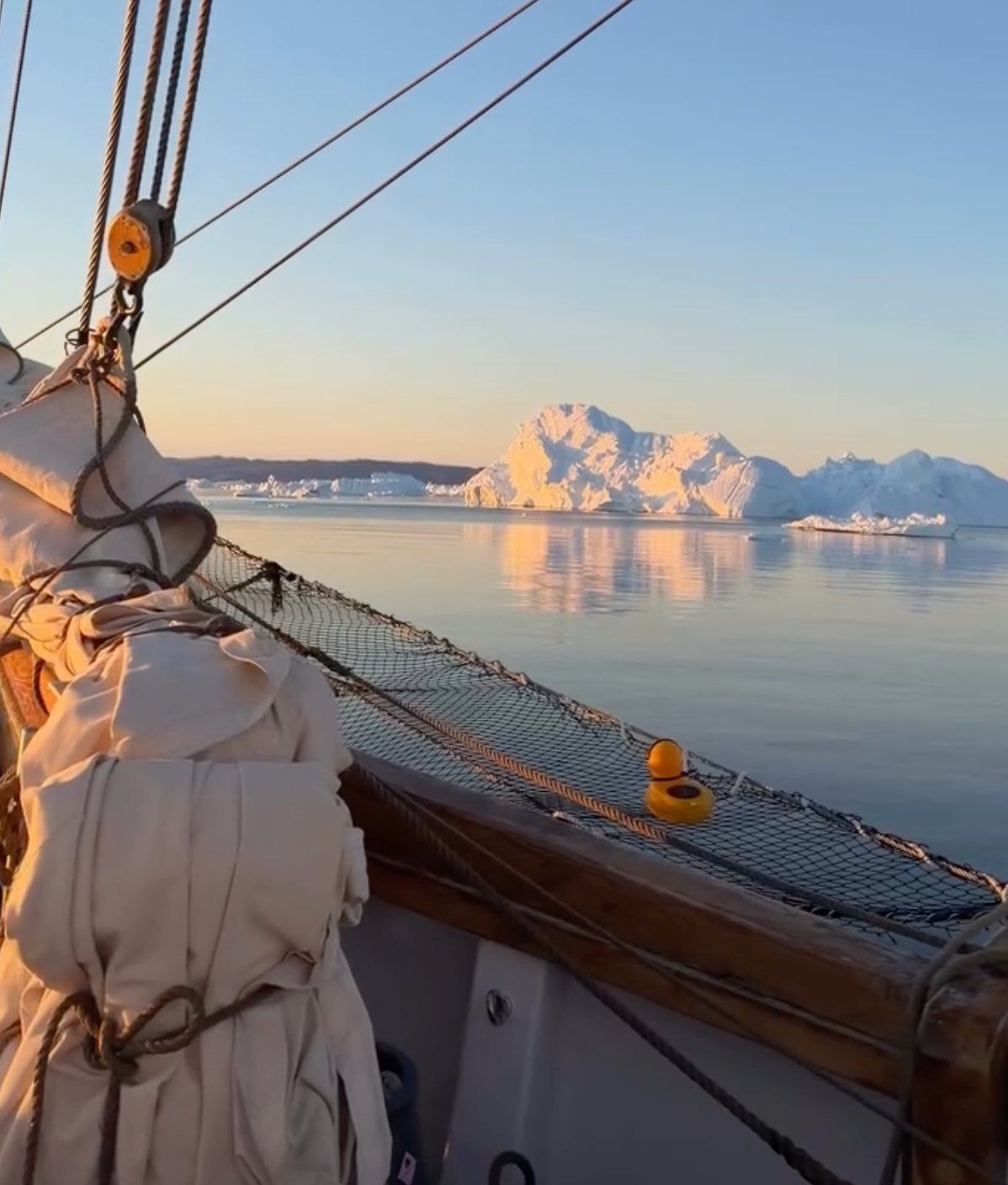
Photo Caption: Images from the beginning of the journey, courtesy of Amundsen Adventure.
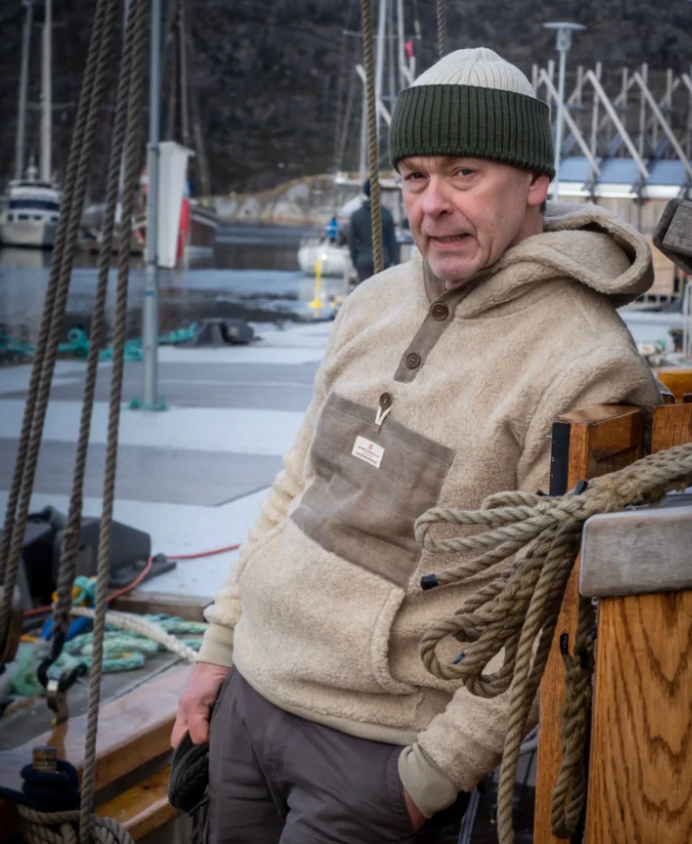
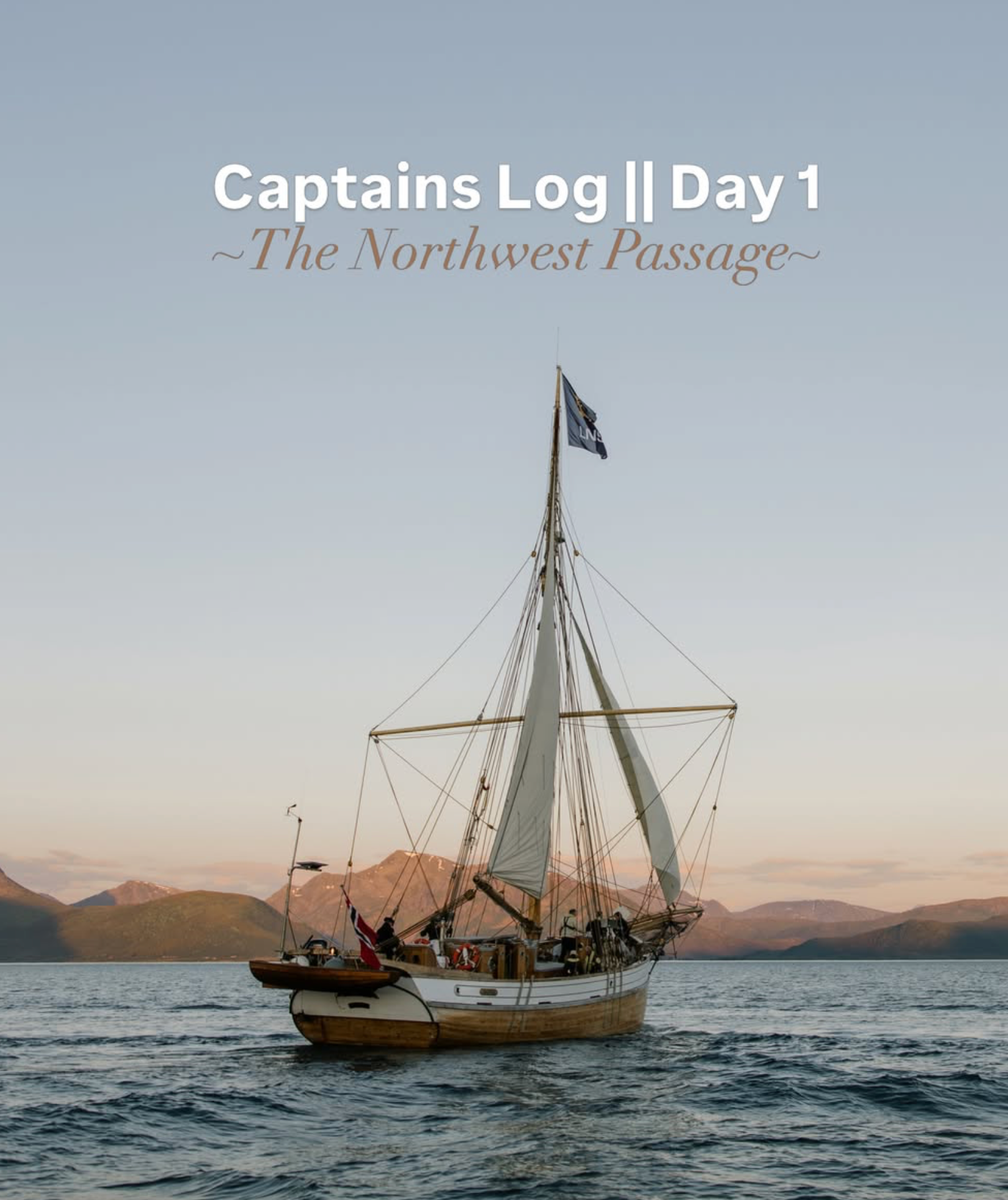
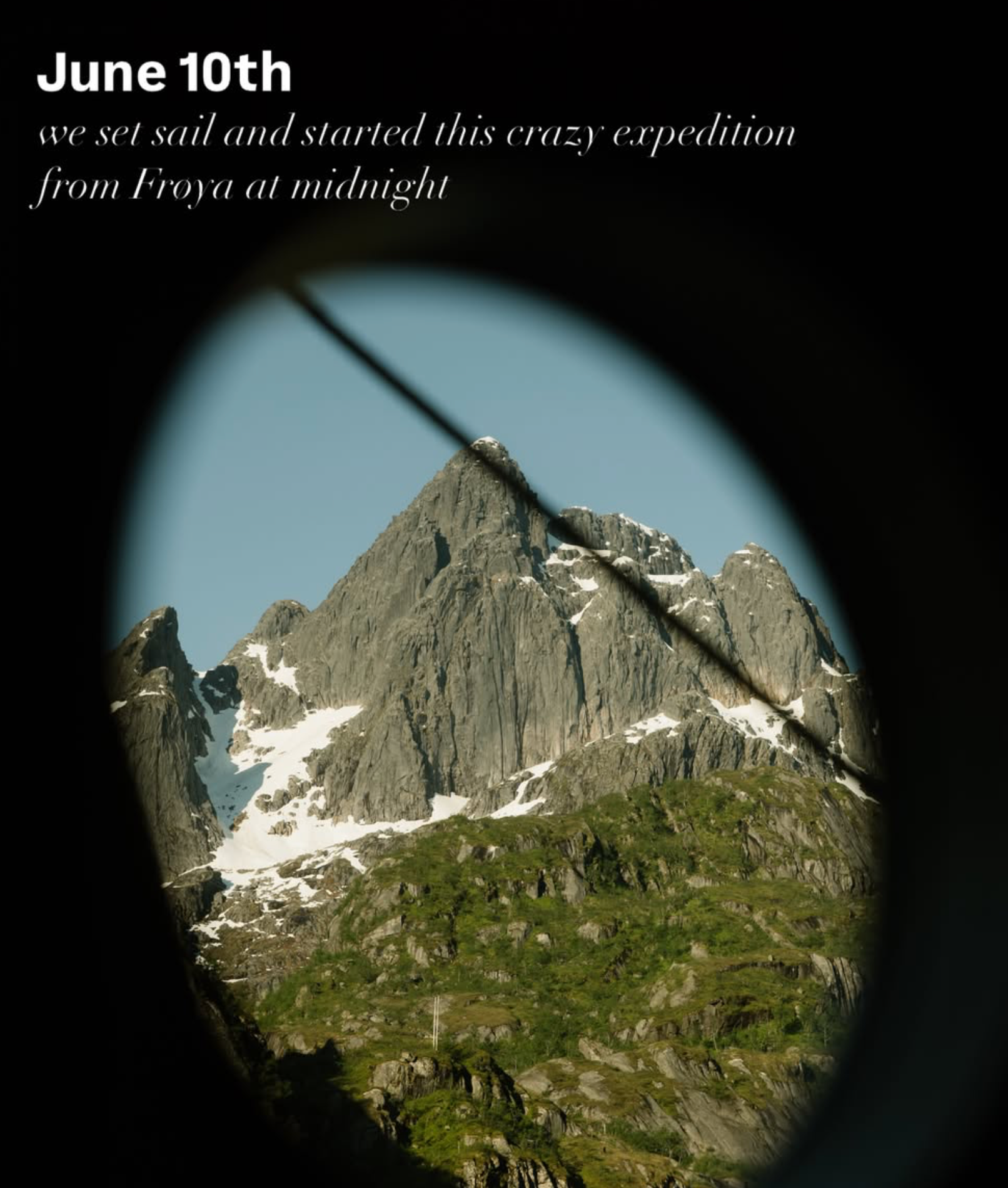
In Amundsen's footsteps
Alma's expedition began on June 10, 2026, in the Lofoten Islands of northern Norway. After a stop in Svolvær for supplies, the crew got underway. Terje described the moment in the captain's log he shared on Instagram:
"After a comprehensive safety brief with assignment of roles in case of evacuation—the boat must be able to be abandoned within 90 seconds without anything being forgotten—we set off in glorious weather at 1230. Barely out of the harbour we got the sails up and stopped the engine.… Pure champagne sailing in brilliant sunshine with a nice breeze from the NE."
A crew of eight to nine Norwegians sailed Alma from Norway, with some crew changes along the way. A voyage like this can't be sailed short-handed. "Sometimes we sail day and night for 10 days," Terje says. "If you're only four, that's not much sleep."
The nerves start well before departure. "When you plan the Northwest Passage, you are nervous six months before you go," he says. "There are so many unknowns: the ice, the dark, the currents, the storms."
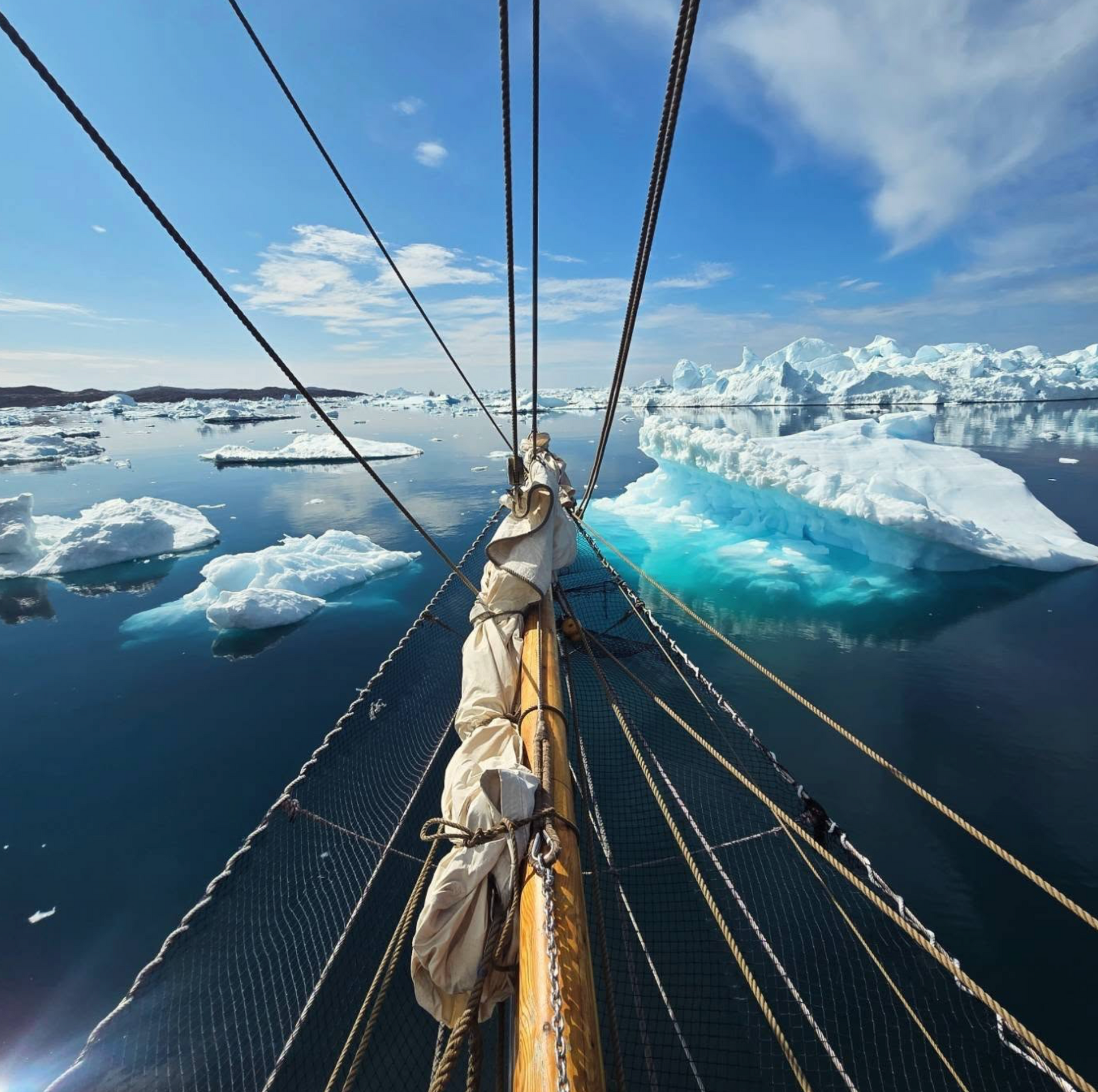
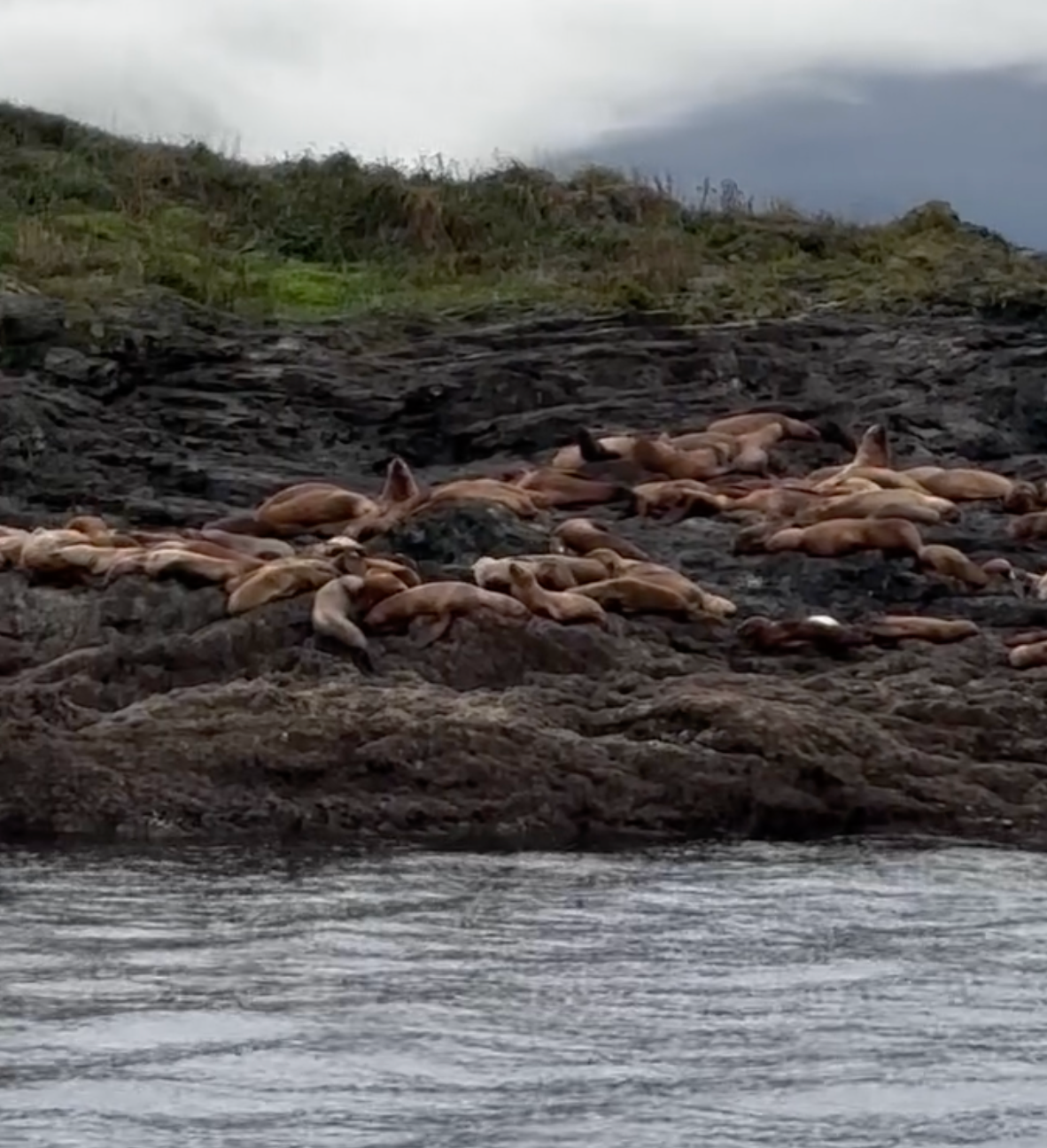
The highlight came in northwest Greenland, near what Amundsen called the end of land. "There's no more land, there's only ice," Terje says. The midnight sun shone over huge glaciers. Along the way, the crew saw polar bears, whales and seals.
For Terje, the most meaningful part was reaching places few people ever see. "Places that you only read about in the books," he says. "You can only get there by sailing." Their stops included:
- Beechey Island, off Devon Island near Lancaster Sound. Sir John Franklin's expedition spent its first winter here in 1845–46. The uninhabited island is known for the graves of three of Franklin's crew.
- Gjoa Haven (Uqsuqtuuq), on King William Island. Amundsen sheltered Gjøa here from 1903 to 1905 and gave the harbor its name. The area is also tied to the Franklin Expedition, whose ships Erebus and Terror were abandoned nearby, and has a rich Inuit history.
- Terror Bay, on King William Island's southwest coast. In 2016, researchers from the Arctic Research Foundation found the wreck of Franklin's HMS Terror here, sitting upright and remarkably well preserved. Inuit oral history, passed down through generations, guided the search. Today both Terror and Erebus, found nearby in 2014, are protected as the Wrecks of HMS Erebus and HMS Terror National Historic Site.
- Cambridge Bay (Ikaluktutiak), on Victoria Island. It's a major hub of the western Canadian Arctic and a common resupply stop for modern expeditions.
Asked for the one thing he'd want people to know about the voyage, Terje says, "Visiting the historical places, being there with Alma, going in the footsteps of Amundsen." For a boat built with a very similar design as Gjøa, sailing into Gjoa Haven brought the voyage full circle for Terje.
Alma held up well. She's insulated and has a strong engine and rig. "Like most voyages," Terje says, "the crew is the weakest point."
Voyage photos courtesy of Amundsen Adventure.
Aground at Tuktoyaktuk
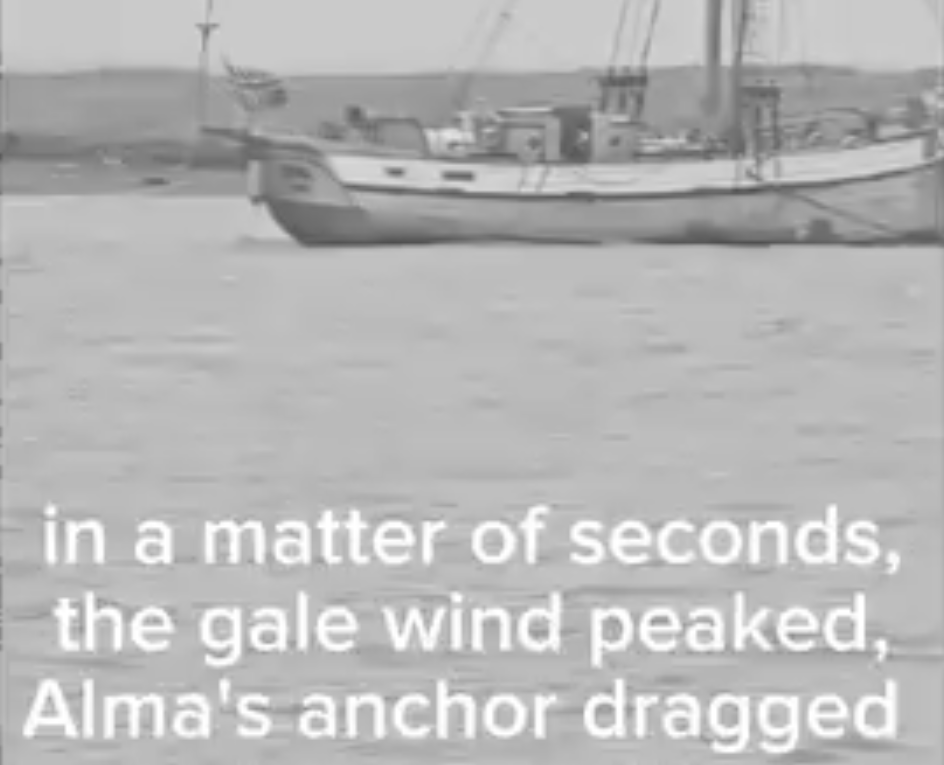
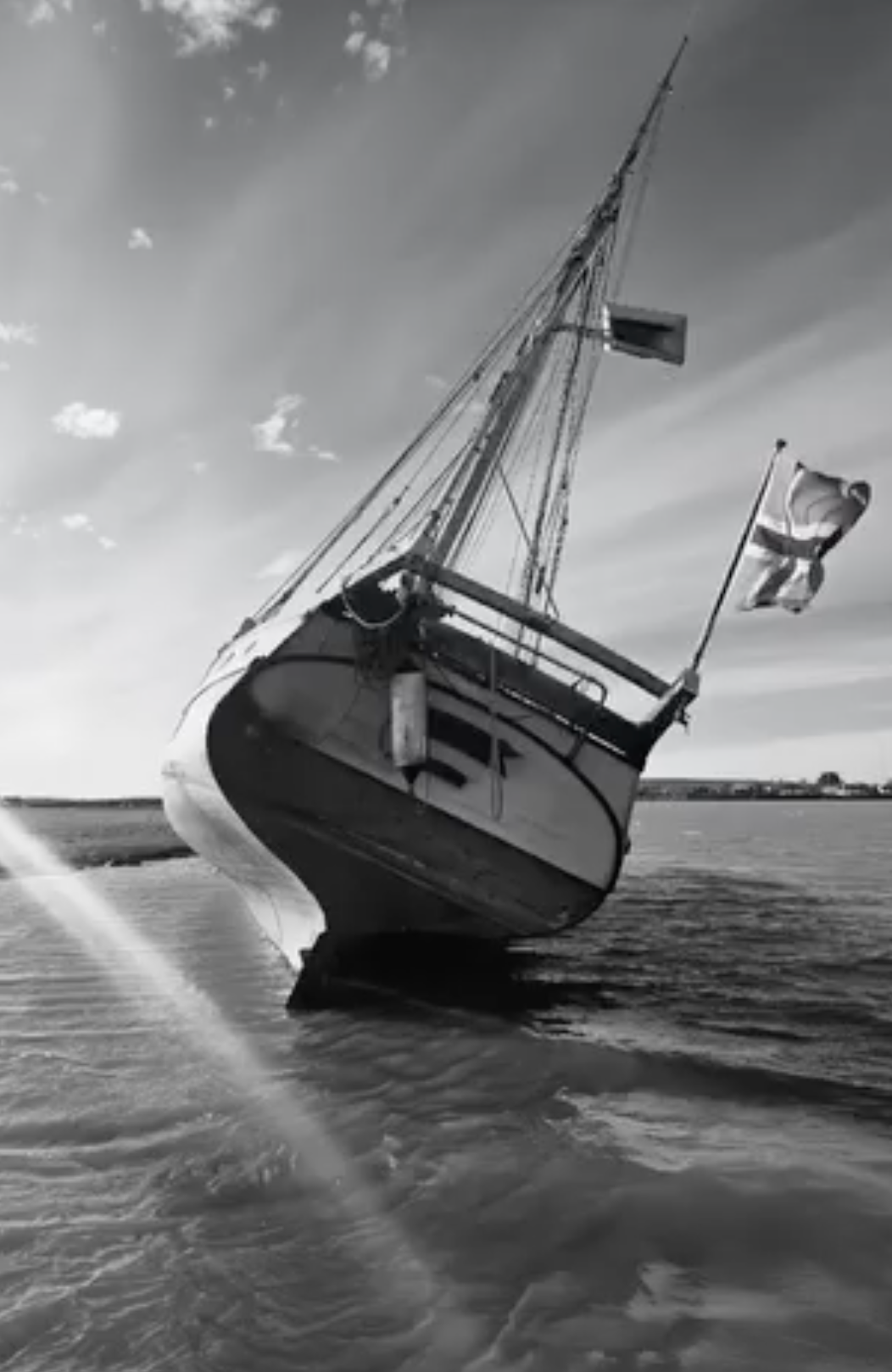
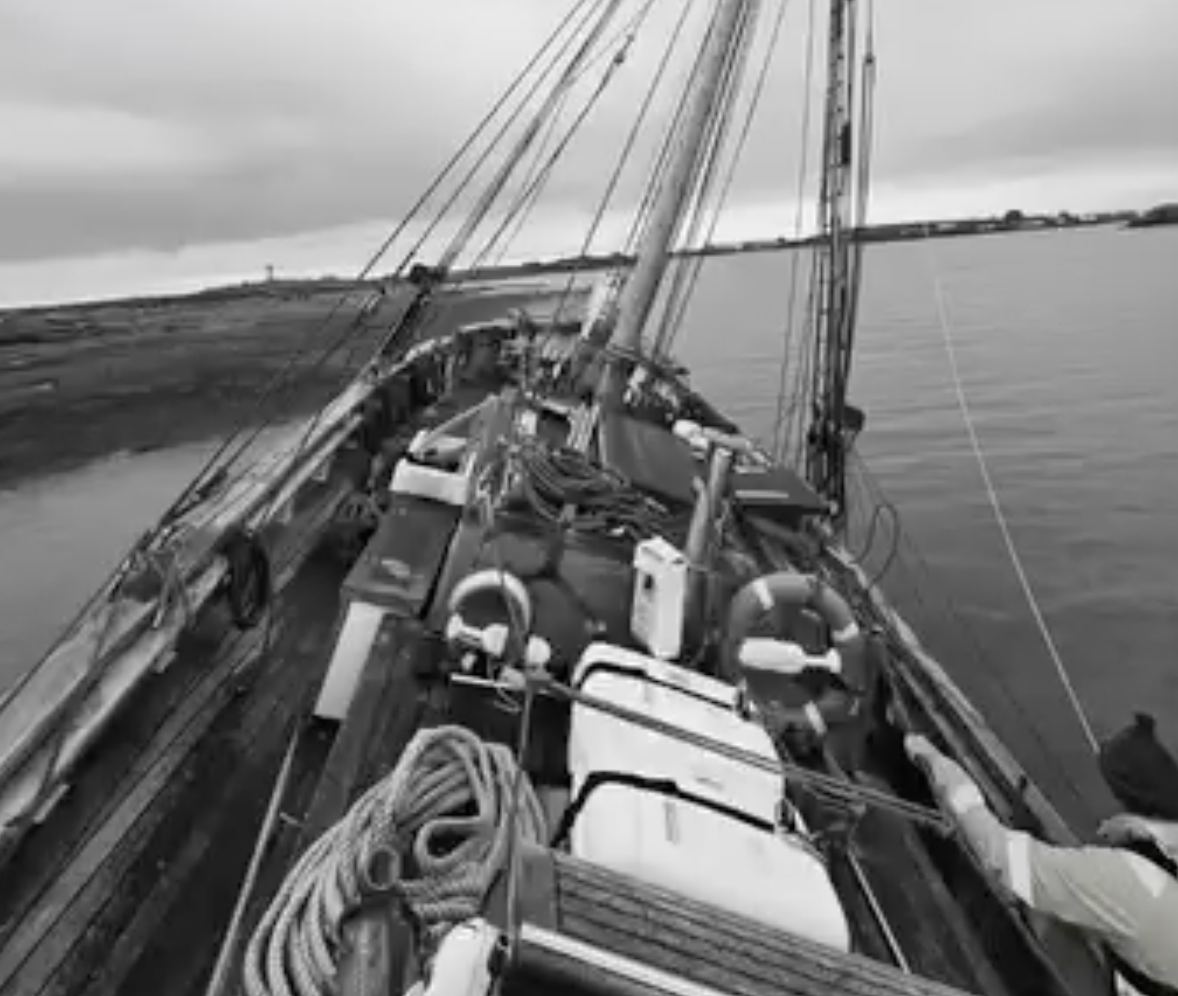
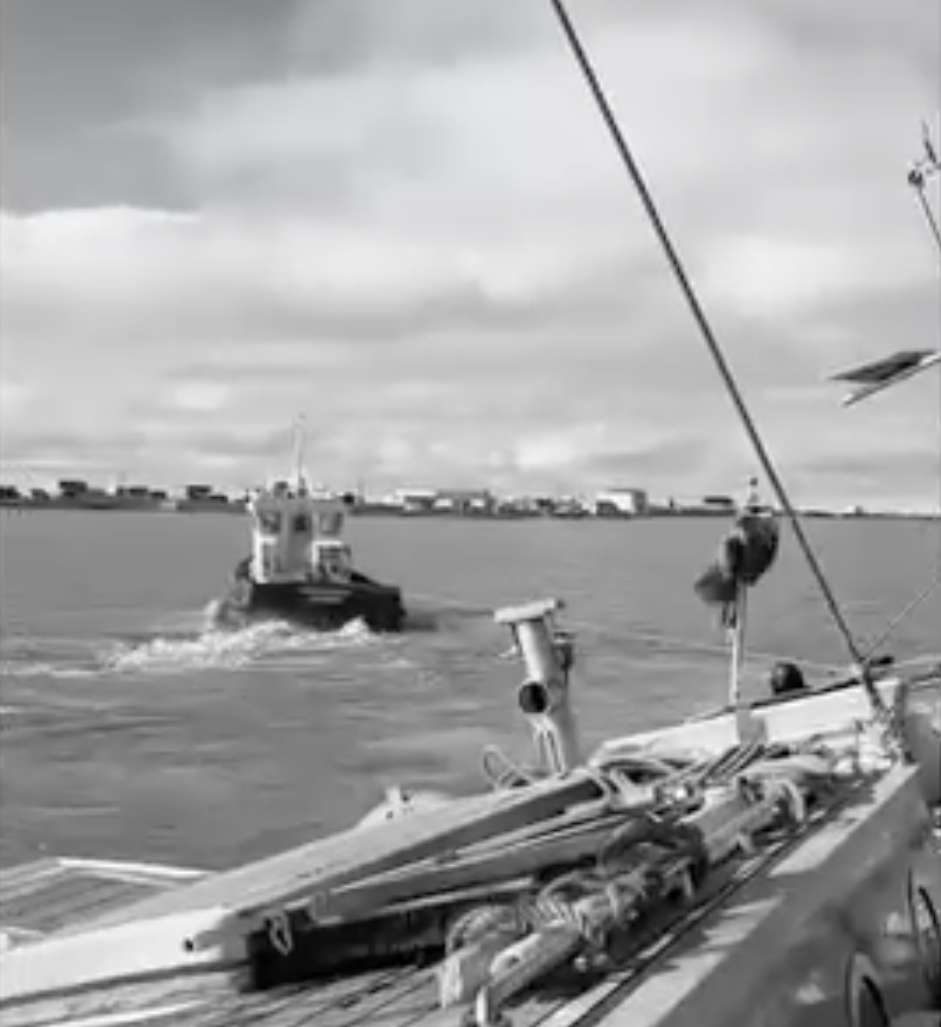
In Tuktoyaktuk, on Canada's Arctic coast, Alma's anchor dragged. A spring high tide washed her onto the ground, and she was stuck. A tug pulled her free, but the grounding damaged her propeller and stressed her rudder, breaking the steering ram.
"You don't go through the Northwest Passage without damage of some sort," Terje says.
The crew made repairs where they could in Alaska and kept going. "We've basically been limping for the last 3,000 miles," he says.
Photo Caption: Images from the grounding, courtesy of Amundsen Adventure.
Why Port Townsend
Stopping in Port Townsend was always part of the plan. Alma was due for haul-out and maintenance, and the Arctic had added a list of repairs. "We knew that Port Townsend is the place to be for wooden boats," Terje says.
Crew member Sarah Sjøgreen is no stranger to Port Townsend. A former tall ship deckhand, she trained for four years in a small Norwegian village to become a traditional ropemaker. She has spent more than 15 years in traditional rigging and ropemaking, teaching apprentices and writing books, articles and films about the craft. Festival-goers may remember her from the 2025 Wooden Boat Festival, where she ran the Ropemaking Tent and presented "Keeping the Old Crafts Alive in Norway."
The crew always planned to stop in Port Townsend, and Sarah knew who to call: sailmaker Sean Rankins, a friend of hers.
As Alma came out of the Northwest Passage and into the Bering Sea, Sarah got word to Sean that they were headed his way with a broken spar and a list of repairs. Sean took on the sail work and referred them to Port Townsend Shipwrights for the rest.
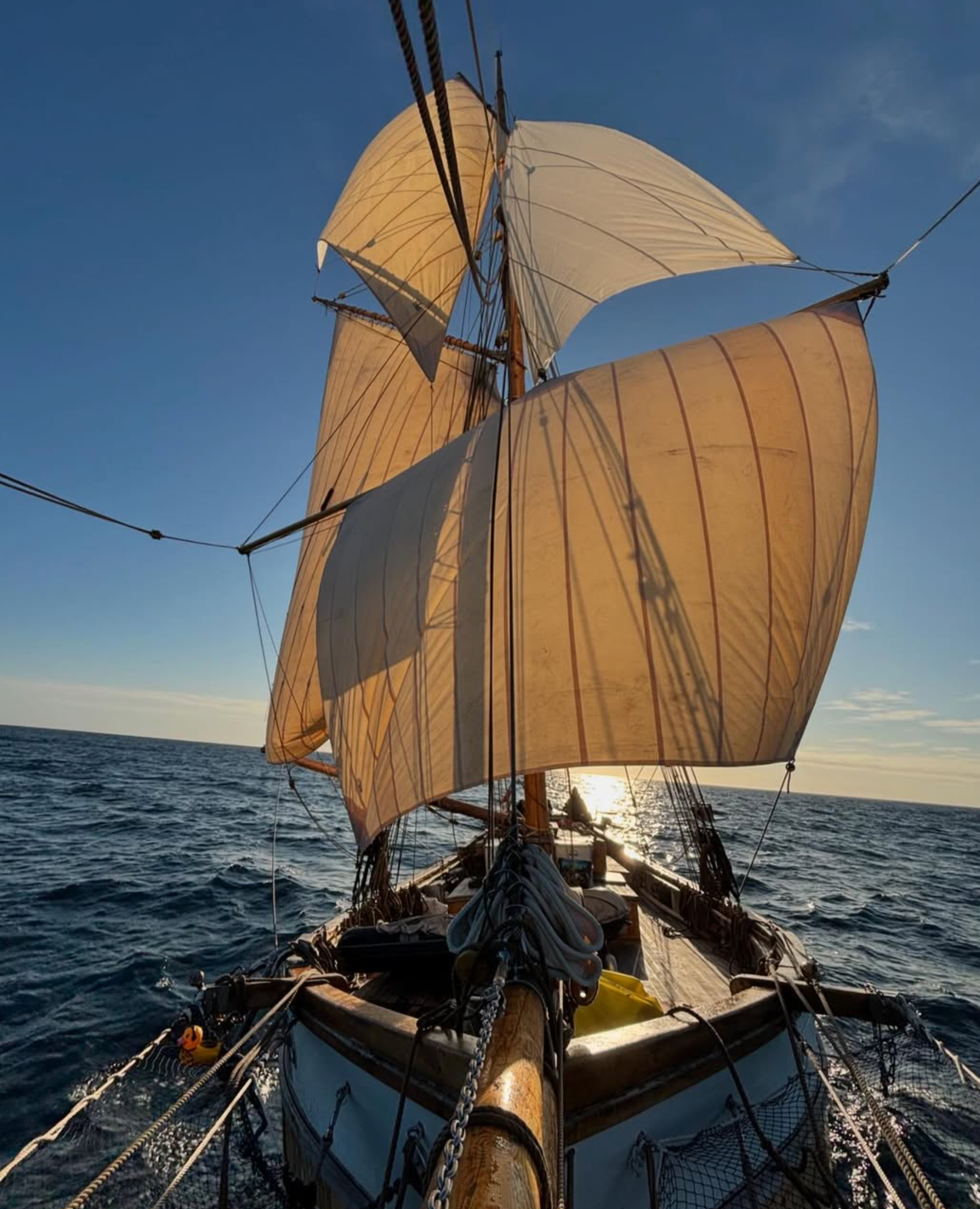
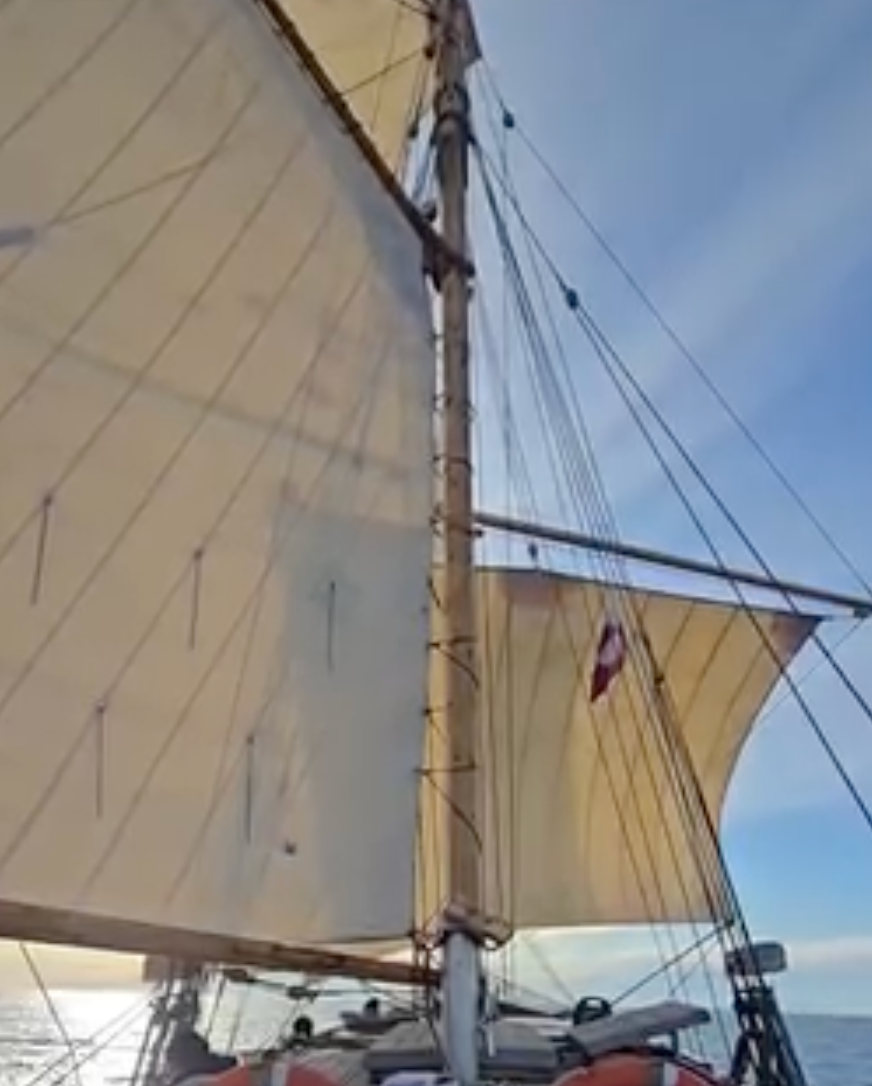
Sean did Alma's sail work while she was here. Her sails weren't new when Terje bought the boat, and the jib, the triangular sail at the bow, took the most wear and tear on the voyage. "Alma's sails were lightly built for coastal sailing, not for crossing to Greenland and through the Northwest Passage," says Sean. He was impressed they had held up so well.
Sean built a new, heavier jib made more for offshore sailing, finishing it with leather patches that protect a sail where it can chafe. He also repaired the old jib so the crew has a backup. He ran it through the machine to restitch the seams that had started to come apart, using a heavier thread.
Sean is a skilled sailmaker whose quality and craftsmanship we trust. When our own sail loft is at capacity, we're glad to refer customers to him. The crew already knew and trusted Sean, and that relationship counts for a lot. Thanks, Sean, for getting Alma's sails ready for the journey ahead.
Our own sail loft, Port Townsend Sails, specializes in sail repairs, upgrades, as well as building new sails for boats in the 30- to 50-foot range. We take on smaller and larger boats depending on the project. Our sailmakers are known for their quality and craftsmanship, from new sails to repairs. If you're planning a refit or a voyage of your own, stop by our sail loft during drop-in hours, 9 a.m. to 4 p.m. Tuesday through Thursday, or contact us to make an appointment!
Photo Caption: Images of the Alma's sails. Voyage photos courtesy of Amundsen Adventure.
Back in shape at the Shipwrights
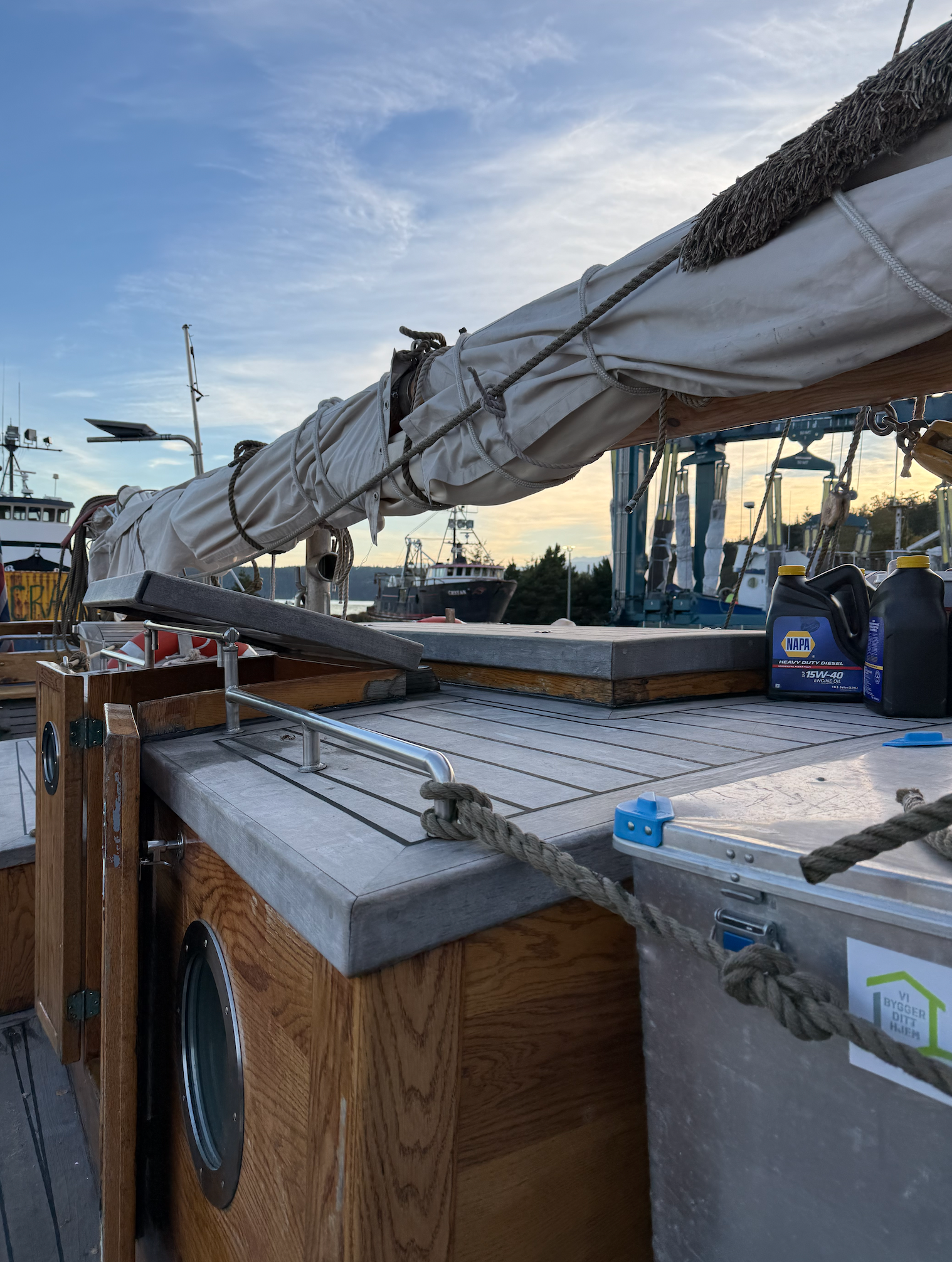
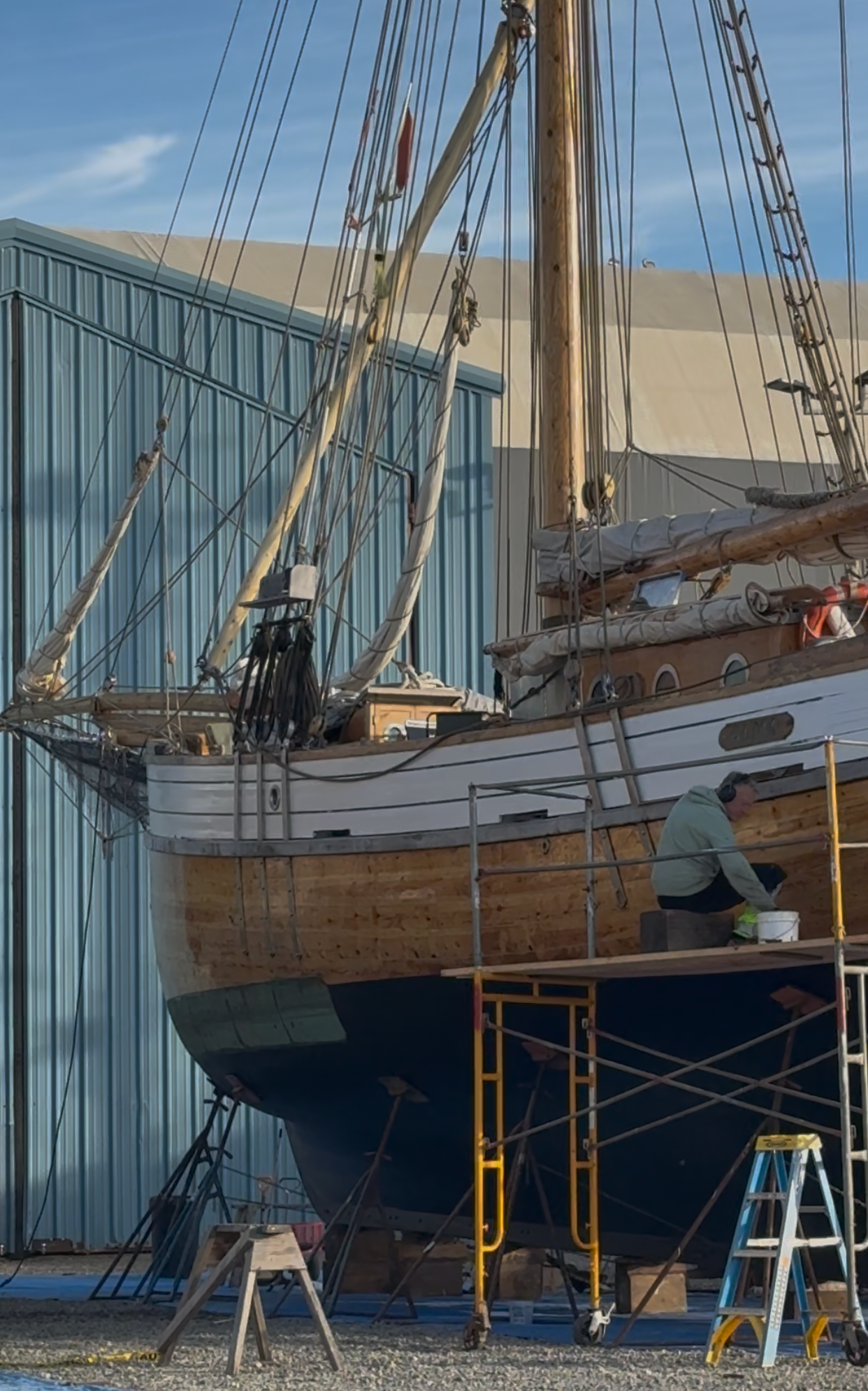
Alma had one week in the yard, and the Port Townsend Shipwrights schedule was already full. Partner Jeff Galey, who lines up new jobs, asked if there were any partners who could fit in a boat with a history like hers. Partner and job lead David "Griz" Griswold took it on. When he first saw the boat, Griz was excited to get to work on a traditional Norwegian wooden boat. "Going over the Northwest Passage in a wood boat with all the ice and everything else, that's a daunting task in any boat. Pretty brave."
Alma's next leg runs down the West Coast in late fall, when the summer high-pressure system gives way to one winter storm after another. For Griz, getting Alma back up and running was a matter of safety for the crew. "The West Coast of the United States is one of the roughest stretches of coast in the world," he says. "We felt an obligation that we needed to get them fixed up so they were safe."
Fitting her in meant moving people over from other jobs. Six or seven shipwrights were able to help work on Alma:
- Propeller: Alma has a feathering prop, with blades that turn edge-on to the water to cut drag when she's under sail. The team removed the hub and blades and sent them to Kruger & Sons Marine Propeller Specialists in Seattle for repair, then reinstalled them.
- Steering: The grounding broke the steering ram, and salt water ruined the helm pump, the pump at the wheel that drives the steering. Replacement parts for her Norwegian steering system would take months to arrive from the manufacturer. Instead, the team found a closely matching American helm pump and ordered special fittings from the East Coast to adapt it to Alma's metric plumbing.
- Bottom: They sanded and painted the bottom and replaced the zincs, metal blocks that wear away so the boat's underwater metal parts don't.
- Electrical: They reworked shore-power charging and the house bank, the lithium batteries that run the boat's systems (more below).
The crew of Alma pitched in too. On the way south through Canada, they found a tree, had a new yard made from it, the horizontal spar that holds her square sail, and installed it while they were here. Builder Harald Sørensen, who sails as part of the crew, handled wood repairs himself while the Shipwrights assisted with other repairs on the ship.
Tracking down parts was one of the biggest challenges. Since COVID, Griz says, many suppliers no longer keep parts on their shelves.
For Terje, having it all done in one yard made the difference. "We very much appreciate that they can do everything," he says. "It's very nice to have everything in one place."
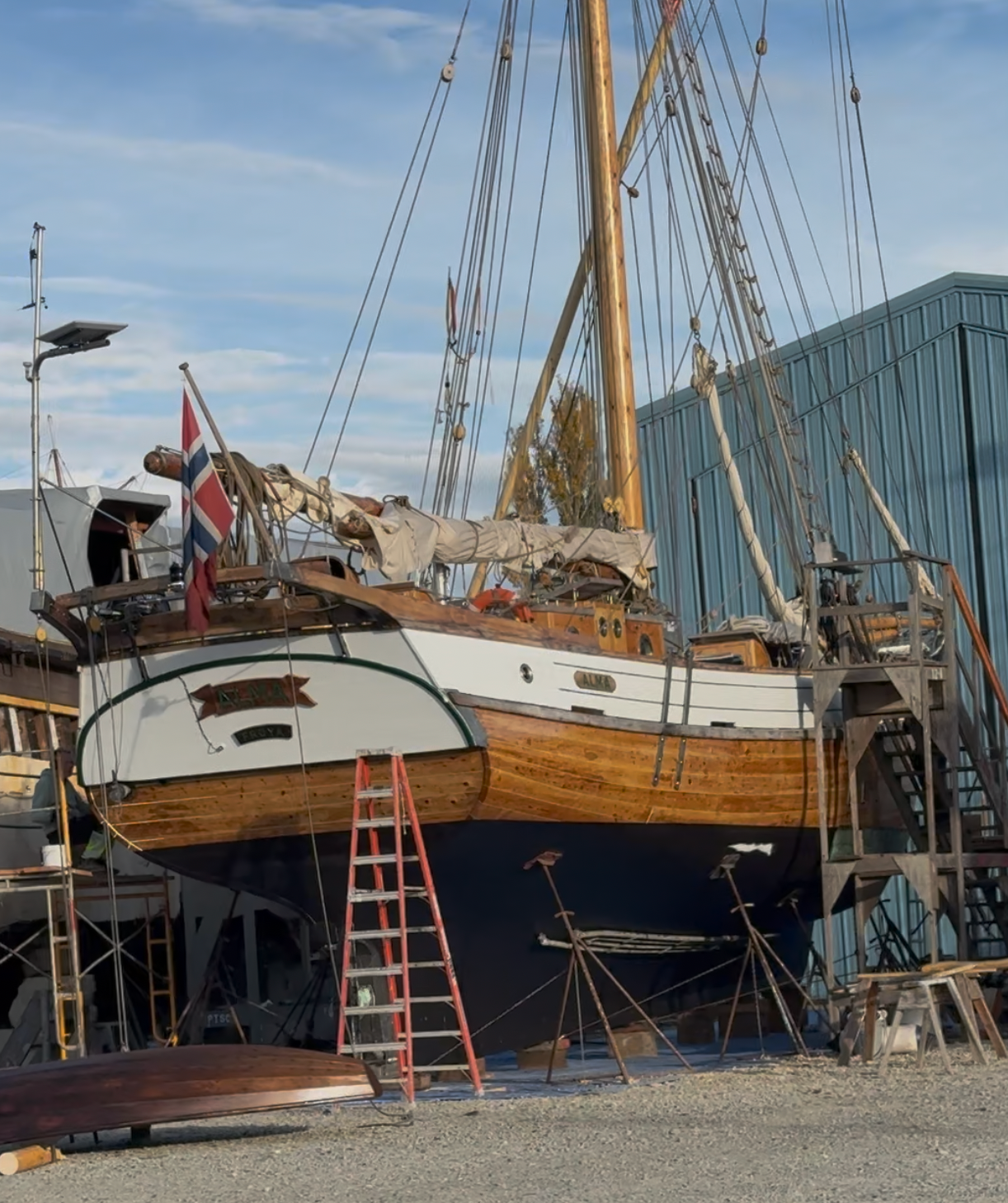
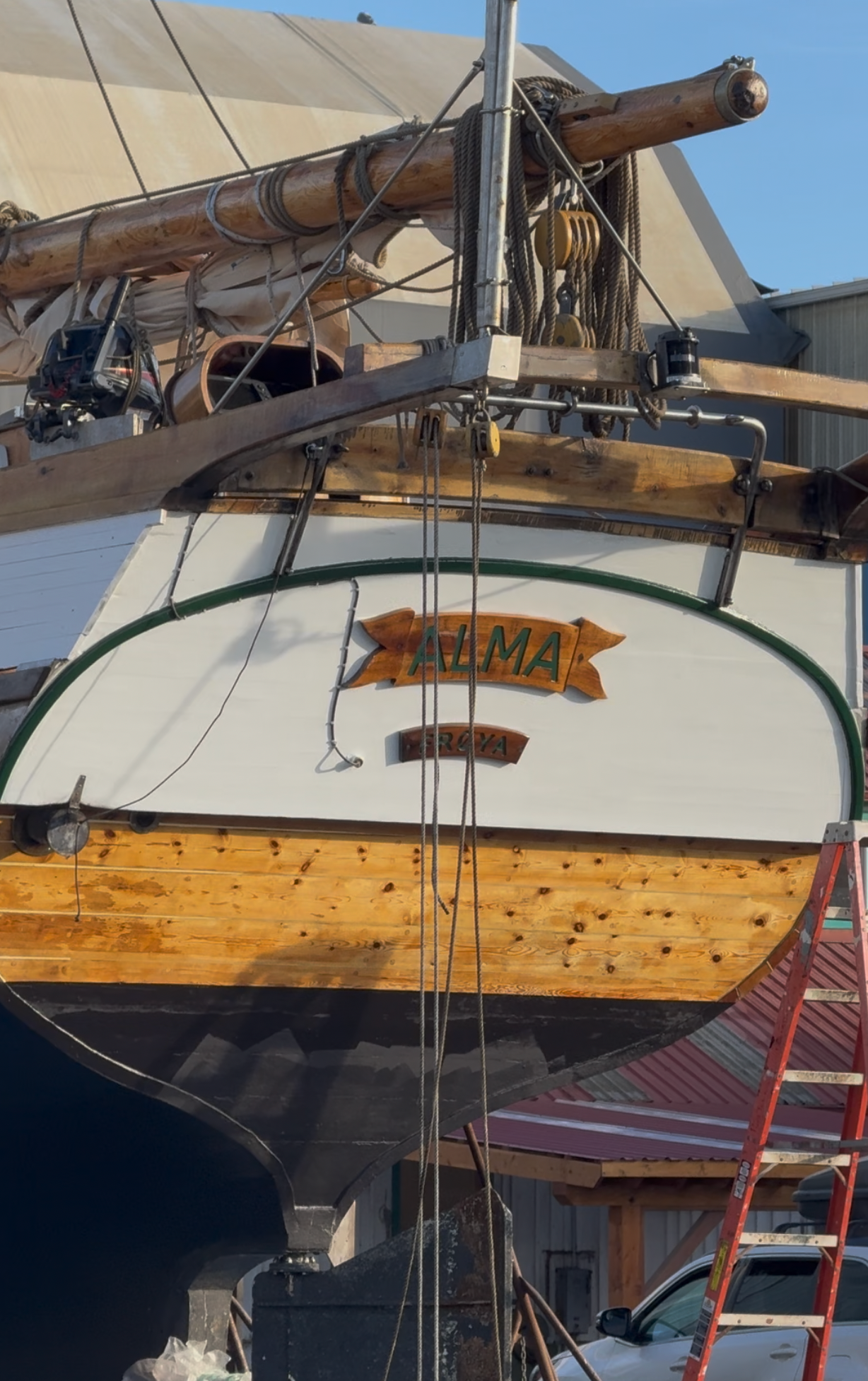
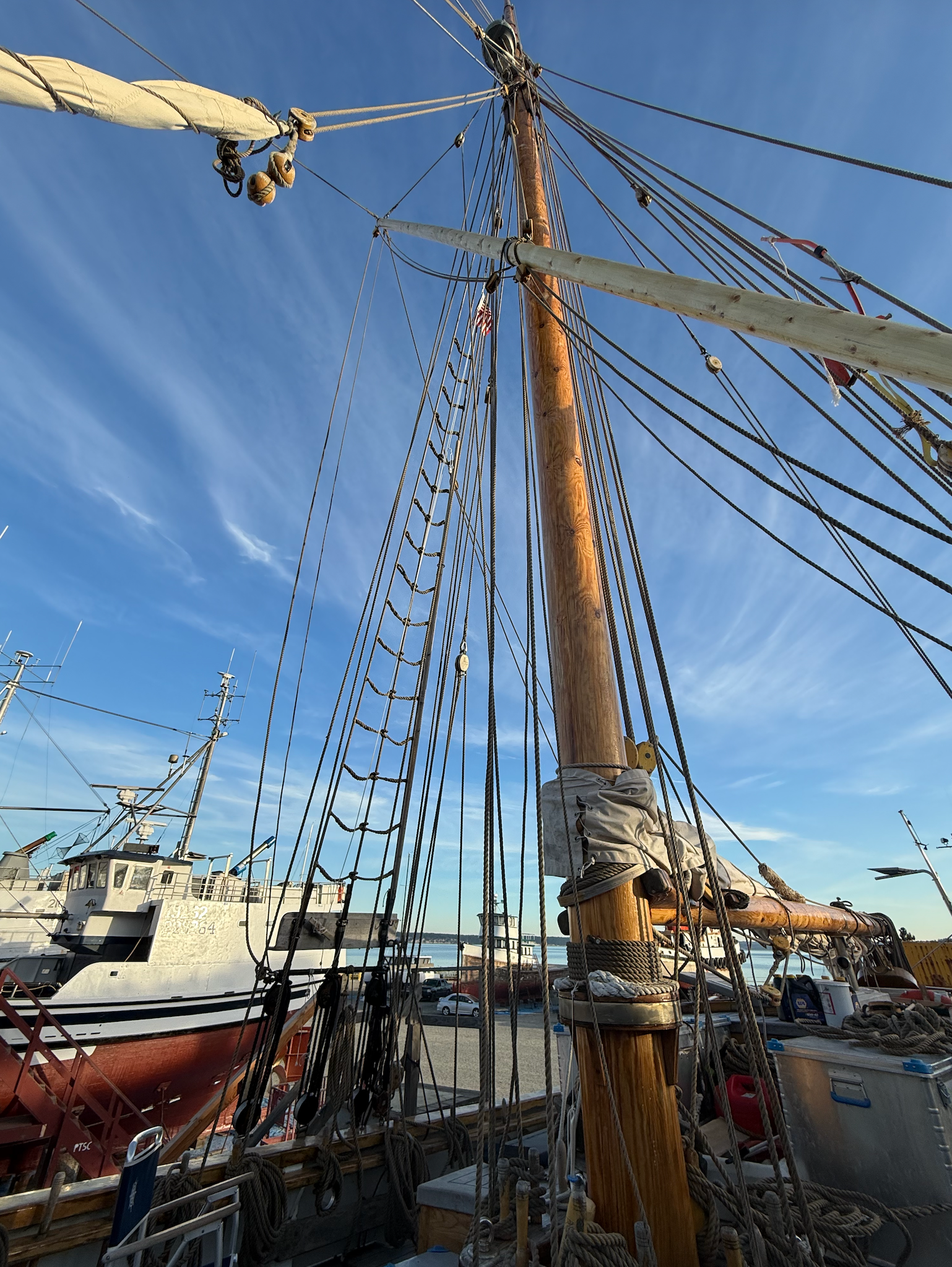
Photo Caption: Alma getting work done at Port Townsend Shipwrights.
Powering up a European boat
One of the first puzzles was simply plugging Alma in. European boats run on 230-volt, 50-hertz power, while North American shore power is 60 hertz. Alma's main Victron charger/inverter is an older model that can't accept North American power.
Electrician and electronics specialist Chris Iroz got the crew charging right away. The original plan was to hook her up to 240-volt, three-phase shore power, but her older Victron Quattro can't accept anything above 55 hertz. So Chris took the boat's separate 16-amp, 230-volt charger, fused it, and fed it North American 240-volt power to keep the batteries topped up. Then he ordered a North American version of their charger for a permanent fix.
The bigger fix was in the house bank. The batteries wouldn't charge past 70%, and Chris traced the problem to the wiring. The backup charger was wired to a single 12-volt battery in the 24-volt bank. And the boat's main positive and negative cables were both connected to the same pair, so everything aboard drew from one side of the bank and worked those batteries harder than the rest.
Chris corrected the charger wiring, moved the positive and negative connections to opposite sides of the bank, then manually balanced every battery in the bank. Now Alma can charge all the way to 100%. They didn't have time to wait for the parts, so Chris gave the crew a plan to finish the job in San Francisco: add battery balancers, devices that keep every battery's charge even.
The Arctic is hard on batteries, but Alma came prepared. "If you're going to be sailing in northern latitudes, you really have to have self-heating batteries," Chris says. "Cold is the killer of all things lithium." Without that protection, he explained, cold can permanently damage a lithium battery.
Getting them on their way
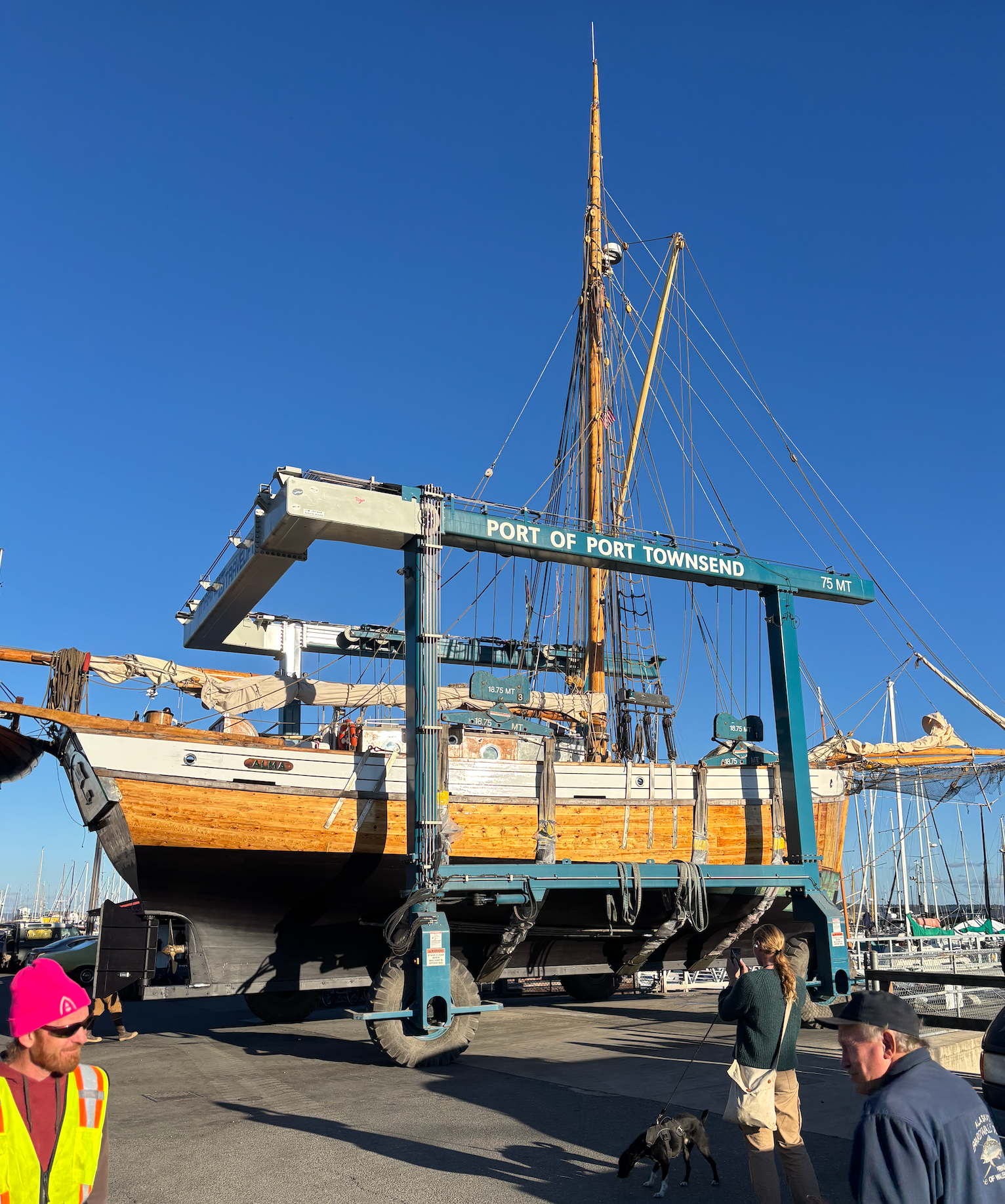
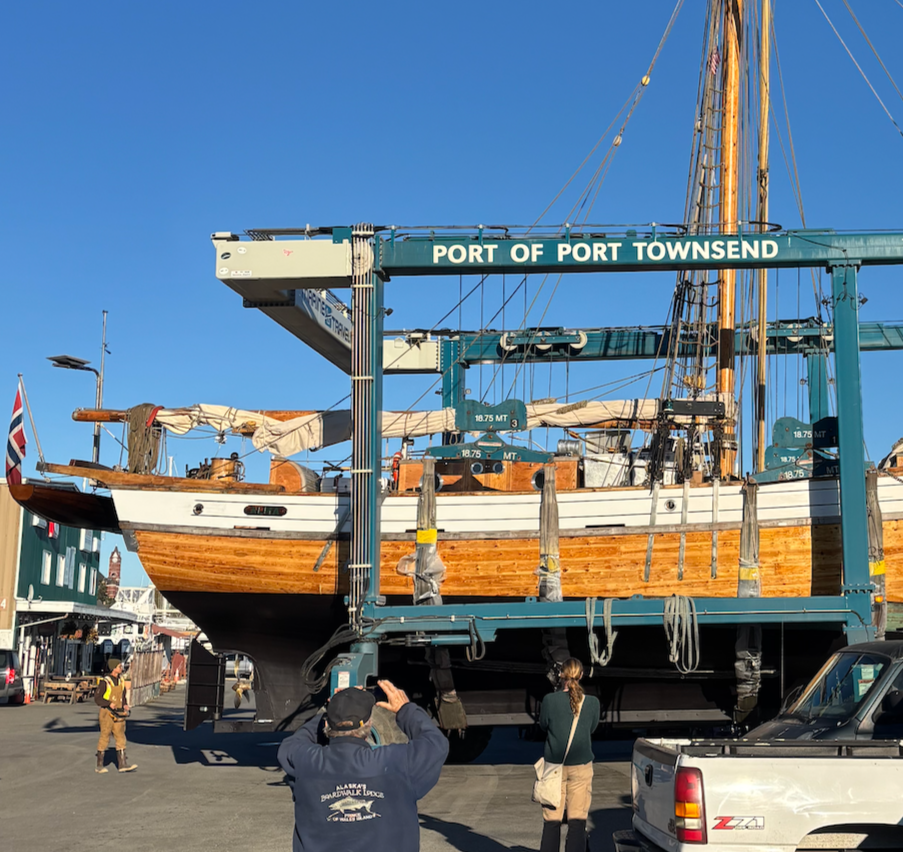
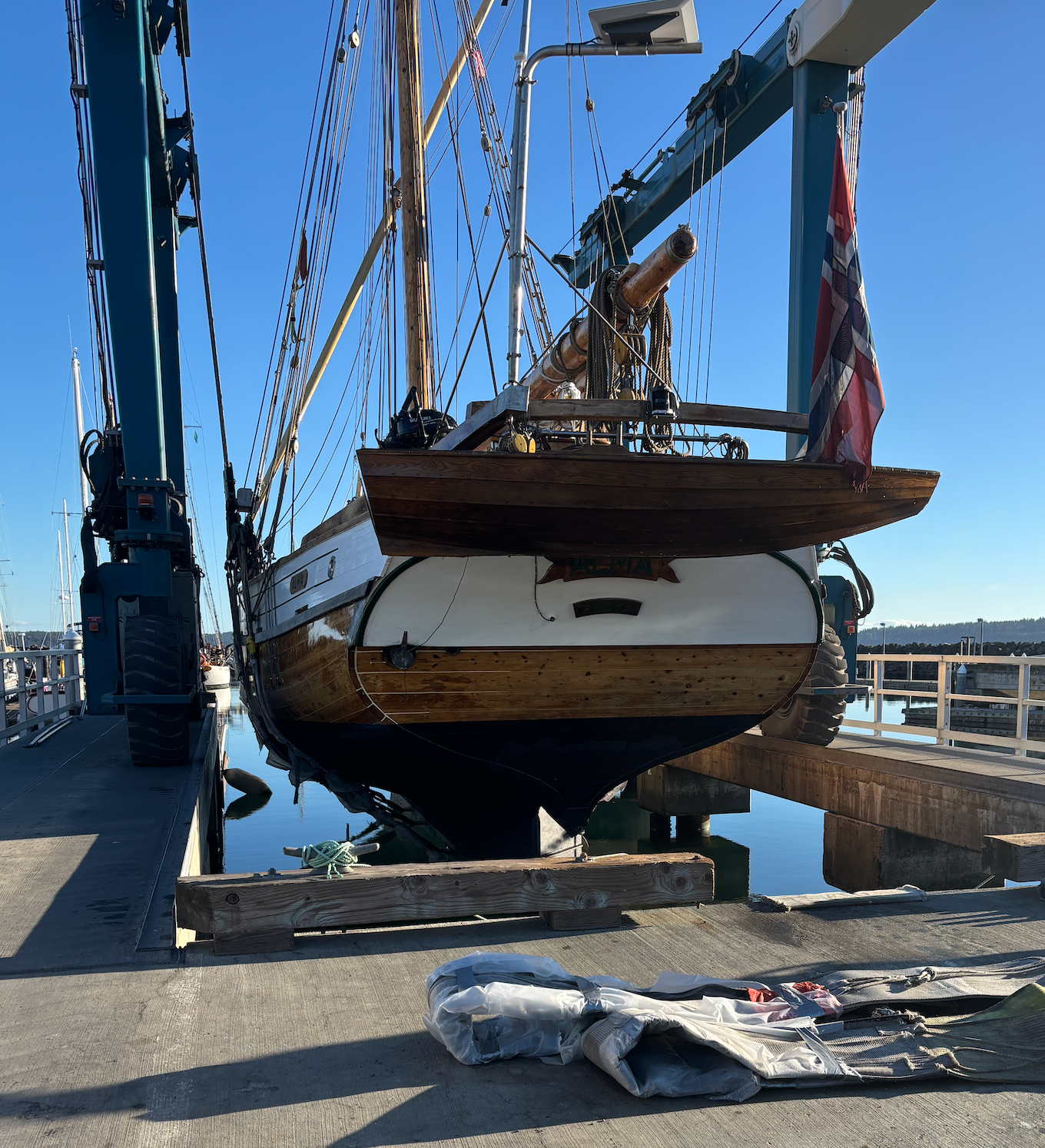
Most of the steering parts arrived on Wednesday, October 21. The last ones came in on the morning of Friday, October 23, just hours before Alma went back in the water. The crew was still putting on the propeller as the travel lift, the giant rolling hoist that carries boats in and out of the water, rolled over the boat. "It came down to the wire!" Griz says.
For Griz, the reward was helping a crew in a tight spot, with few options and little time. "To really jump in there, get the work done, get them on their way in a timely fashion, it really feels good," he says. "We provide such value to the sailing and boating community."
Visits like this are rare. European boats come through the yard often, Griz says, but usually because someone in the US bought one overseas and had it shipped here. "To have a European crew come over on this trip is kind of fun," he says. "A traditional wooden boat with a gaff rig, sailed all the way from Norway, is something you don't see very often." A gaff rig sets a four-sided mainsail from a spar called a gaff, a style that goes back centuries.
Photo Caption: Alma getting relaunched after her work at Port Townsend Shipwrights.
What's next for Alma
Alma motored out of Port Townsend on Saturday, October 24, 2026, bound for San Francisco with a crew of four. Terje is scheduled to give a talk about the voyage at the Norwegian club there on November 5 and has been invited to visit the Norwegian Consulate.
From San Francisco, his son takes over as skipper for the run through the Panama Canal to the Bahamas. Then she'll sail to New York, Newfoundland and Greenland, doing some charter work along the way, before heading home to Norway.
Terje's advice for anyone with a big dream is simple. "People should not be afraid of following their dreams. Just go ahead and do it. Don't think so much. Most times it will be okay."
Fair winds, Alma. Follow her journey and learn about her expeditions at Amundsen Adventure.
Photos courtesy of Amundsen Adventure.