Isswat: Restoring a Boat Built to Work
Restoring a Boat Built to Work
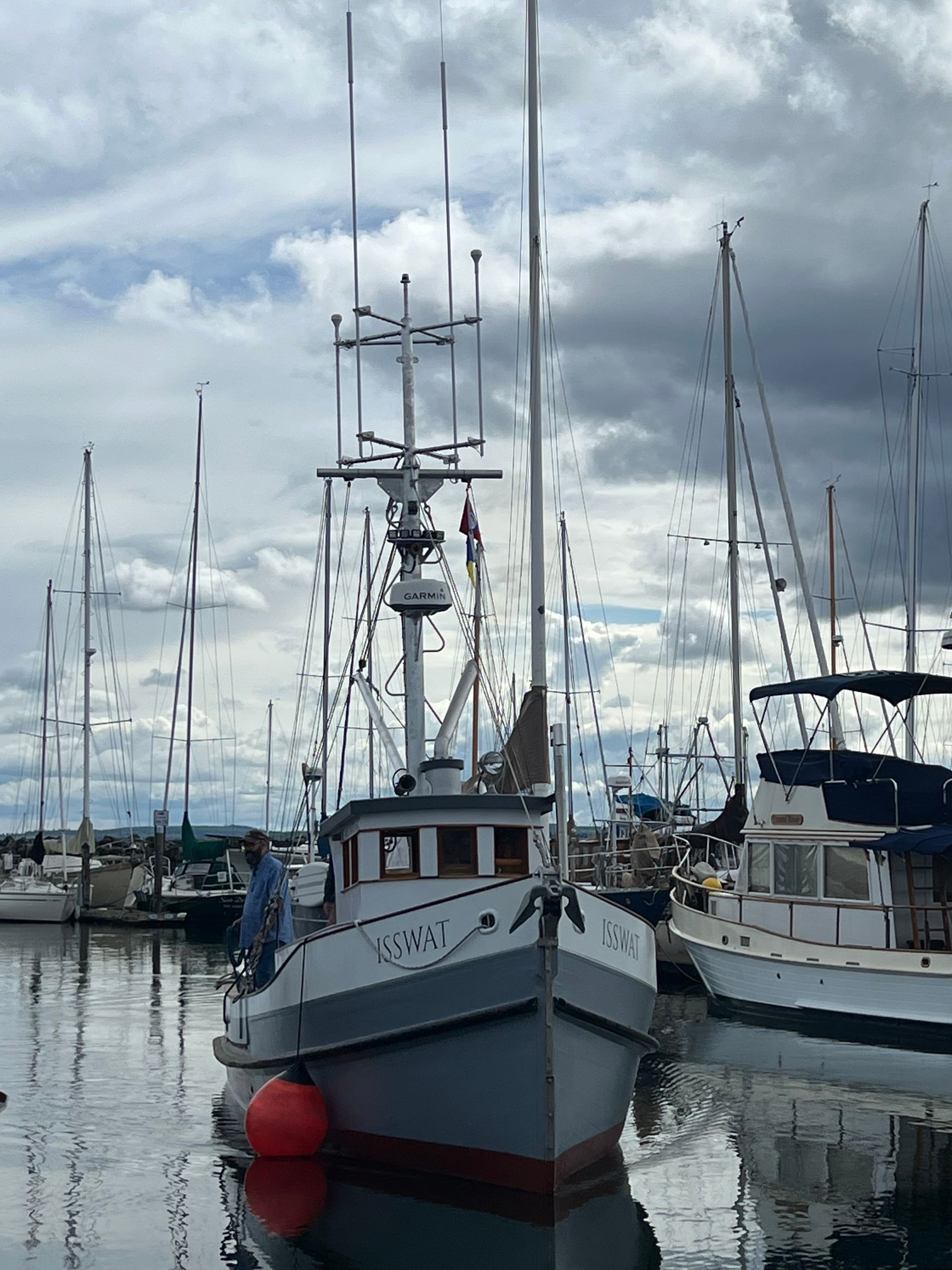
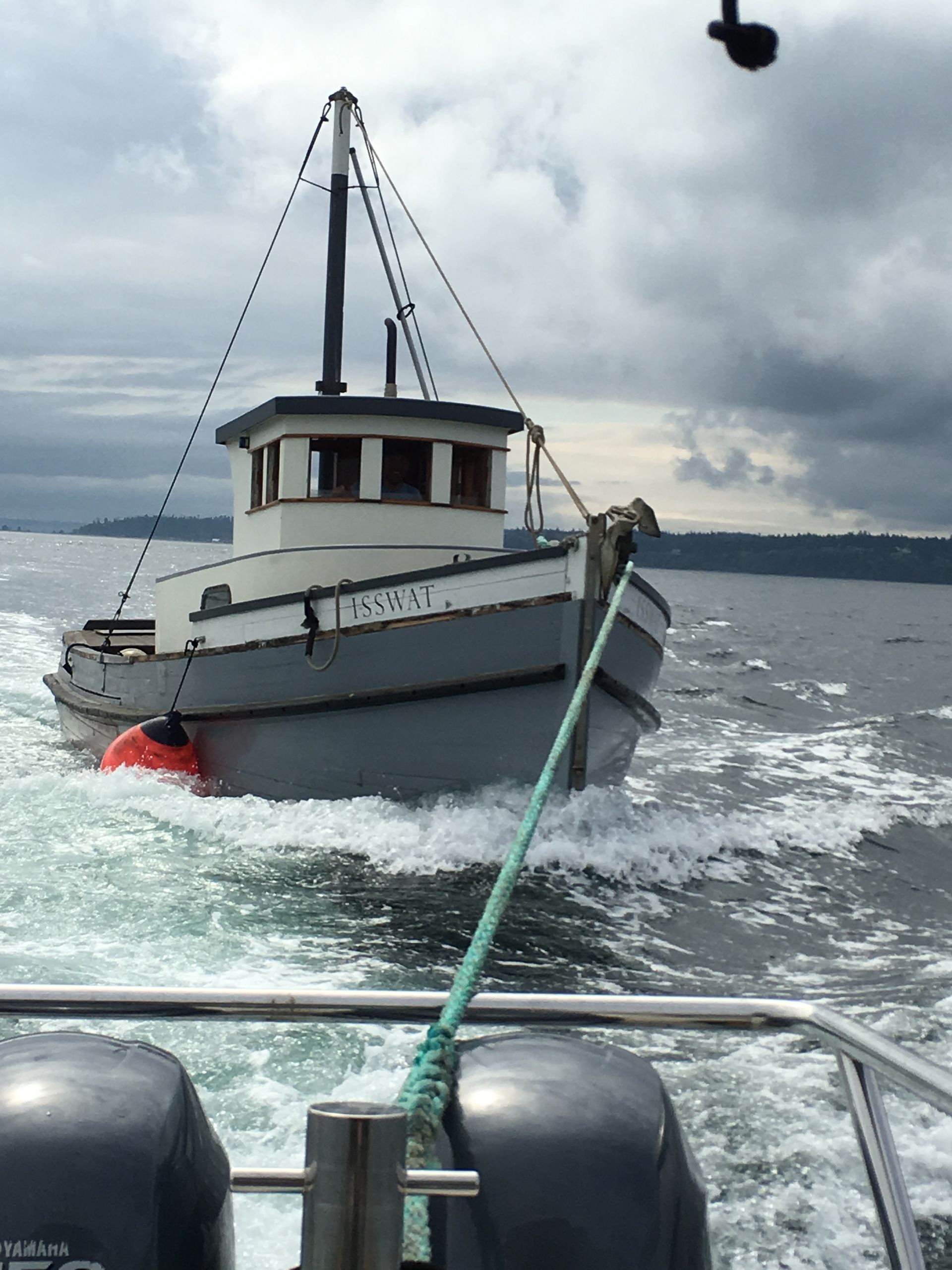
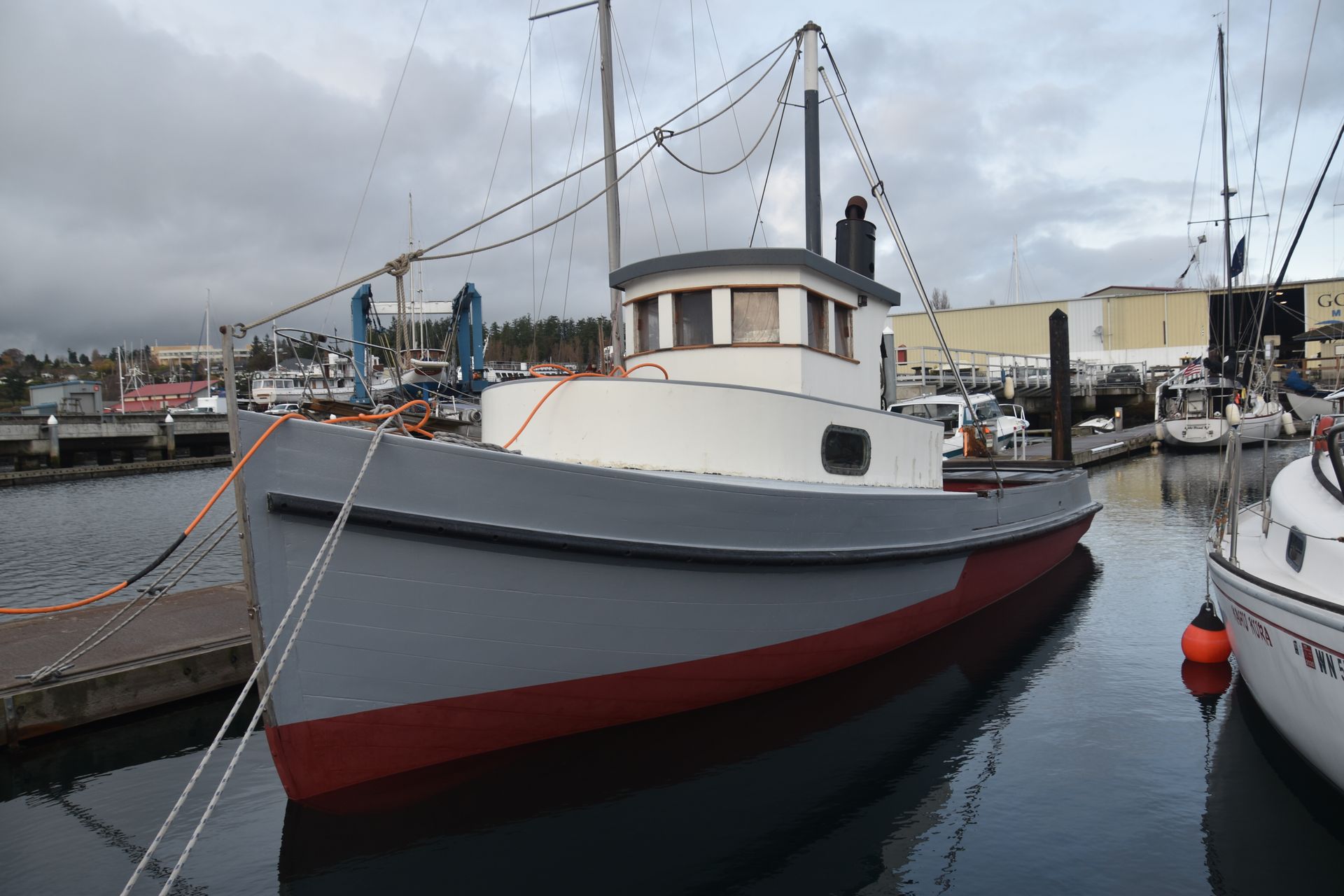
Built around 1948 in Whiskey Cove on Pennock Island near Ketchikan, Isswat was built to work. The 32-foot wooden boat spent her early years as a salmon troller and gillnetter, and she also worked at a logging camp. After coming south to Washington around 1970, she continued working on the water, trolling off the coast and serving as a tug during the off-season.
Her working life eventually took her to Oregon, where she was reportedly used as a crabber, before she returned to Washington in the 1990s. At one point, Isswat was nearly sold for scrap. Her fishing gear was removed, and the boat that had spent decades earning her keep on the water became, for a time, a pleasure boat.
Over the years, she passed through the hands of several owners in the Pacific Northwest, including several with Port Townsend connections. Eventually, in 2018, she came to Jeff—the wooden boat he had always told himself he would own someday.
“I had always told myself I would do one wooden boat. At 32 feet, Isswat felt like a manageable size, but her history is really what drew me in.”
Boats like
Isswat were once common along the Northwest coast. Today, relatively few remain. Jeff wanted to see what he could do with one.
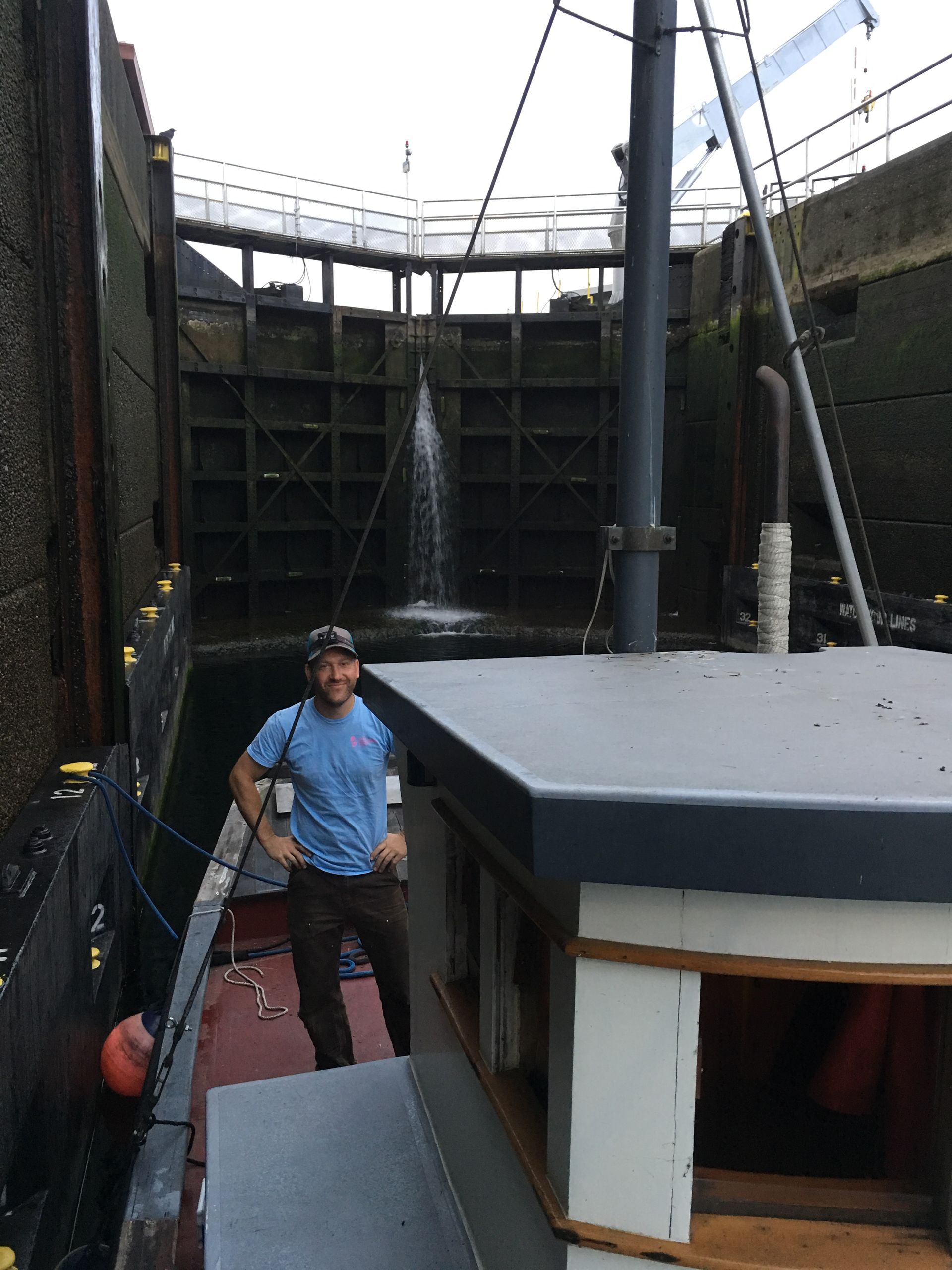
A Boat That Needed Almost Everything
Jeff hauled Isswat out for the first time in 2018. He already knew he was taking on a major project. In fact, he admits he did the one thing you’re generally not supposed to do when buying a wooden boat: he bought her without a survey.
“I knew it was going to be a lot of work, and that I’d probably be working on everything.”
During that first haulout, Jeff replaced all of the sister frames, using offcuts from the Western Flyer, and replaced a number of planks around the waterline. He also rebuilt the foredeck. Isswat returned to the water in 2019.
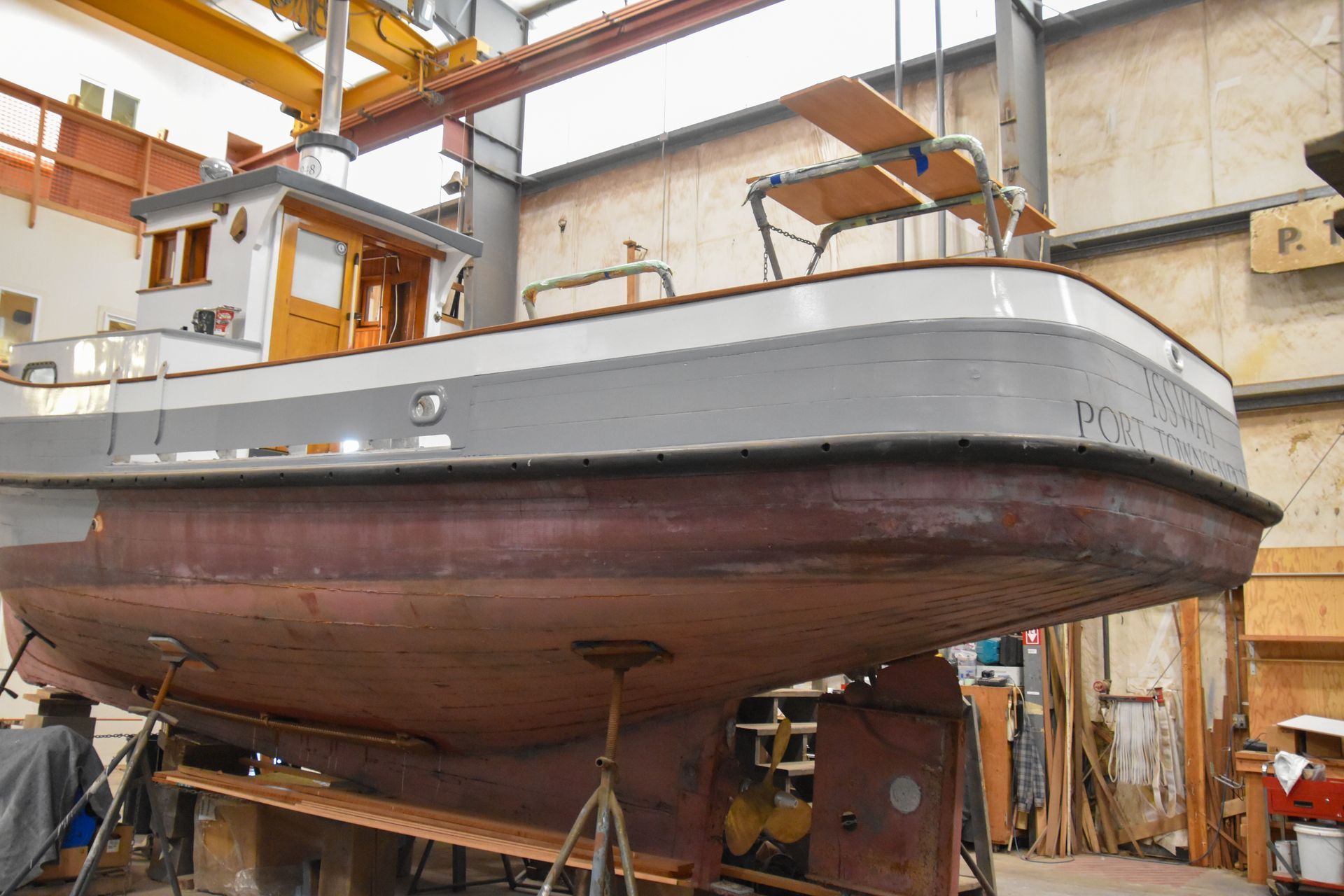
A couple of years later, she came out again. This time, Jeff installed a new sternpost and new fuel tanks, made modifications to the rudder, and replaced the aft deck and aft break beam. After that project, Isswat returned to the water and made an appearance at the Wooden Boat Festival.
But the biggest project was still ahead.
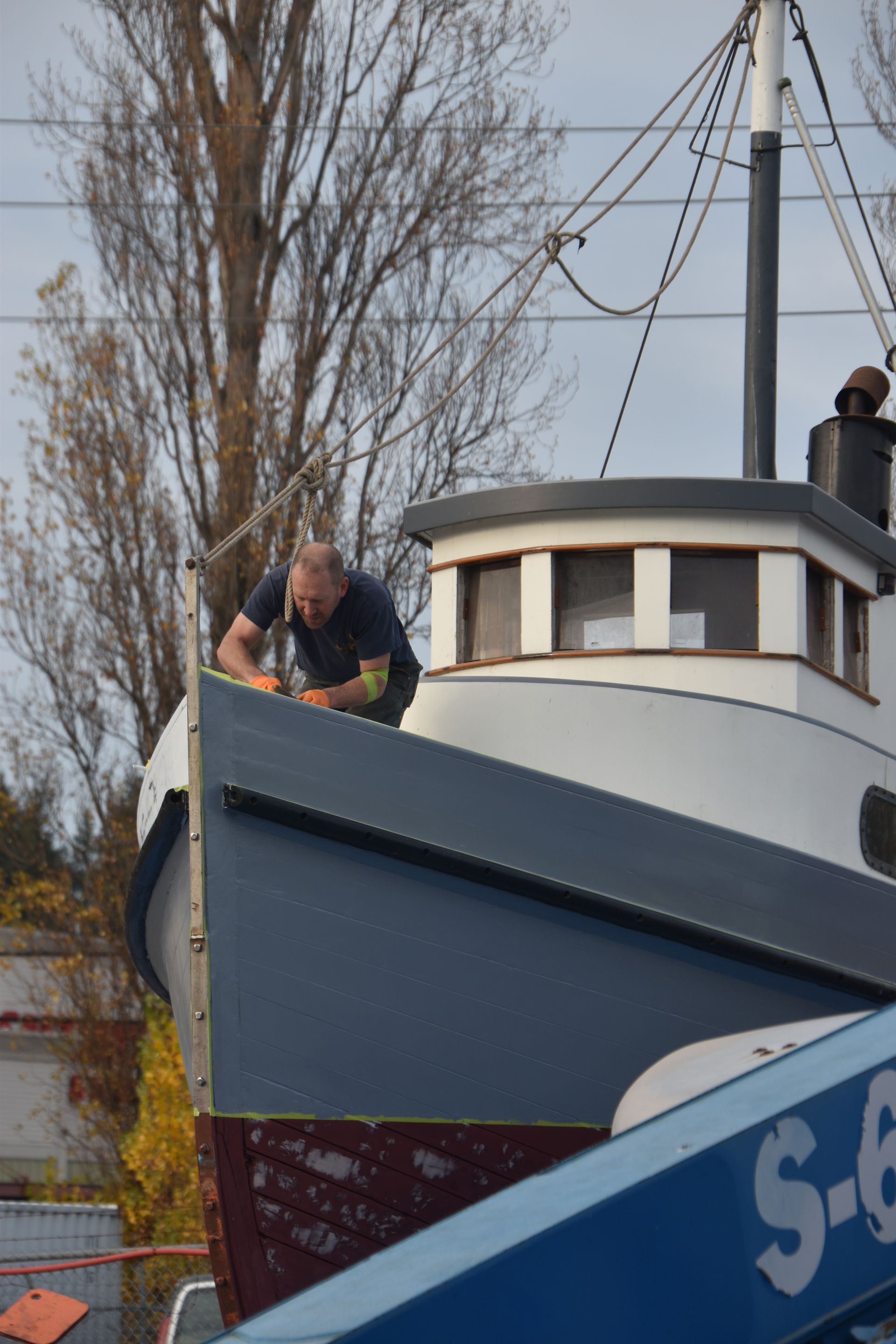
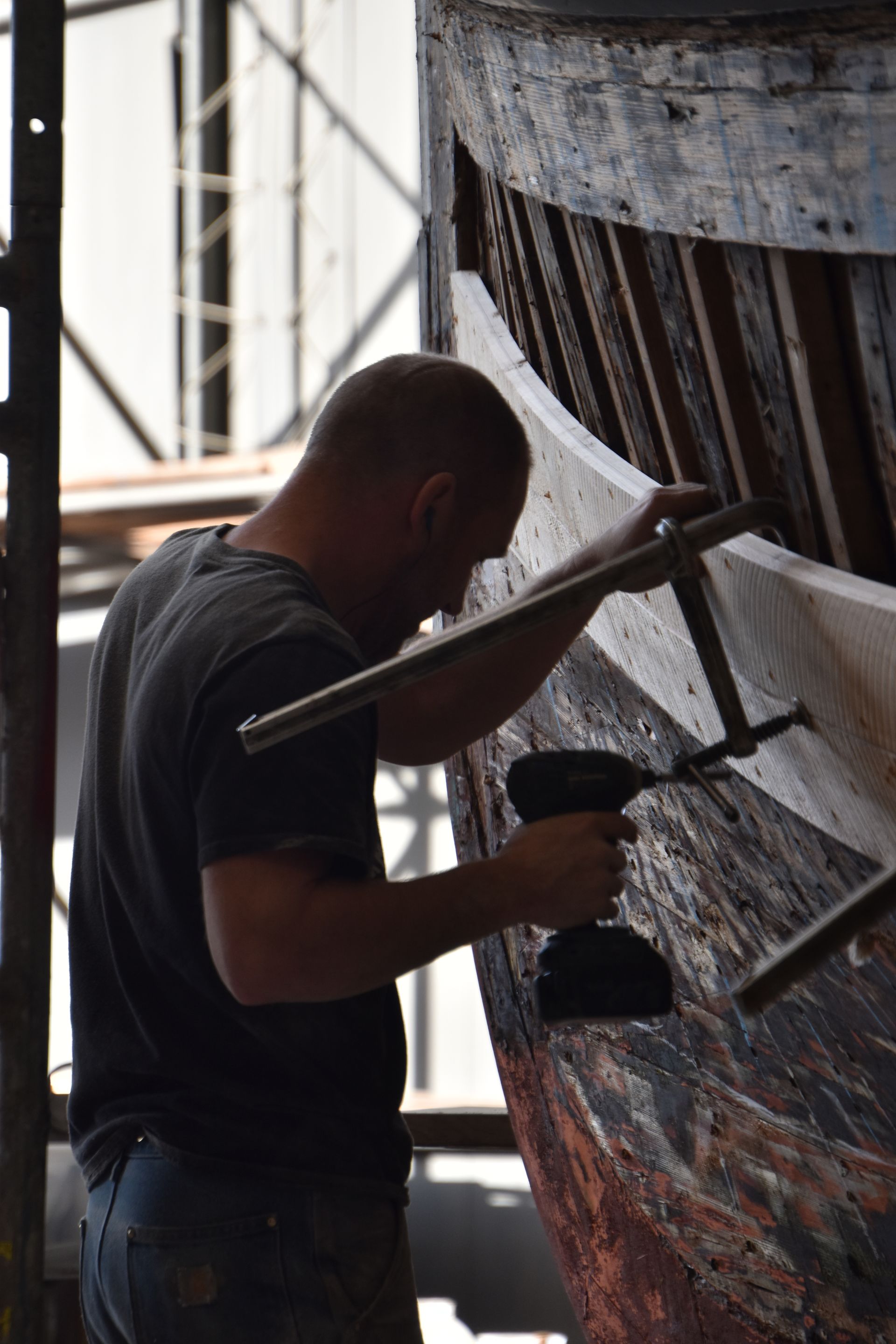
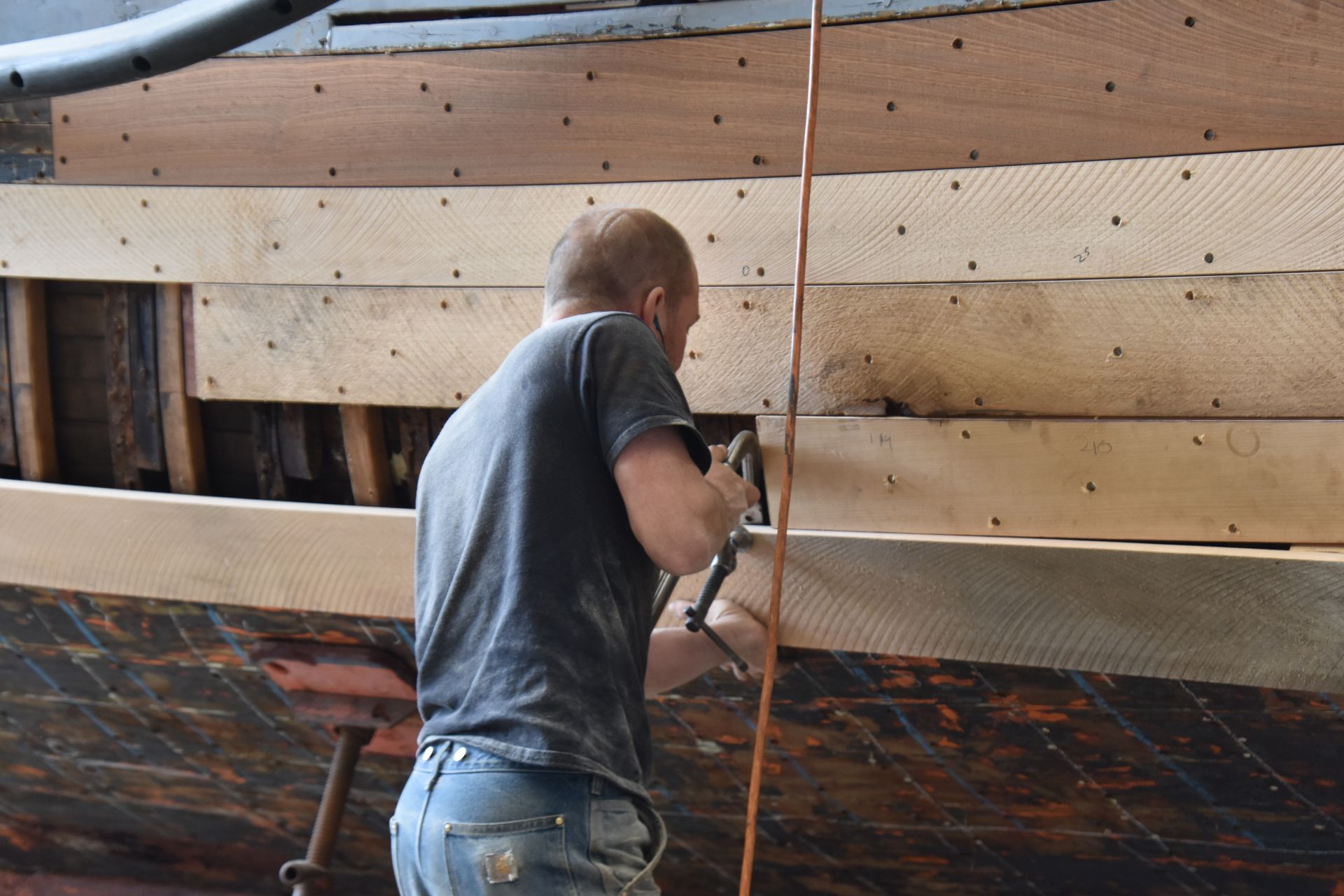
Nearly Everything, Rebuilt
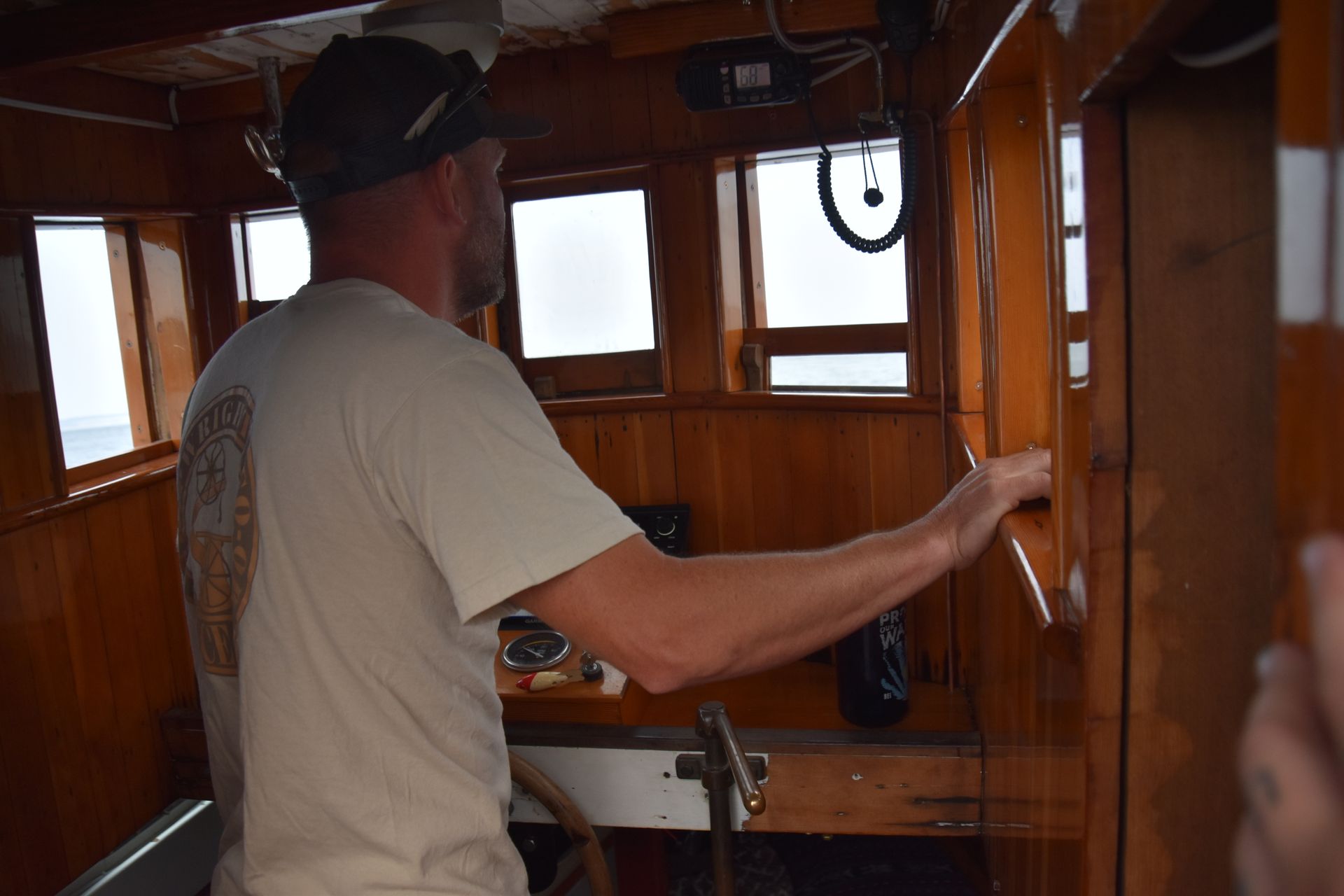
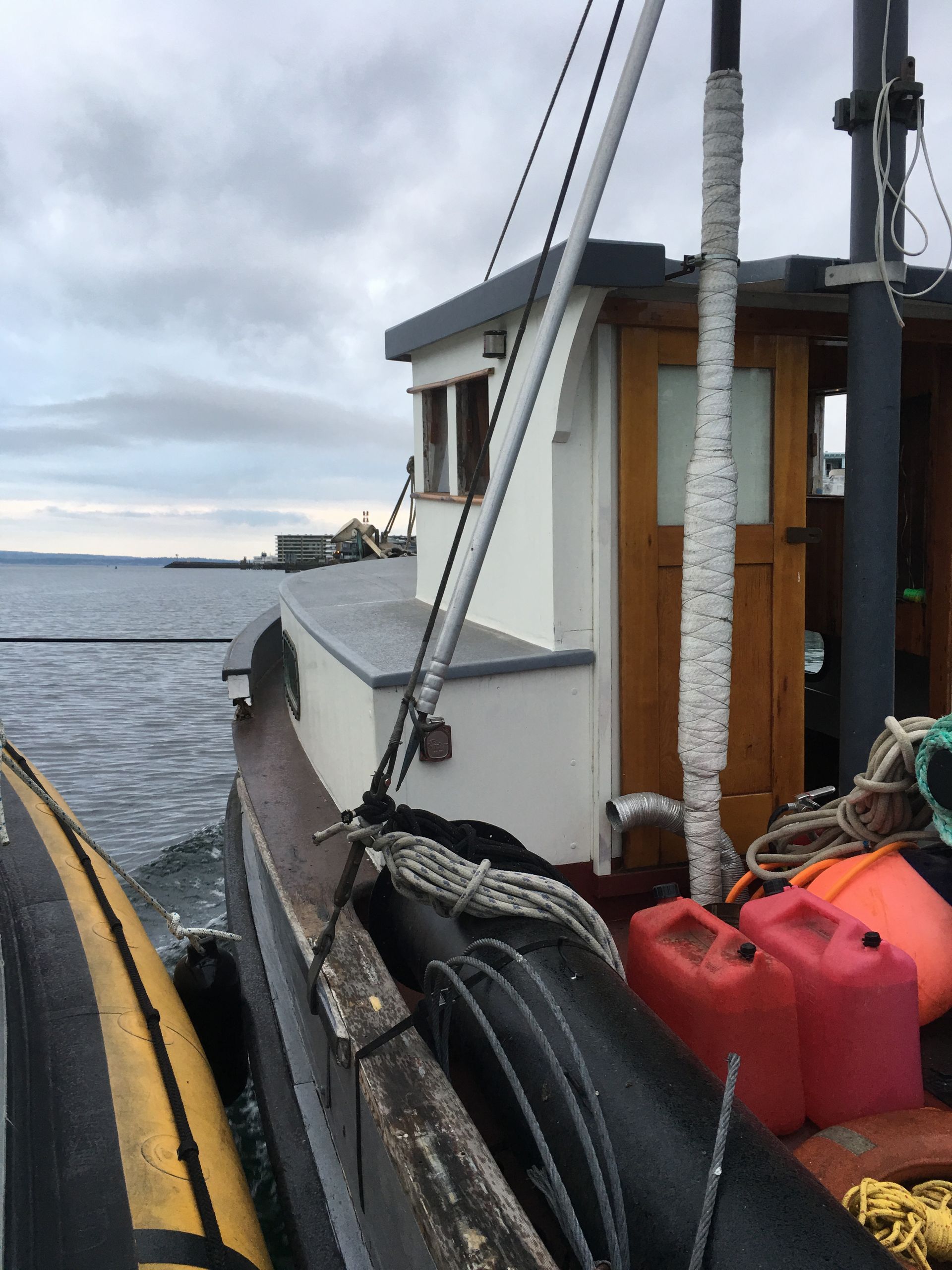
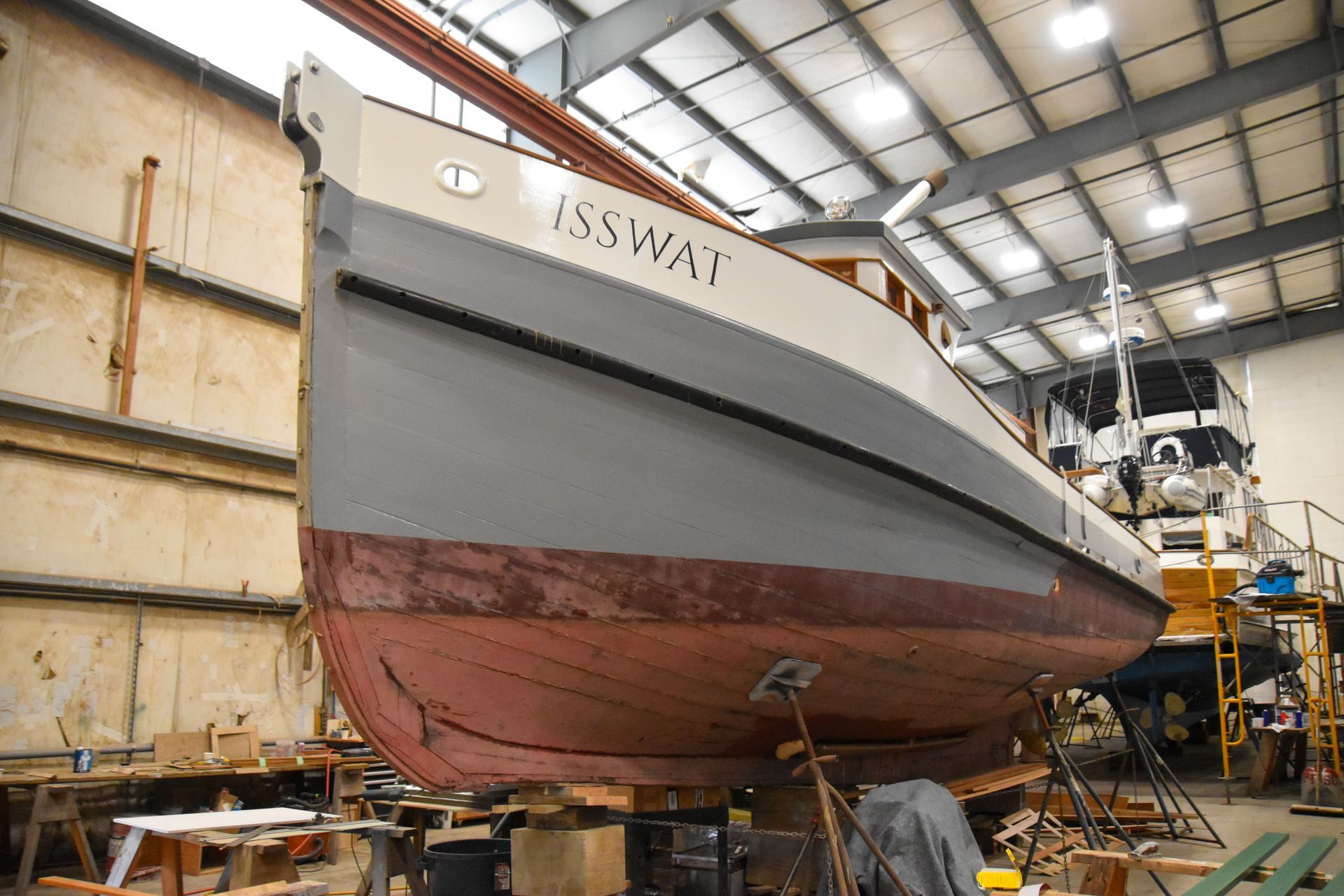
In 2023, Jeff hauled Isswat once again. What was expected to be a substantial project turned into roughly a year and three months out of the water. During that time, Jeff replaced the wheelhouse deck and all of the framing beneath it. He rebuilt the bulwarks, replaced the engine, redid the electrical system, and rebuilt the interior, including the interior structure and bulkheads. “Basically, I worked on nearly everything,” Jeff says. He built and installed a new mast and boom and replaced six planks in the stern.
Most of the work was done by Jeff himself. He had plenty of conversations along the way—with his business partners and others he trusted—about how to approach different parts of the project. But the actual wiring, welding, and woodwork were largely his. “When it’s your own boat, you’re responsible for all the decisions. With a customer’s boat, a shipwright can explain the options, provide information, and help the owner make an informed choice. But with your own boat, there’s no one else to make the final call. It’s on you.”
But, as Jeff points out, there is at least one advantage to working on your own boat: “At least I don’t have to worry about billing myself when the project goes over budget.”

Getting the Mast Right
One of the biggest challenges of the recent project was building Isswat’s new mast. Structurally, of course, it had to be right. But Jeff was equally concerned with something less measurable: proportion.
As you approach Isswat, it is one of the first things you notice. If it were too short, at the wrong angle, or simply looked out of proportion with the boat, Jeff knew it would bother him every time he saw it.
The mast is one of the most prominent features of the boat. Getting it right mattered.
When an Engine Turns the Wrong Way
Wooden boat restoration rarely goes exactly according to plan, even when you think you know what you’re doing.
One of Jeff’s memorable surprises came during an earlier project involving an engine he had acquired and rebuilt for Isswat. Typically, an engine of that vintage has an “X” in its serial number if it is counter-rotating. He went through the entire process of putting the engine back together.
Then he started it.
The transmission wouldn’t engage.
The engine was turning the wrong way.
After all that work, Jeff had to find another engine and start the process again. It was, understandably, disappointing. Still, despite the setbacks, Jeff says the restoration has been an enormous amount of work—but overall, it has been pretty fun.
“Isswat has felt like a master class in boat repair."
Back in the Water
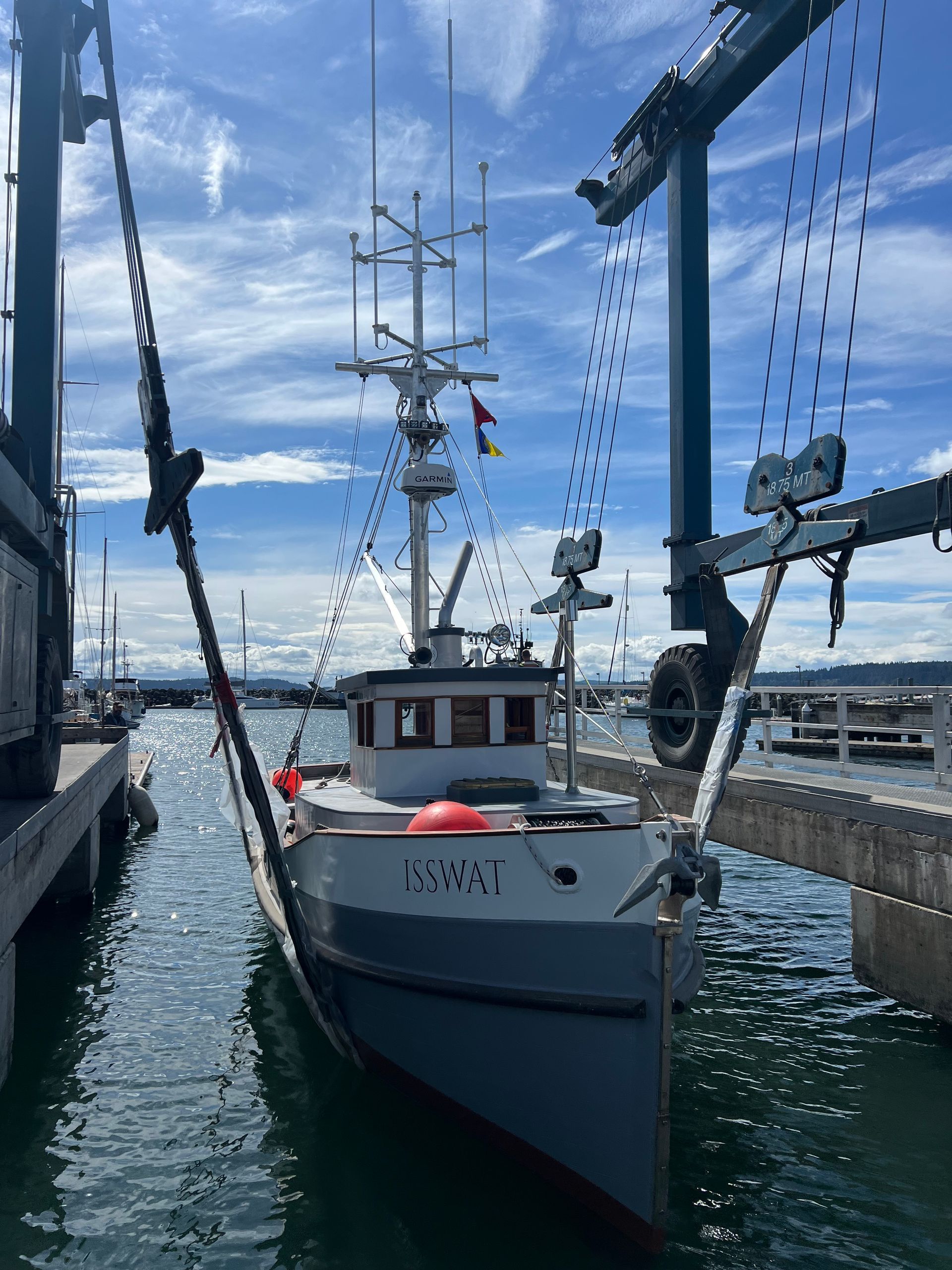
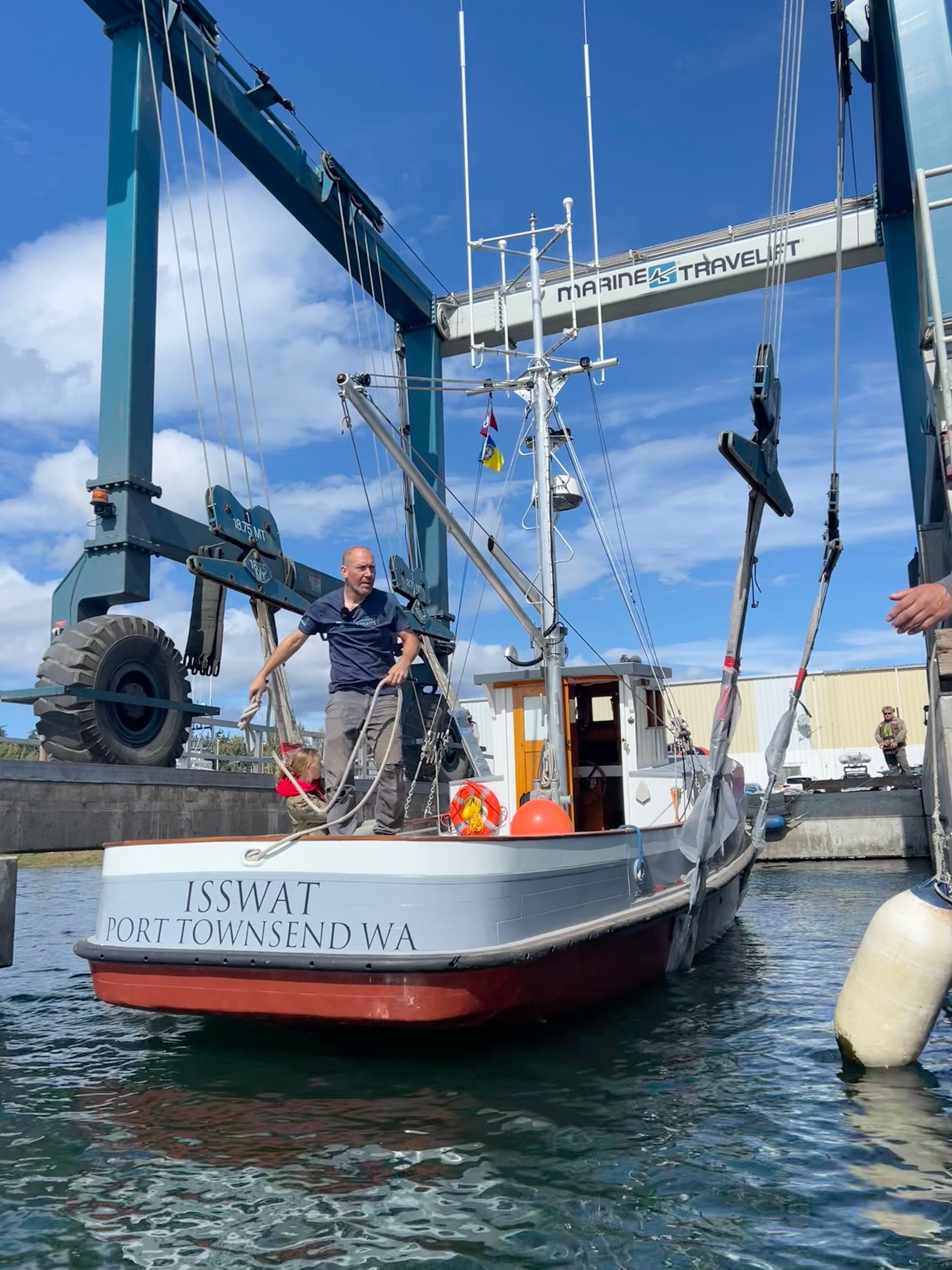
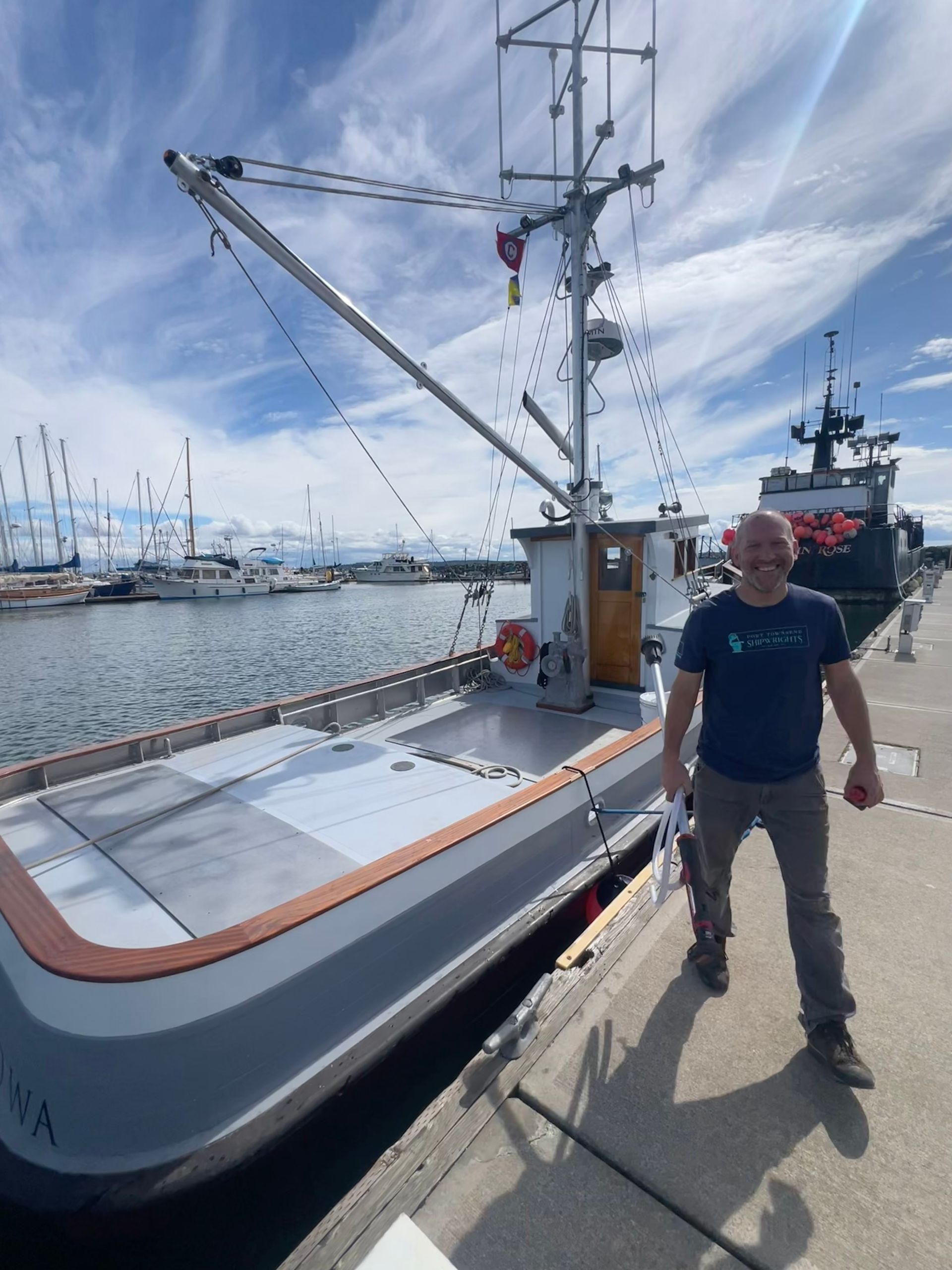
After years of haulouts, rebuilding, late nights, and countless hours of labor, Isswat is back in the water.
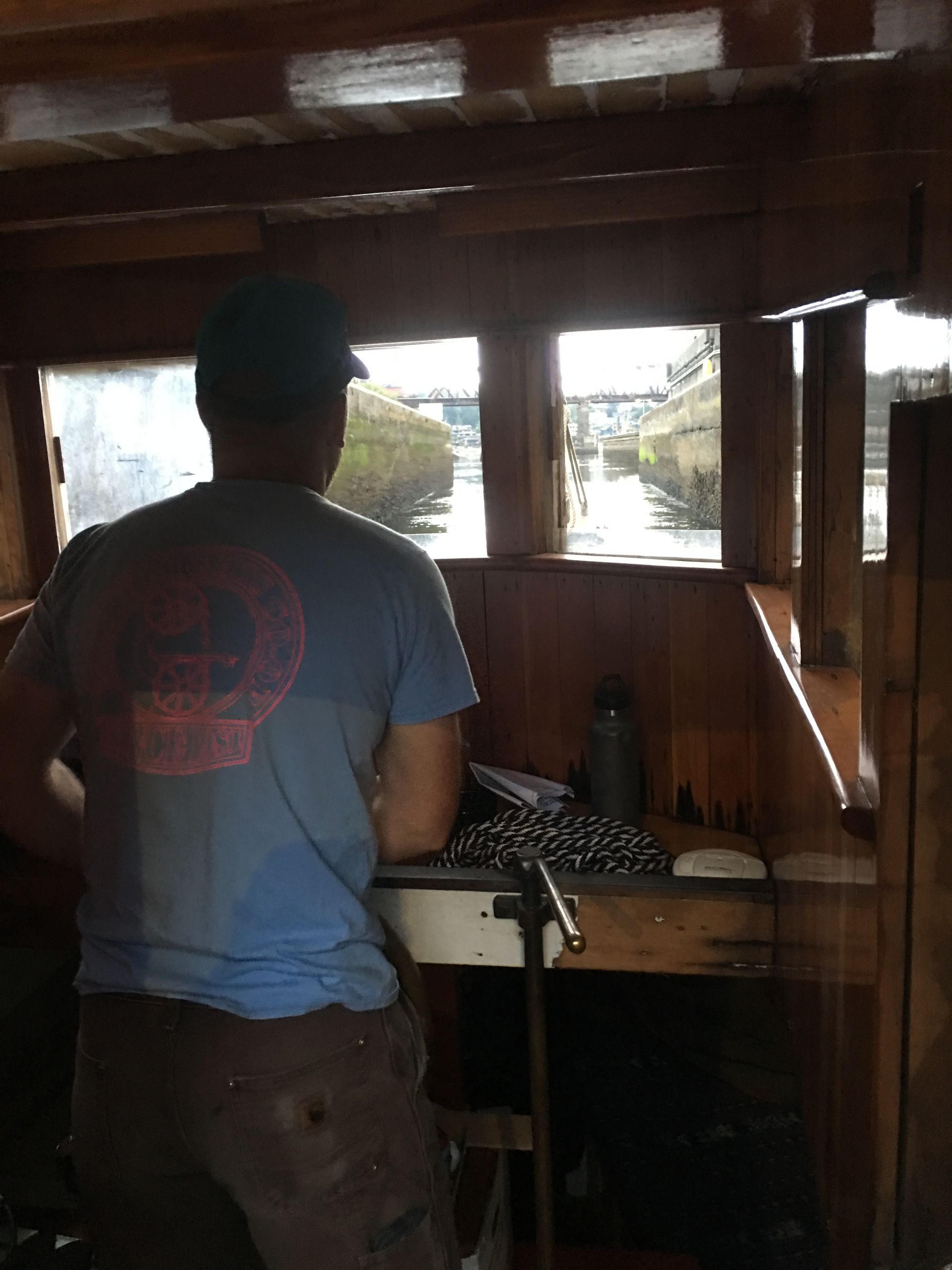
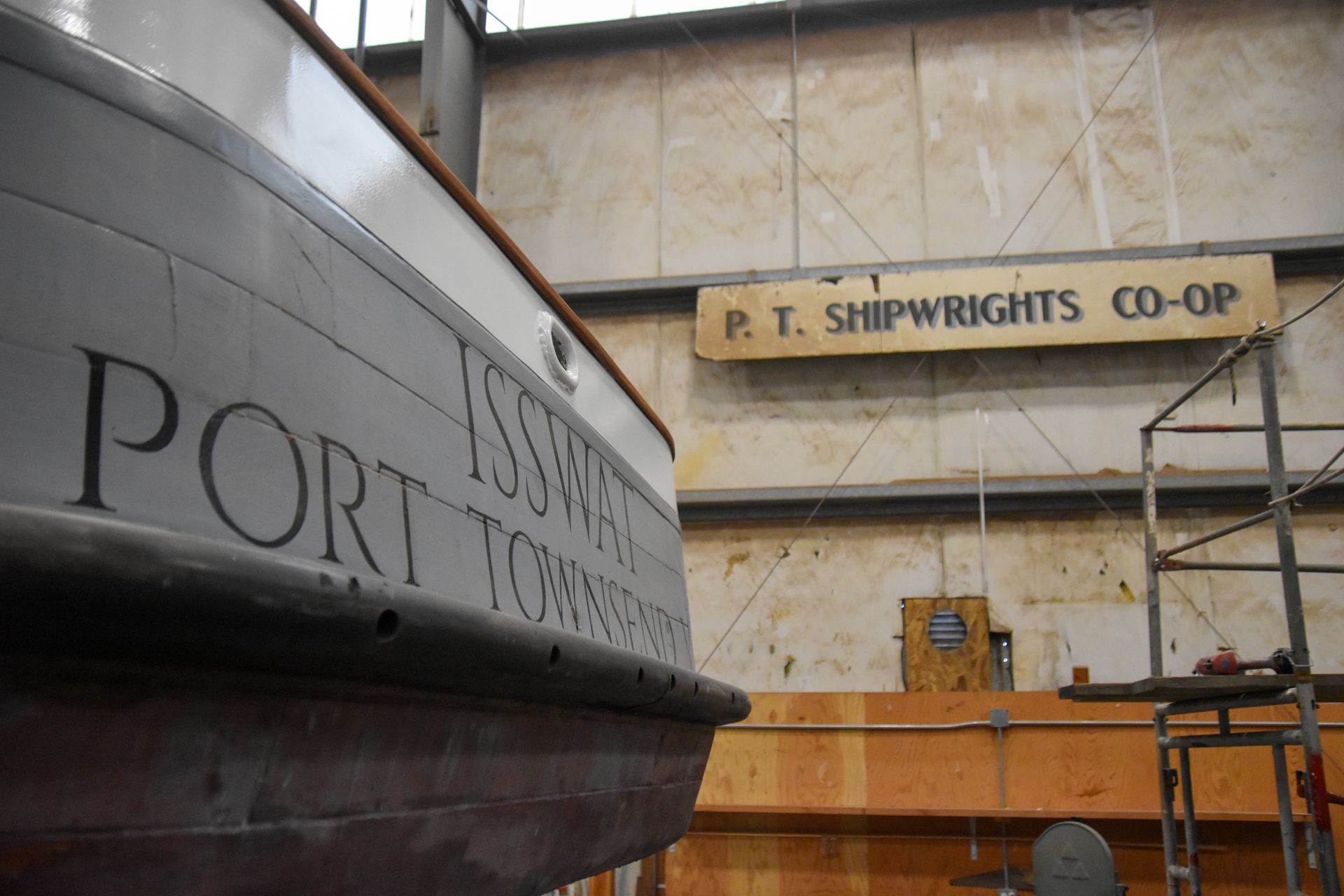
For Jeff, that’s more than a milestone. It’s a huge relief. Toward the end of the most recent project, he was working at Port Townsend Shipwrights until about 10:30 nearly every night. Having the boat in the yard made the work more efficient: the tools were there, the materials were there, and everything he needed was close at hand.
Now, Isswat is floating again, and Jeff can start thinking about what comes next. His goal isn’t simply to preserve Isswat as an example of a Northwest working boat. He wants to see her working again.
Jeff hopes to take her north to Southeast Alaska for the summer and return her to hand trolling—using the boat for the kind of fishing she was originally built to do. The hope is to catch enough fish to help pay for food and fuel along the way. “We’ll see how well that works.”
Keeping the History Alive
For Jeff, bringing Isswat back has never been only about fixing an old boat. “I’m proud of preserving her history and keeping her alive.”
Looking at photographs from when he first acquired her, he’s struck by how much she has changed. He is proud of how far she has come, but he’s equally proud of what the restoration represents: preserving the history of a type of boat that was once a familiar part of life along the Northwest coast. “Hopefully, she’ll have another 80 years ahead of her.”
After nearly eight decades,
Isswat has already had several working lives. Now, back in the water and ready for whatever comes next, she has another chapter on her horizon.