Seymour: A 1913 Halibut Schooner Still Fishing Alaska
One of four century-old halibut schooners Port Townsend Shipwrights keeps fishing
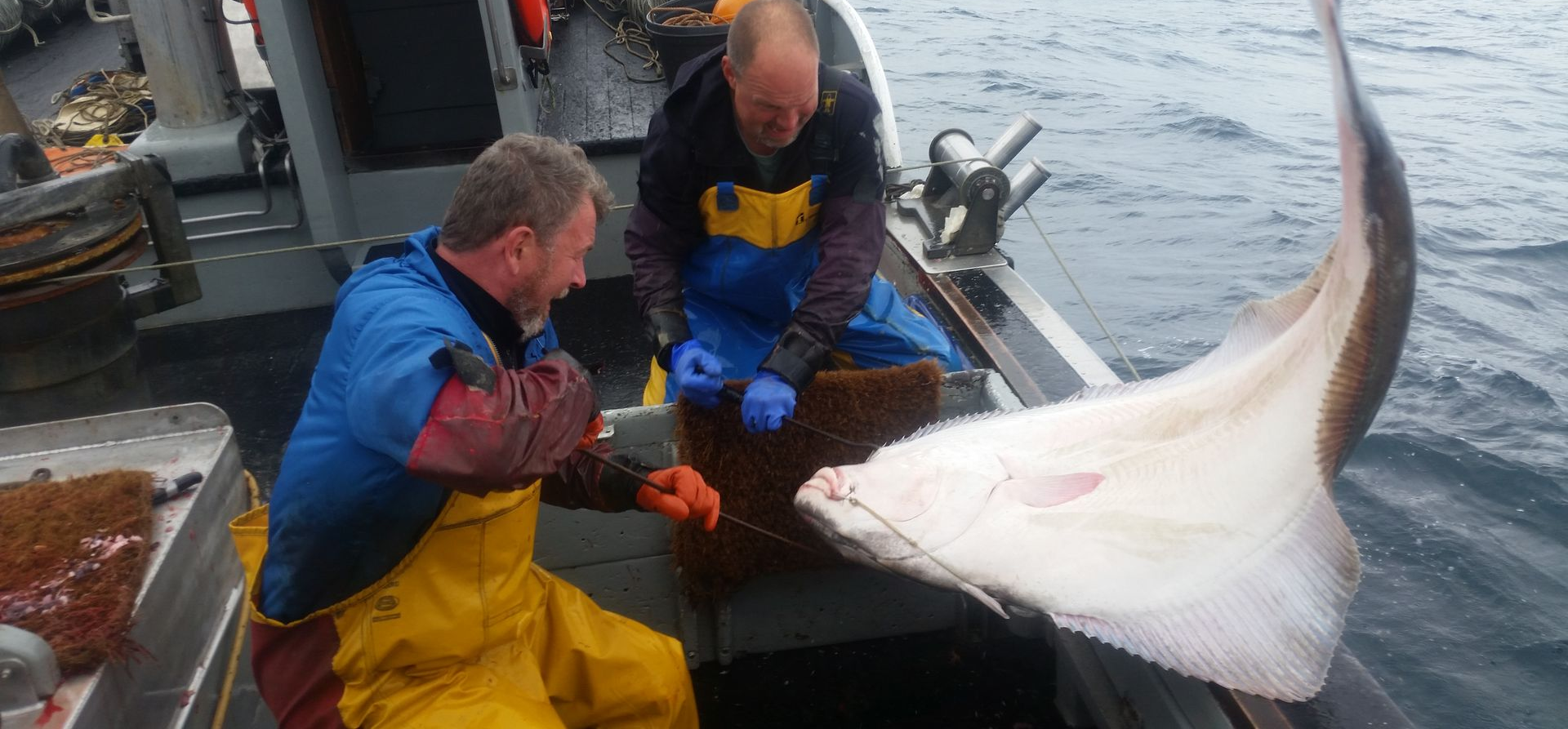
Photo Caption: Captain Pete Lopuszynski and crewmate Brian Harber haul a halibut over Seymour's rail. Photo courtesy of John McHenry.
What does it take to keep a wooden boat, more than a century old, working in some of the roughest water on the coast?
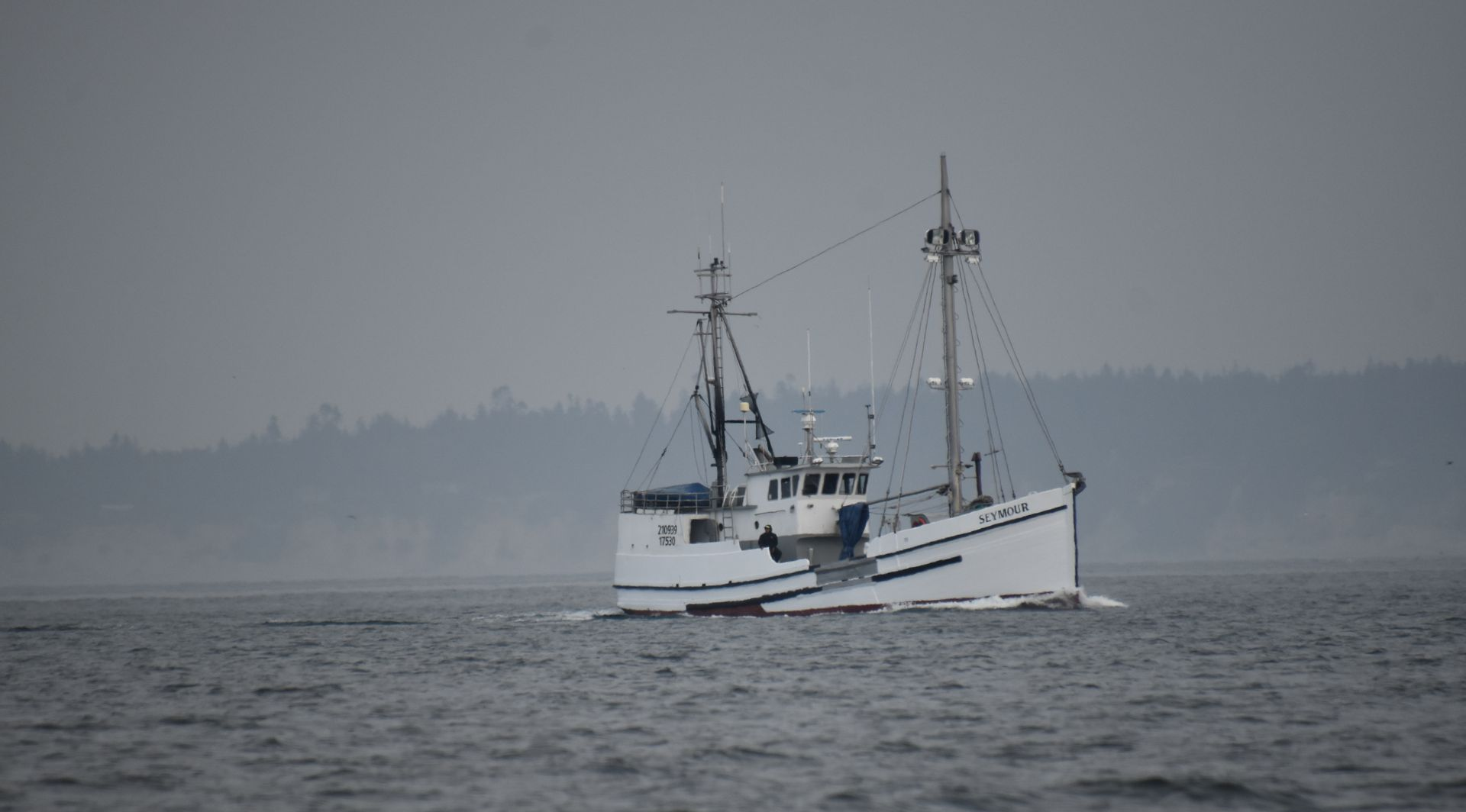
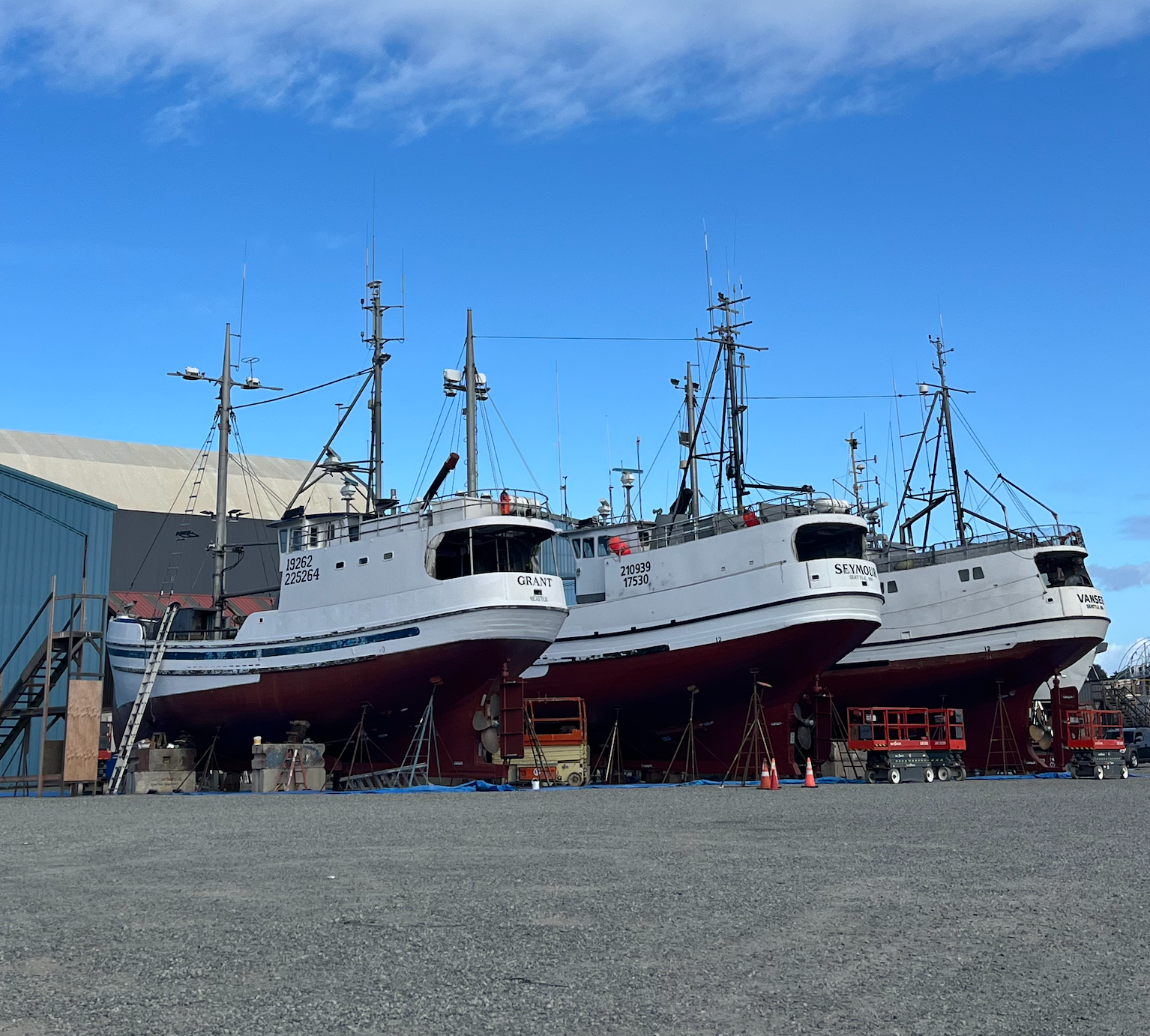
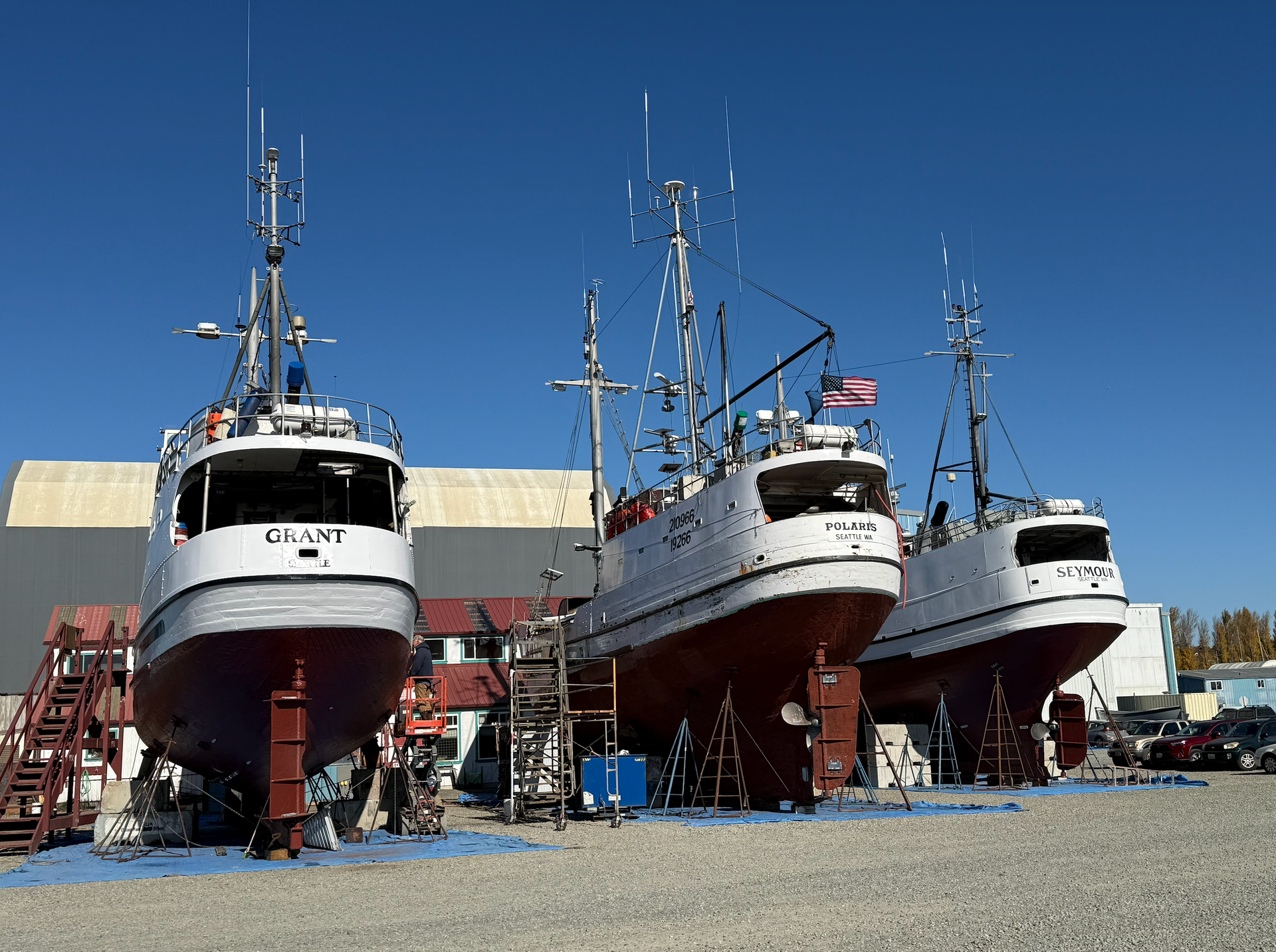
Seymour was built in Tacoma in 1913, and she has fished halibut every year since. More than a century later, she still heads north each season with a crew of five, 10 tons of ice and a few hundred pots, bound for the Gulf of Alaska. When the season ends, she hauls out at Port Townsend Shipwrights to get ready for the next one. She's one of four century-old fishing schooners the Shipwrights care for, along with Polaris, Vansee and Grant.
We talked with the owner of Seymour, John McHenry, who first came aboard in 1984, and the captain of Seymour, Pete Lopuszynski, John's brother-in-law, who has fished aboard her for 38 seasons. We wanted to learn what makes these boats special, and why it matters that they keep fishing.
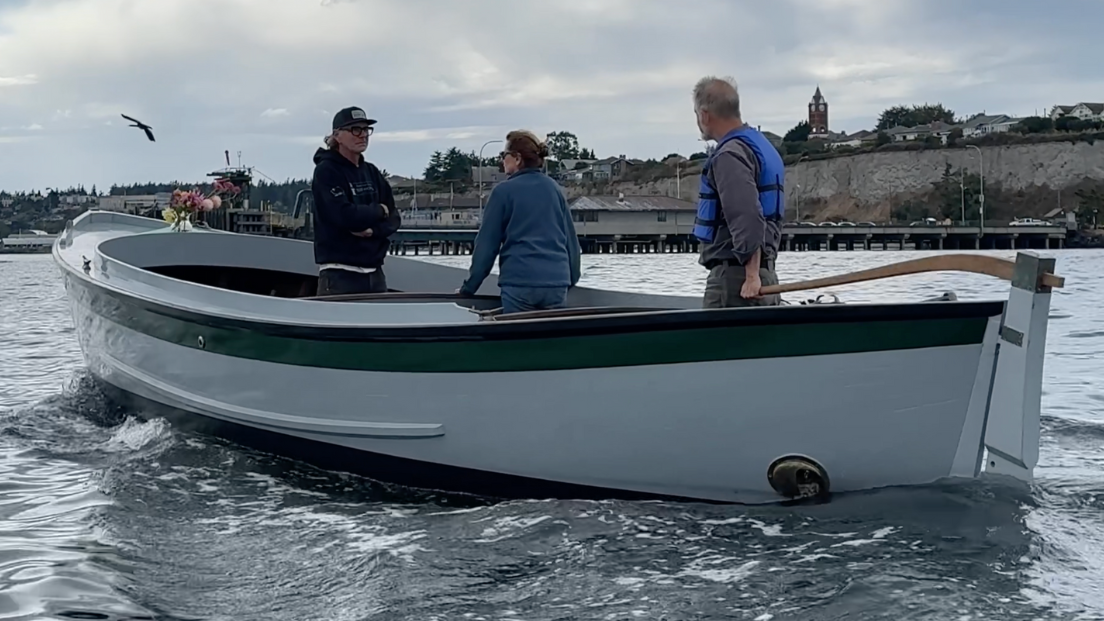
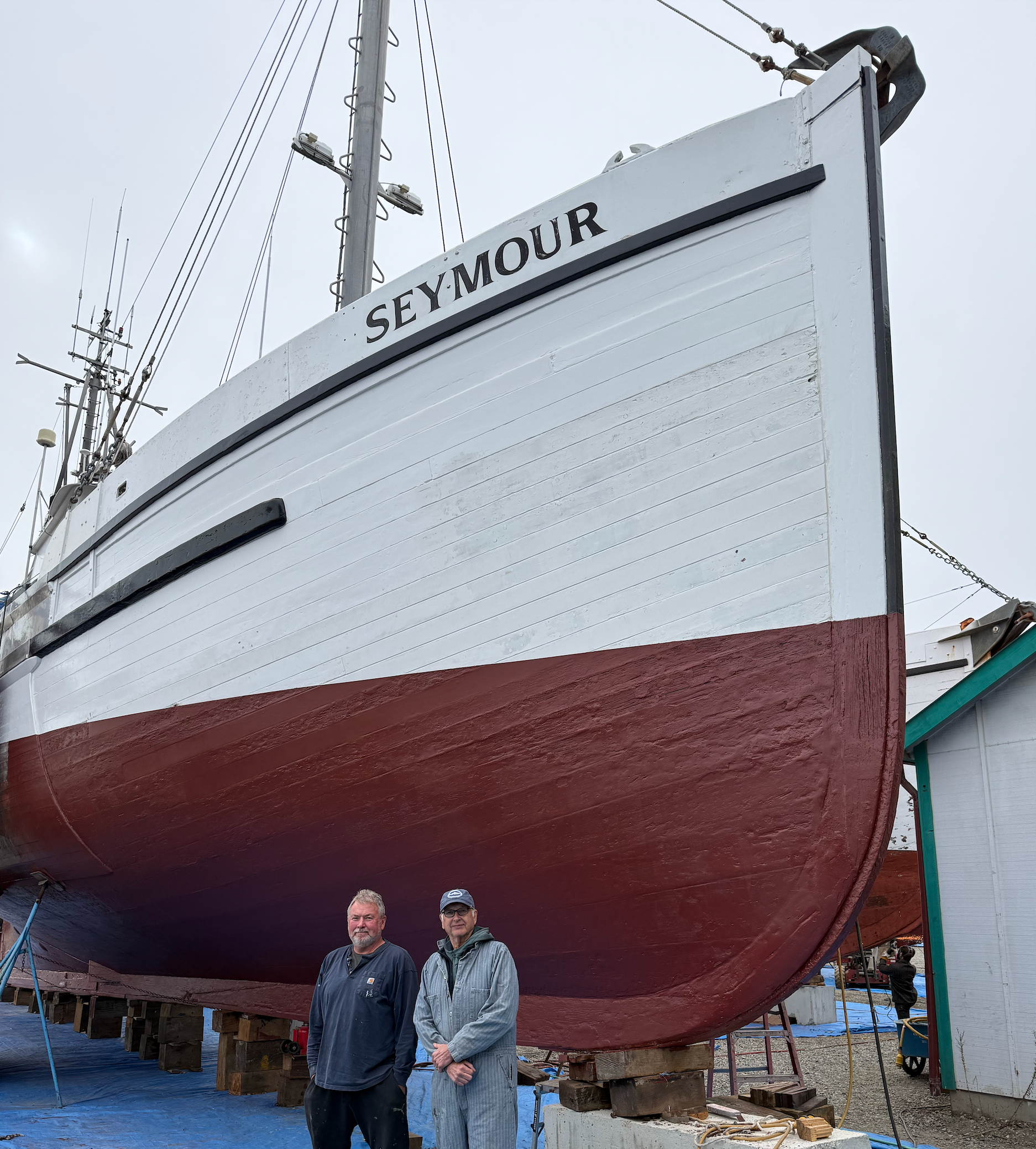
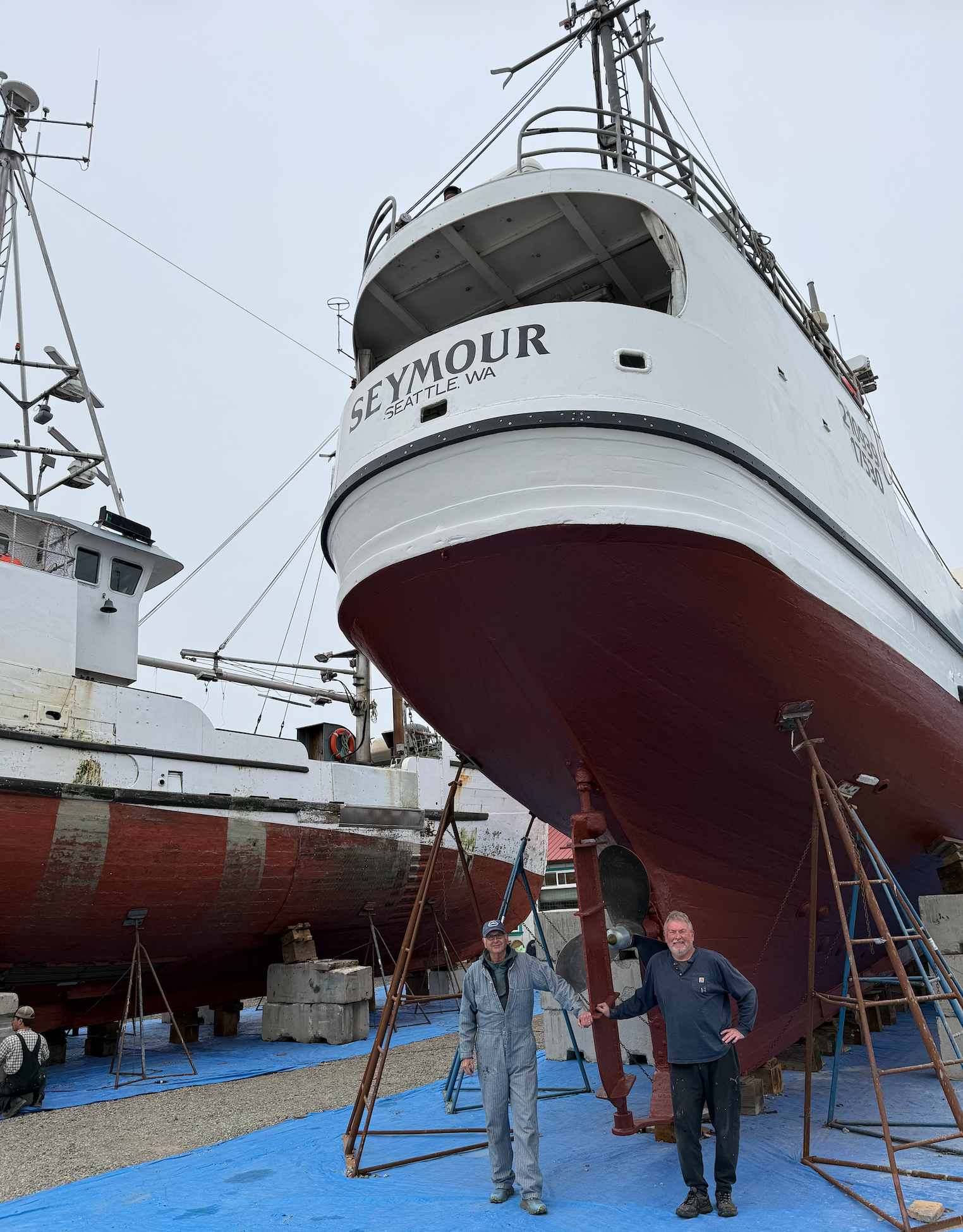
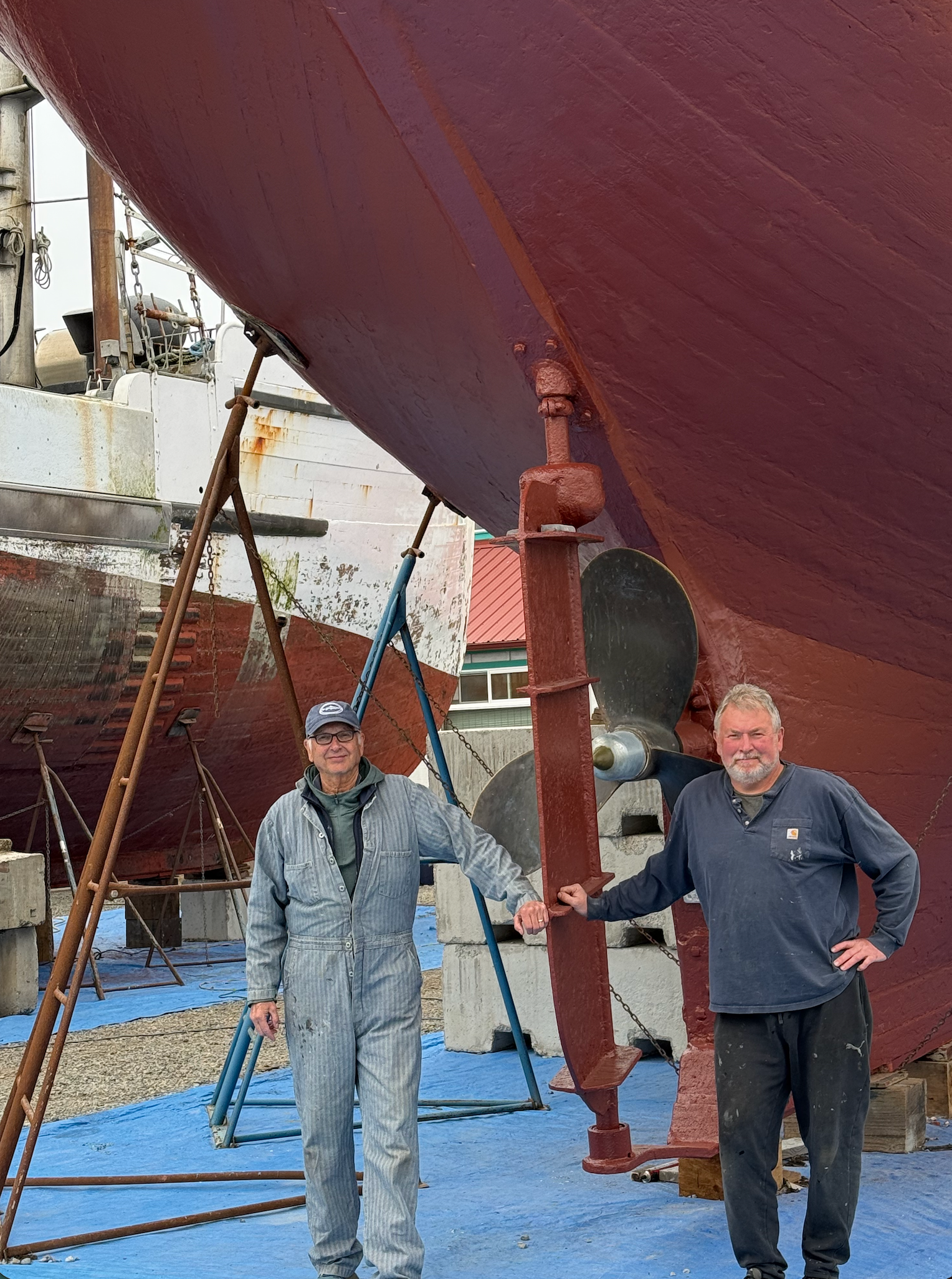
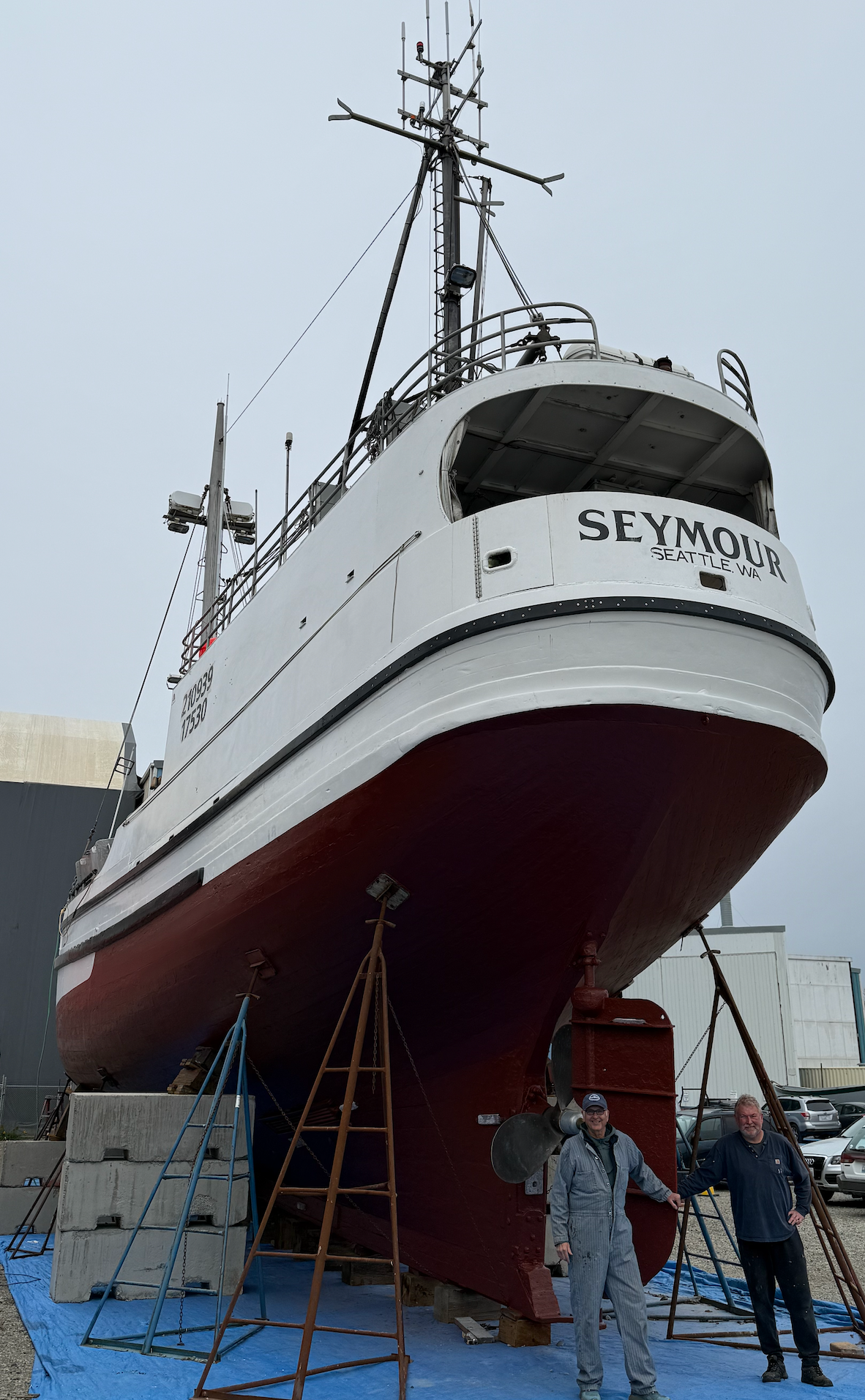
Photo Caption: Owner John McHenry and captain Pete Lopuszynski beside Seymour at Port Townsend Shipwrights.
Built for sail in 1913
Seymour was built in Tacoma by Edward "Ed" Johnson, a Swedish shipwright who turned out several halibut schooners. Most of the others are gone now. Seymour is 76 feet long, framed and planked in old-growth fir, and much of her original hull below the waterline is still intact.
She was built just as the fleet was moving from sail to power. Engines were new and not very reliable, so Seymour carried two masts and sails. "Some of the guys kept them on," Pete says, "because it helps steady the boat a little bit. When it's rolling back and forth, it slows that roll down."
She was built as a dory boat, with a crew of about 14. Six small dories were stacked on her stern, and crews rowed out to fish and rowed back to the schooner. That fishery was eventually outlawed. "Too many guys were lost in it," John says. "You can imagine, you're on the ocean in rowboats." Today a crew of five longlines and sets pots from Seymour herself.
When John started fishing, the halibut fleet was run almost entirely by Norwegians. "When I came in, everybody was Norwegian," he says. He wasn't Norwegian himself, but he fell in with the Norwegian crews and learned the trade from them. He bought into Seymour in 1984 from its three aging owners, took over running her in 1989, and eventually bought the whole boat. Today his wife's Polish family is part of the crew, including her brother Pete. "It's not a Norwegian halibut schooner anymore," he jokes. "It's a Polish halibut schooner."
For more of Seymour's history and John's years aboard, read John's earlier interview.
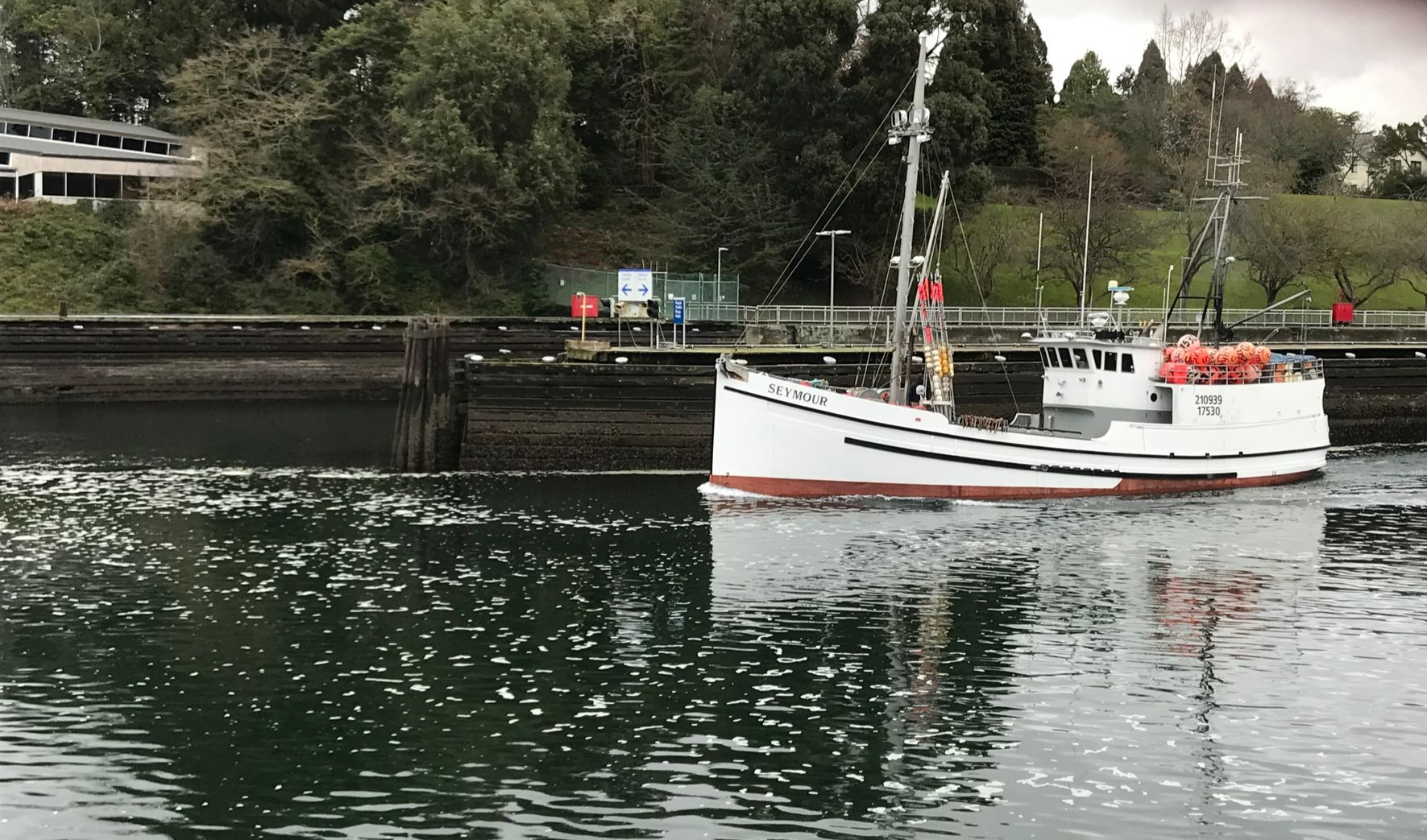
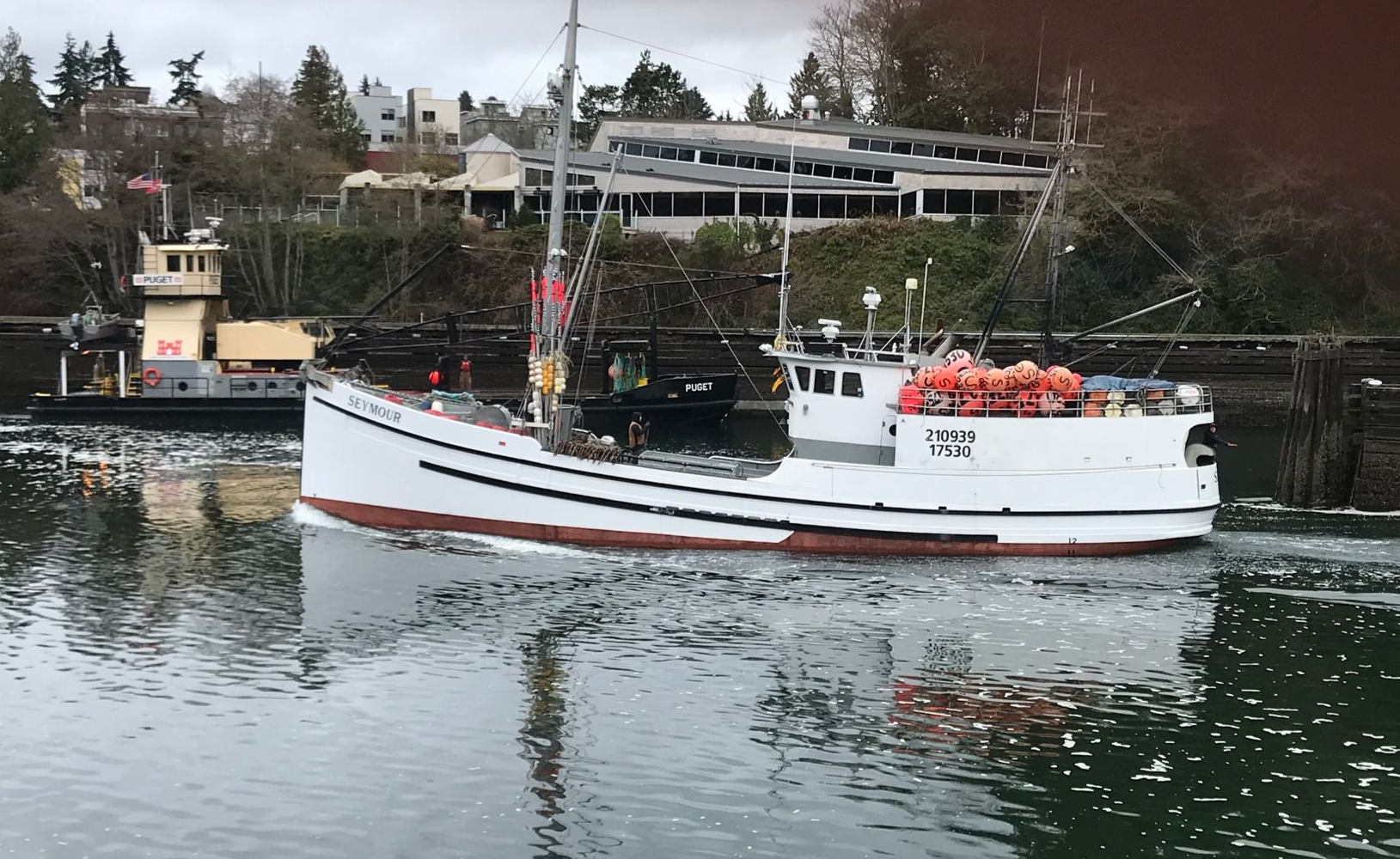
Photo Caption: Seymour heads out through the Ballard Locks in Seattle. Photos courtesy of John McHenry.
A season at sea
Each season starts in Seattle, where the crew loads gear, groceries and fuel. Then they head to Bellingham for ice and bait and run north to Alaska in time for the opening.
They fish two species across the Gulf of Alaska and out toward the Aleutians. Black cod come first, caught 30 to 70 miles offshore in collapsible "slinky" pots.
Seymour carries 270 to 300 of them. On the way back east, the crew switches to baited hooks for halibut, which can be as close as a mile from shore.
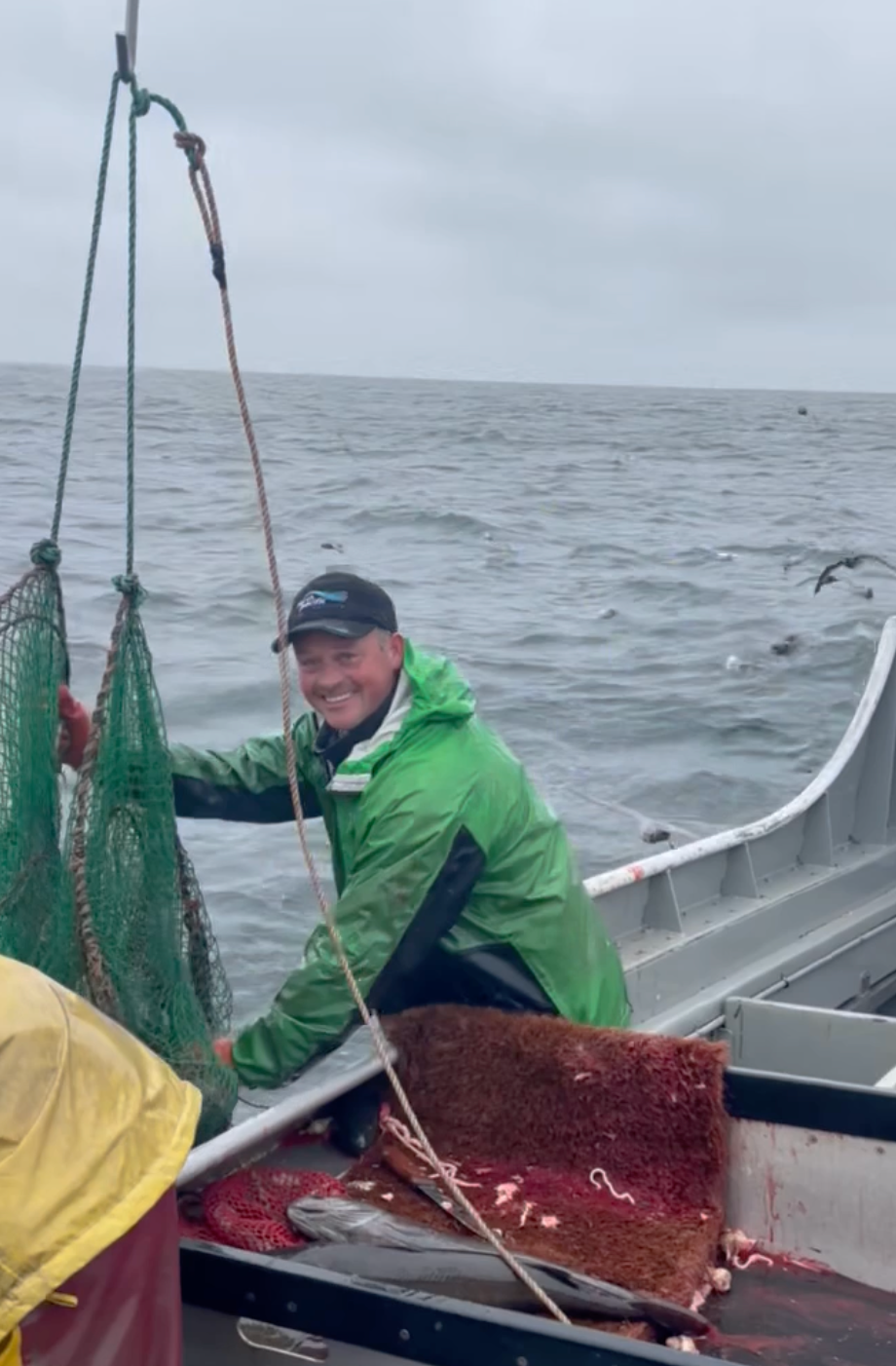
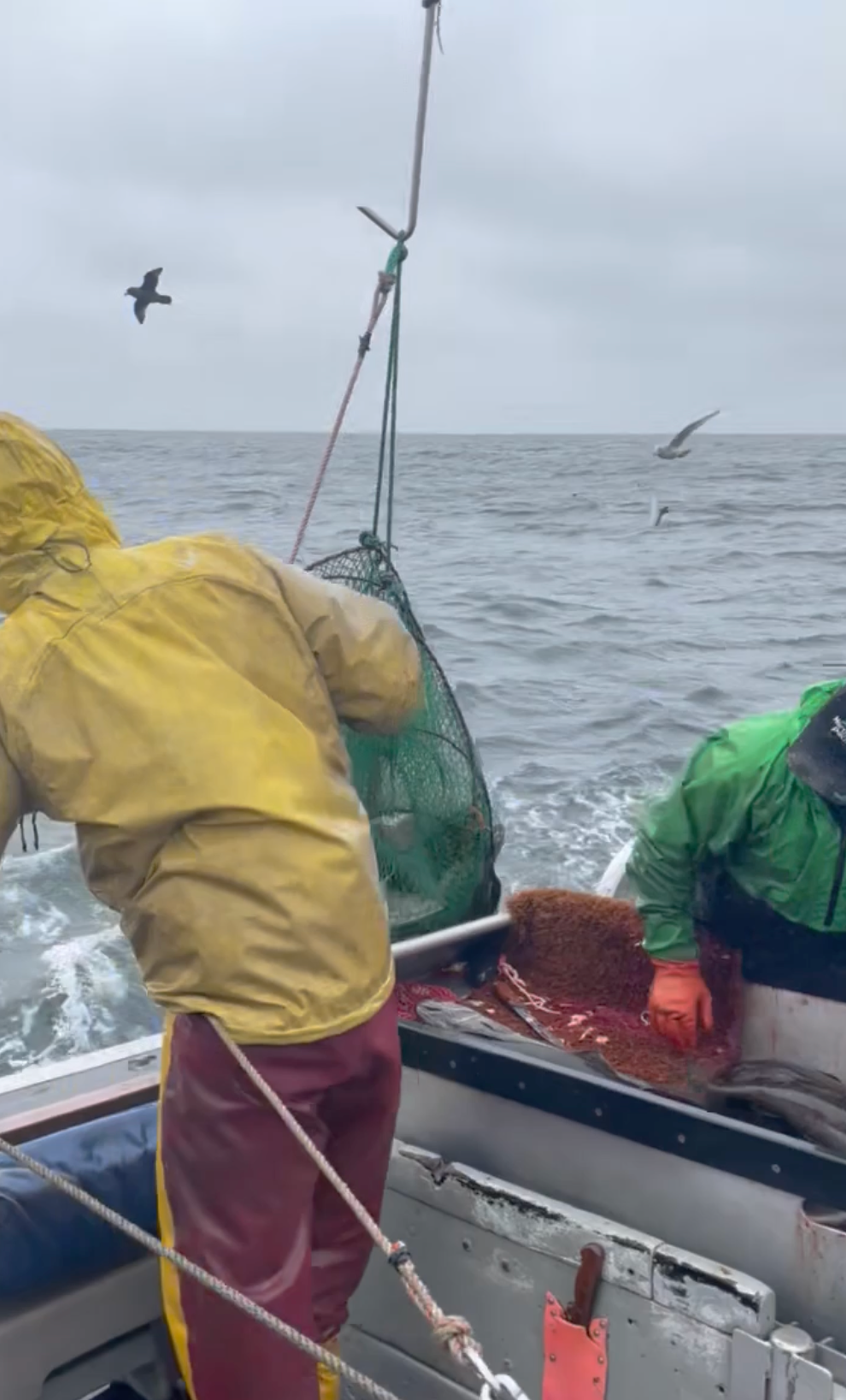
Photo Caption: Seymour’s crew hauls in black cod with collapsible slinky pots. Photos courtesy of John McHenry.
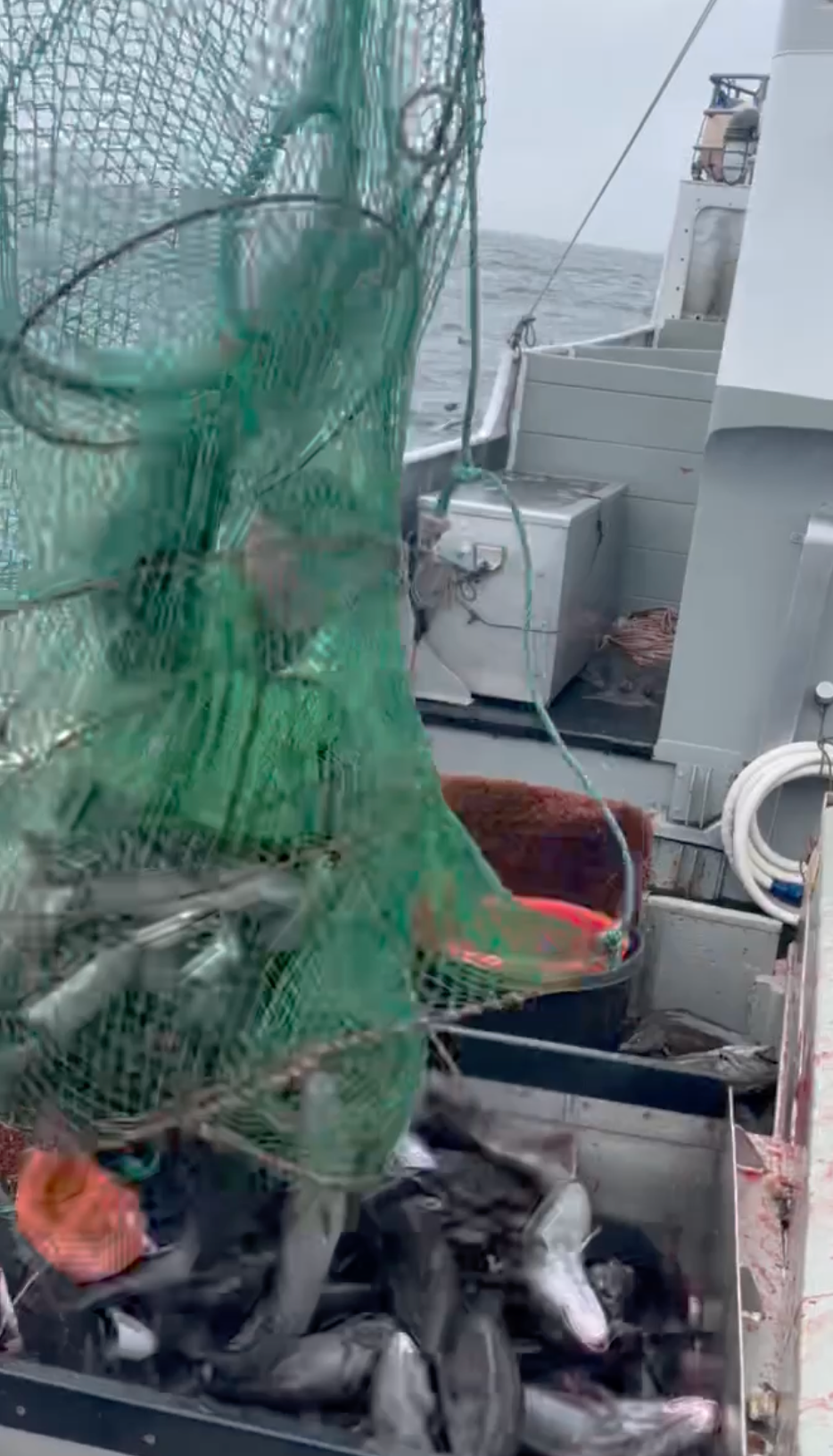
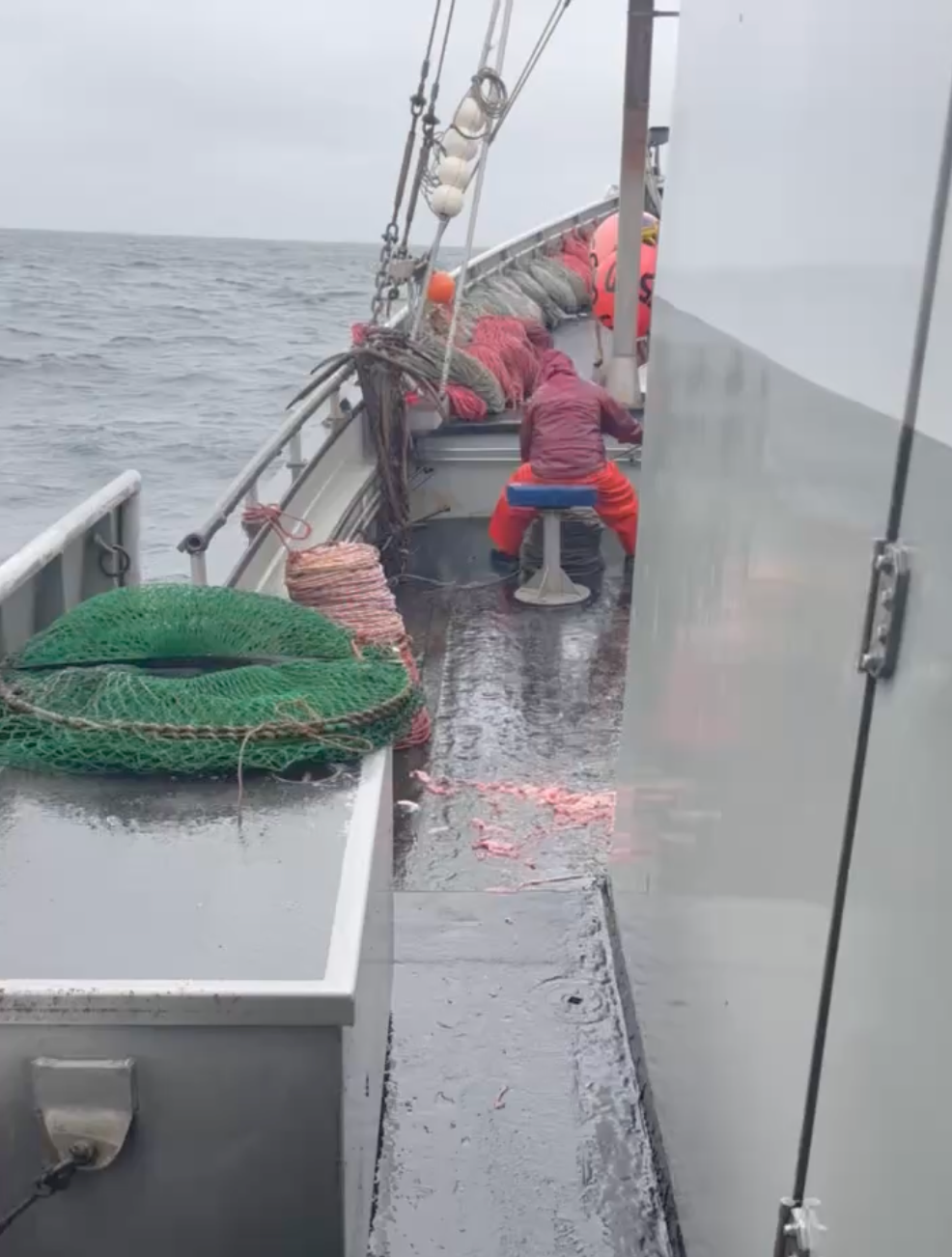
The catch is kept fresh, not frozen. The hold carries about 10 tons of ice and is refrigerated to hold the fish between 31 and 33 degrees.
The crew is usually five, including Pete and a cook who also works the deck. They fish about two months, fly home for two or three weeks, then return for roughly three more. The season ends when they've caught their quota, which has taken anywhere from three and a half to six months.
Photo Caption: Jonny Johansen and Jack McHenry land a halibut aboard Seymour. Photo courtesy of John McHenry.
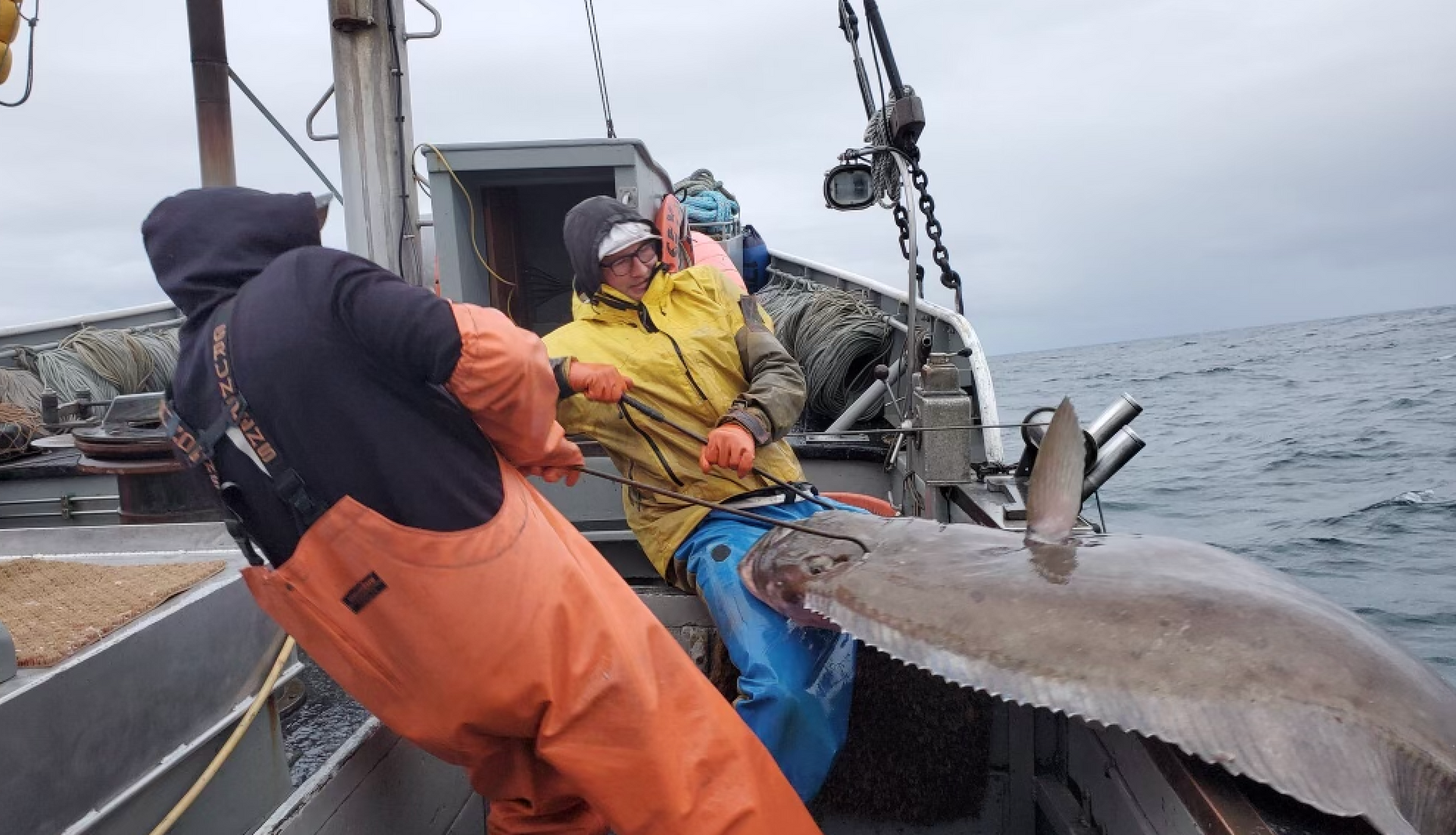
When they're out fishing, the routine is relentless. "We'll work generally about 18 hours and sleep for 6, and then just keep doing that," Pete says. A trip runs five or six days, weather permitting. Then they spend about two days in town to offload, clean up, and restock ice, bait and groceries before heading back out.
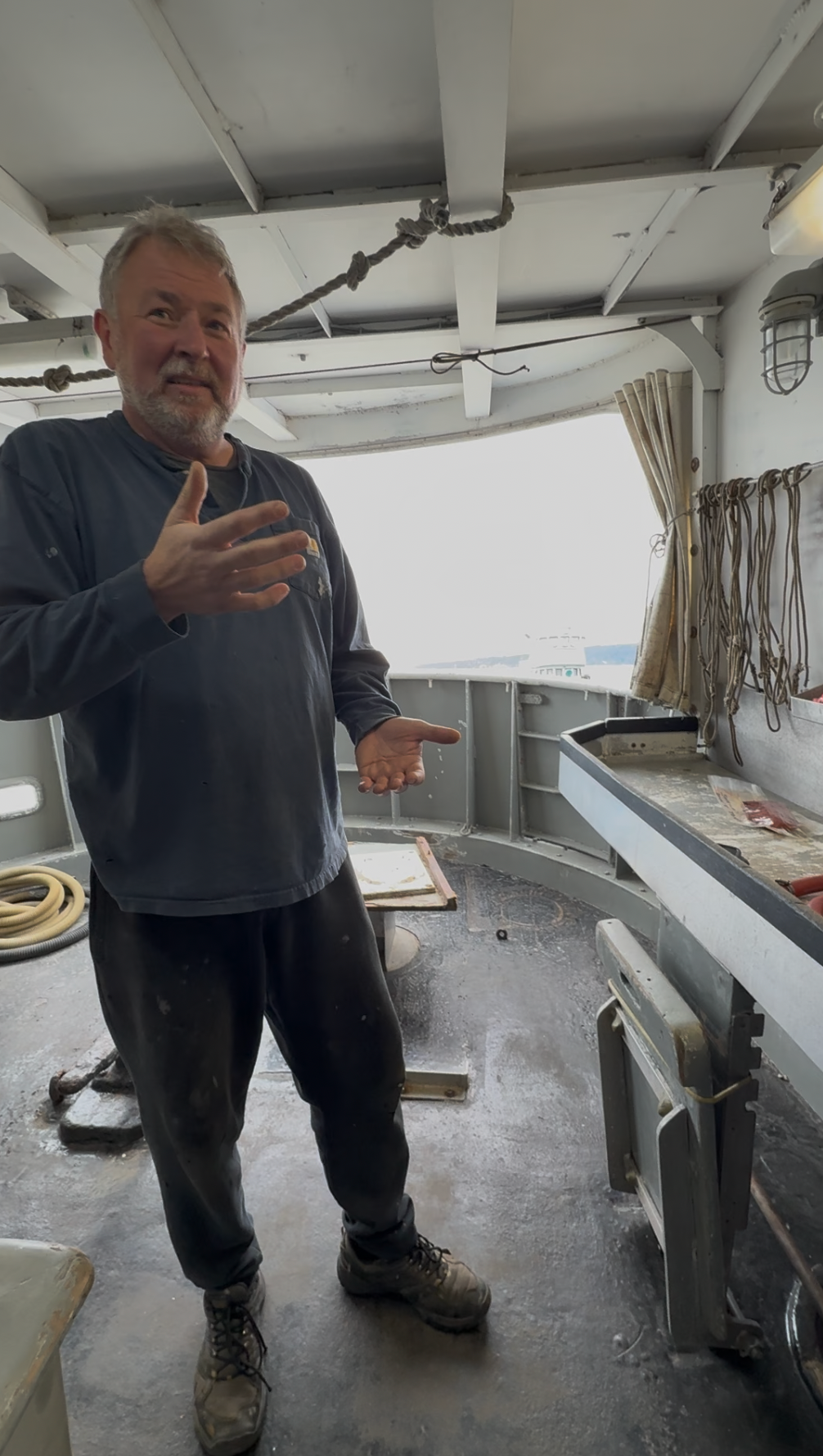
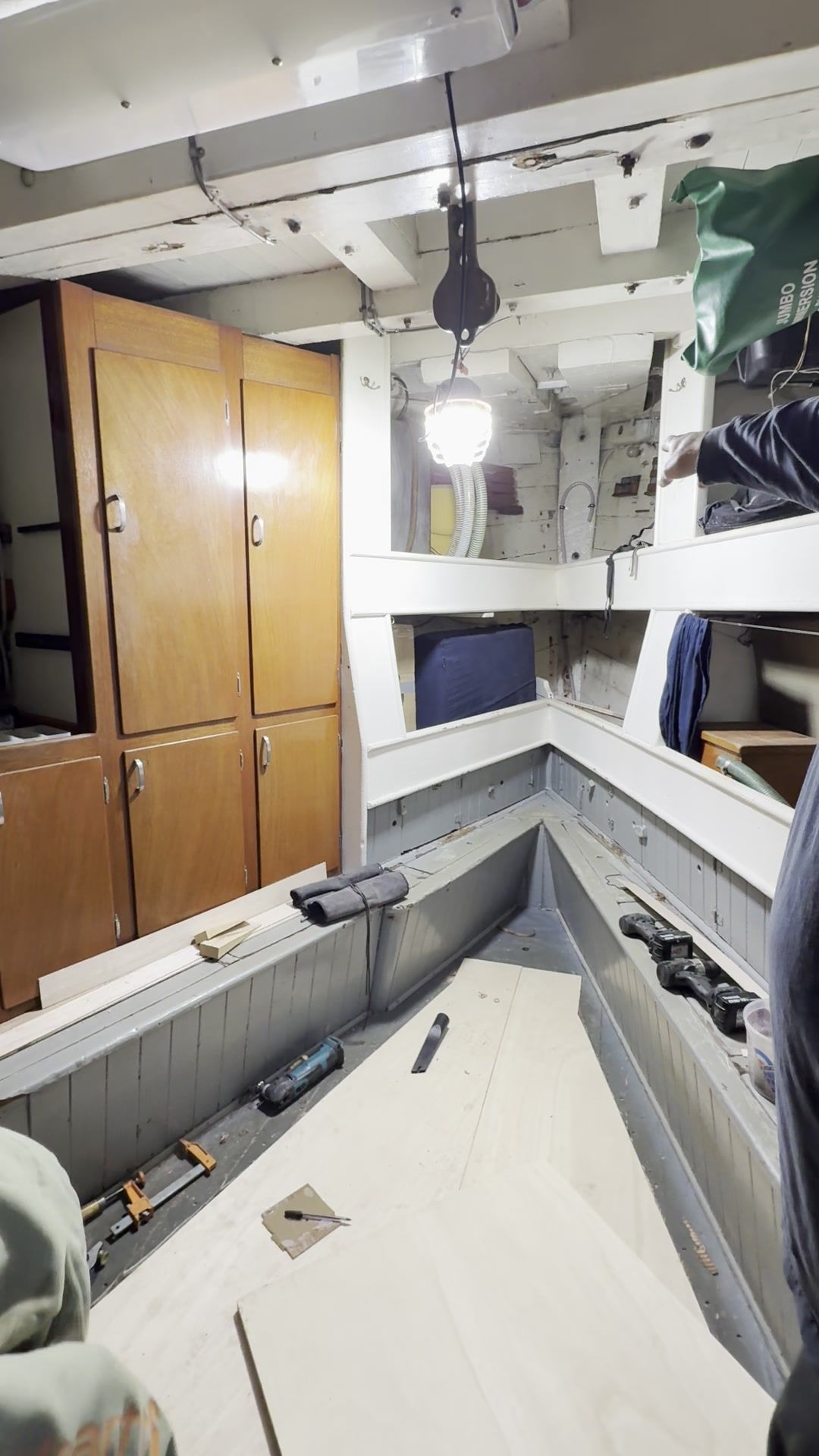
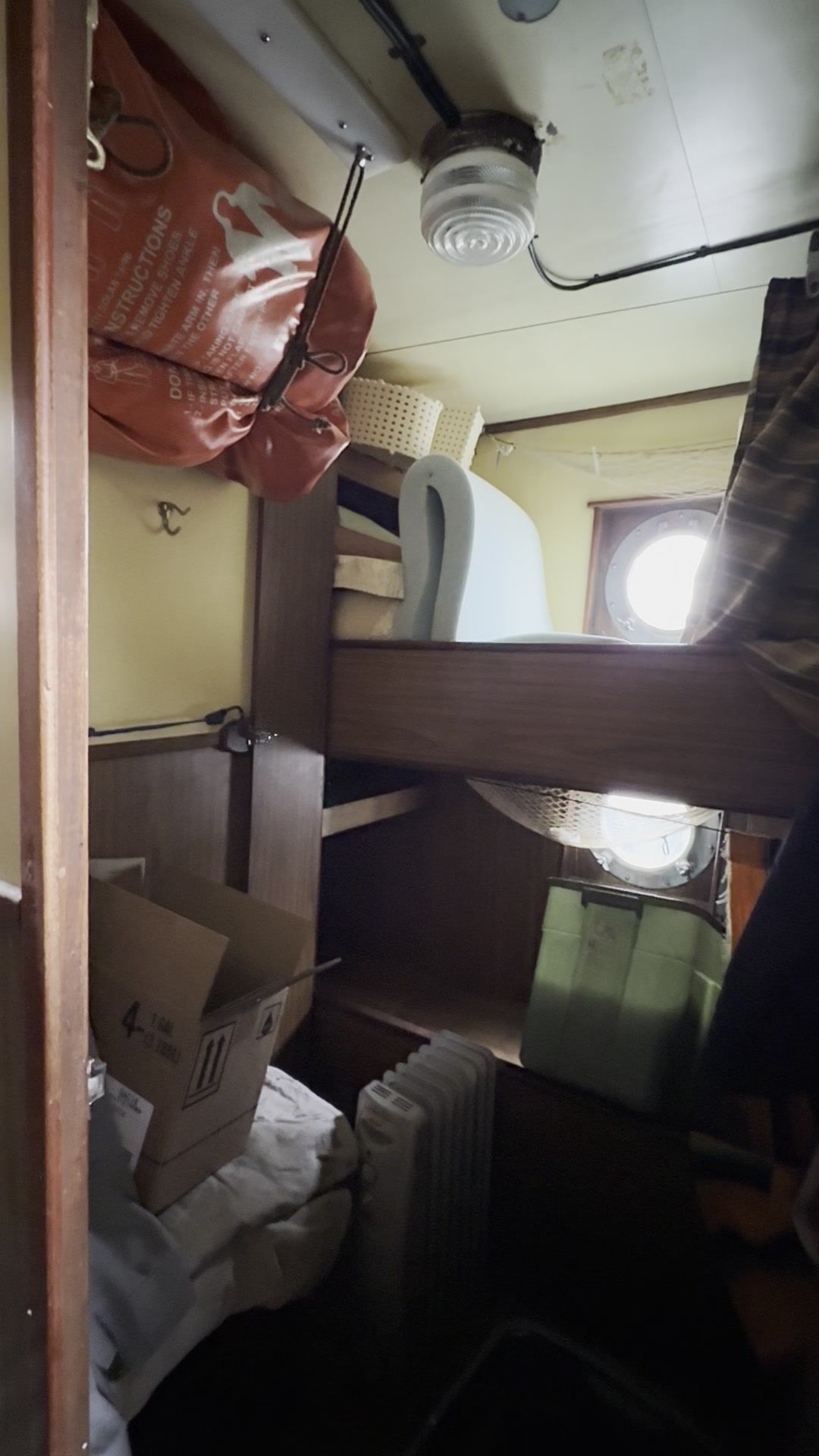
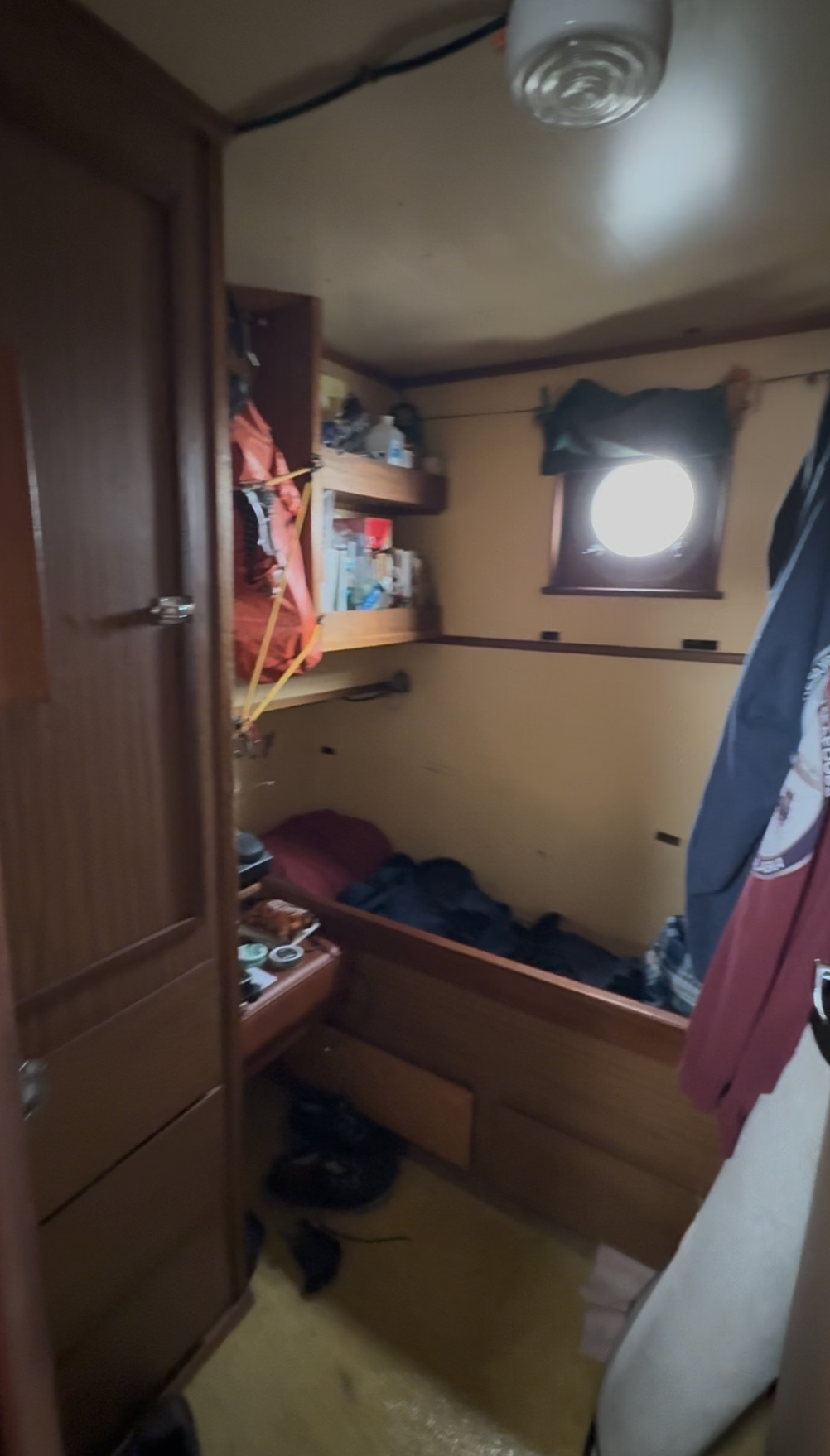
After our interview, Pete gave us a tour. Both he and John were quick to point out that we were seeing her mid-haul-out, with everything torn apart for repairs, and that she's normally much tidier. For about two months at a time, Seymour is home to her crew of five, and he showed us where they sleep, eat, and process the fish and bait. The bunks are tucked along the curve of the hull.
Photo Caption: Pete shows us around Seymour, from the covered deck where the crew baits the longlines to the galley, bunks, and captain’s quarters.
Riding out the weather
When asked about fishing in bad weather, John turned to Pete: "You should tell them about the derby." Pete's worst day aboard came in his first season, during the old derby fishery. Halibut openings lasted 24 hours, from noon to noon. The dates were set far in advance, whatever the weather. A boat could land 40,000 to 50,000 pounds in a single opening, so you didn't want to miss it.
"It was 50-knot winds, and I don't know what the seas were, probably 20 feet," he says. "Usually we'd hope to be hiding in town in that kind of weather. But we had to then. That was the most miserable fishing that I've done."
Seymour is long and narrow compared with modern boats, so she rolls. John says that hull shape is also a big part of why she's so fuel efficient. She also has the deep draft of a sailing hull, and Pete says that makes her feel safe. Early in a trip, with only ice and bait aboard, her bow is light and lively. Loaded with fish, she squats down, rolls slower and plows through the seas. "I always feel safe with her, for sure," he says. "She's been around a long time and been through a lot, probably a lot worse than the weather I've been in."
The scariest moment wasn't weather. Around 1990, when Pete was crew and John was running the boat, the engine quit. "It was an odd feeling," Pete says, "drifting out there with no propulsion, no way to move around." They were far enough offshore that it didn't lead to any serious trouble.
It happened during the derby years, and every boat nearby was racing to catch its share. "We didn't have six months to catch this fish," John says. "We had four weeks or so." He could see other boats fishing all around them, and he didn't blame them for staying on the grounds.
Then Dewey Torgeson, captain of the halibut schooner Republic, called. As John remembers it, Dewey said, "Yeah, you broke down, huh? Well, with this wind and current, you'll probably drift into Seward in about a week." John took it as a tease and a wish of good luck, figuring the Republic would keep fishing like the other boats. Then Dewey added, "We'll come over and tow you in."
The Republic crew stopped fishing in the middle of the derby to bring Seymour in. "I couldn't believe it," John says. More than 35 years later, after reading this story, this was the part of the story John most wanted added. "That's just how that guy is," he says, "I'm still so grateful to them." After getting towed in, John got the engine taken care of and they were fishing the rest of that season.
Why Port Townsend Shipwrights
For years, Seymour was hauled out at Fishing Vessel Owners Marine Ways, known as FVO, at Fishermen's Terminal in Seattle. Halibut-schooner owners founded the yard in 1919, and it built and repaired fishing boats for more than a century before closing in 2022 (HistoryLink). Over time, John says, the service there faded, and it got harder to find people who could work on wooden boats.
He saw the change in the city too. "When I first started fishing, guys that worked in the shipyard lived right close by, right in Seattle," he says. "Little by little, they had to move further and further out." With the tech boom, he says, it's hard to live there on blue-collar wages, and the craftsmen went with them.
Brad Seamans, who leads Port Townsend Shipwrights' projects on the fishing schooners, saw the same thing from the yard's side. "It would be really hard to get entry-level shipwrights to come in there, make entry-level shipwright wages, and live anywhere near there," he says. Without new people learning the trade, FVO's shipwrights were aging out.
Polaris was the first of the schooners to come to Port Townsend. John called next about Seymour, then Vansee followed, and Grant's owner came up the next year to see the work for himself. "They do kind of stick together," Brad says.
When asked what led him to bring Seymour to the Shipwrights, John shared that other boat owners had told him that they were very satisfied with the yard's work. Bill Gardner, who had worked on Seymour's engine room in Seattle, also advised John to go to Port Townsend Shipwrights when he retired. "There's a lot of energy here, a lot of vitality," John says. "We've come up here, and we're very pleased."

The fishing schooners
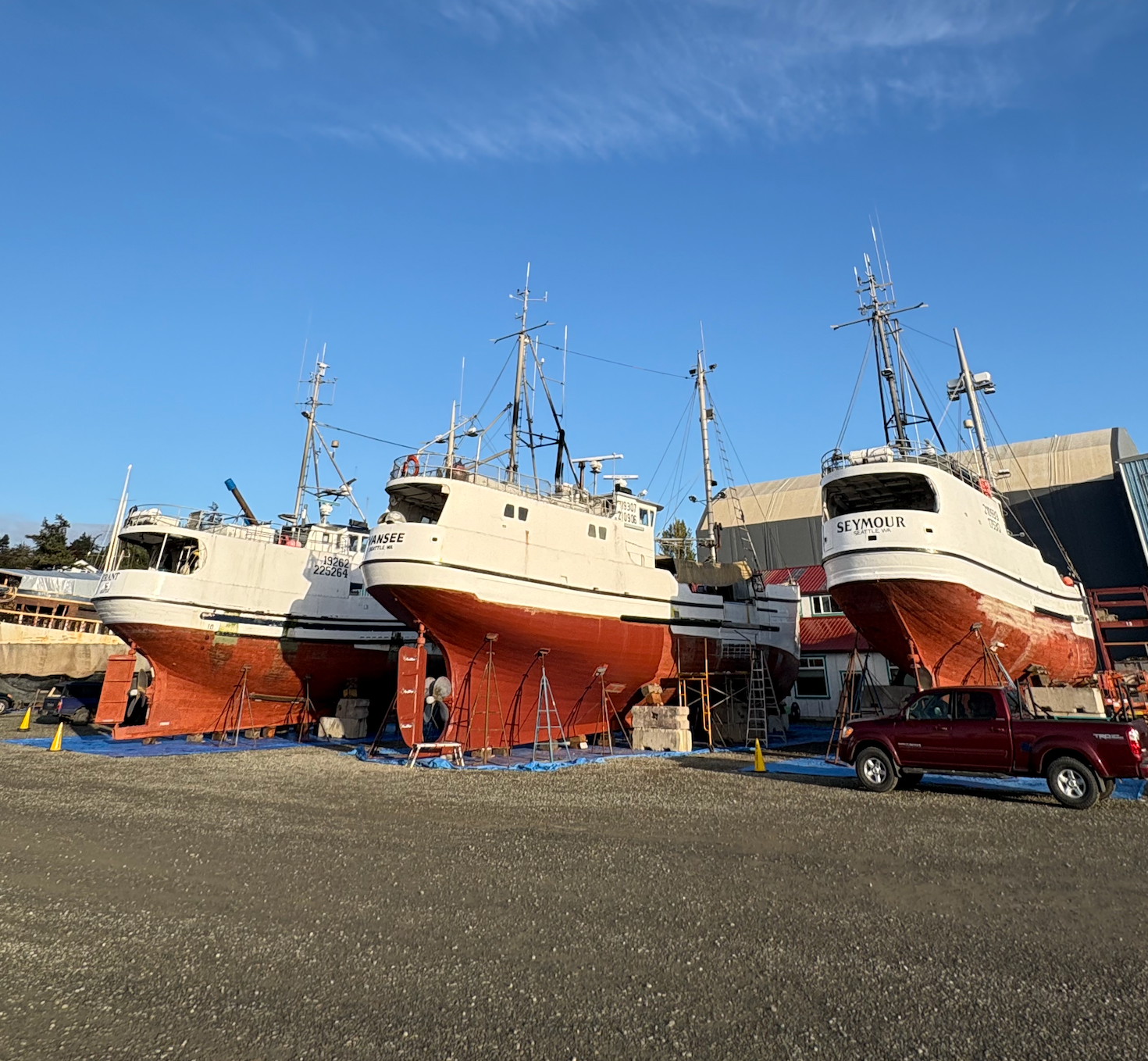
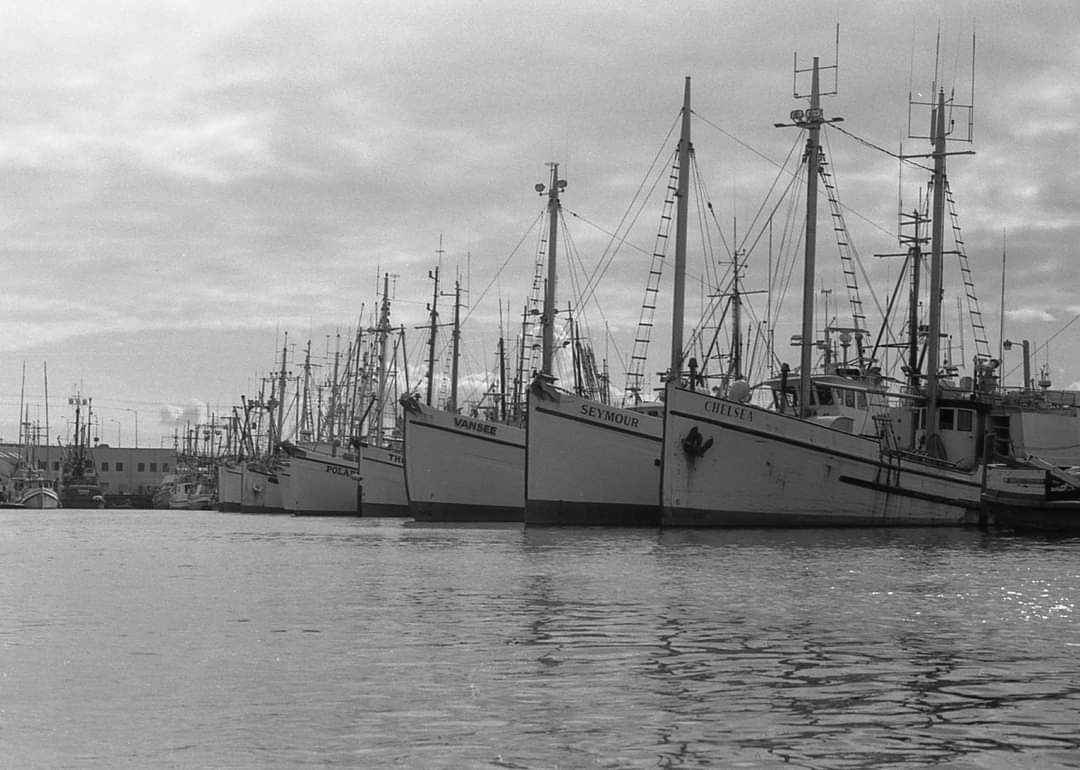
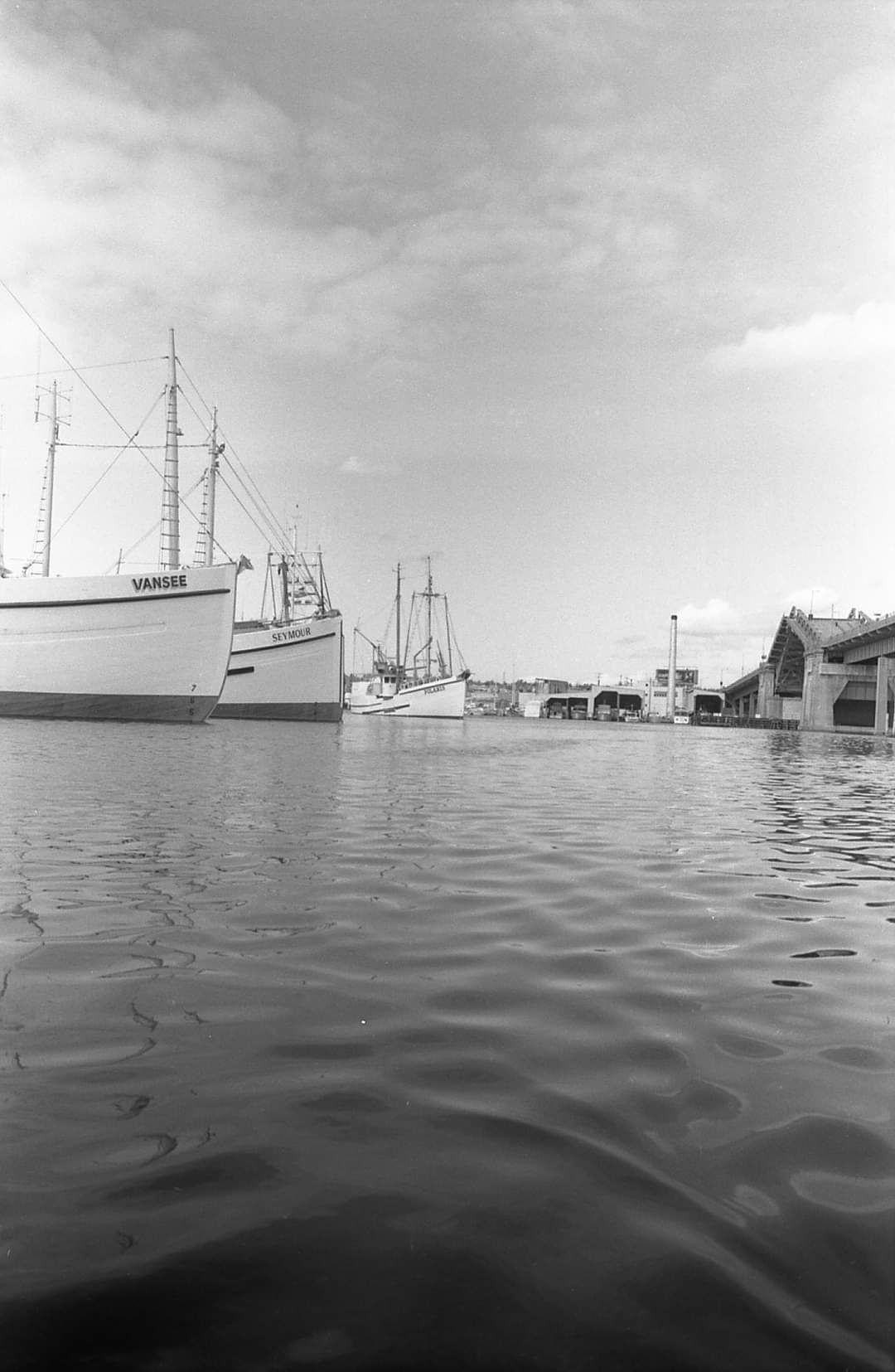
Seymour isn't alone. The Shipwrights care for four halibut schooners, all more than 100 years old and all still fishing commercially in Alaska. Between seasons, all four moor side by side at Fishermen's Terminal in Ballard, facing the Ballard Bridge.

Source: National Fisherman
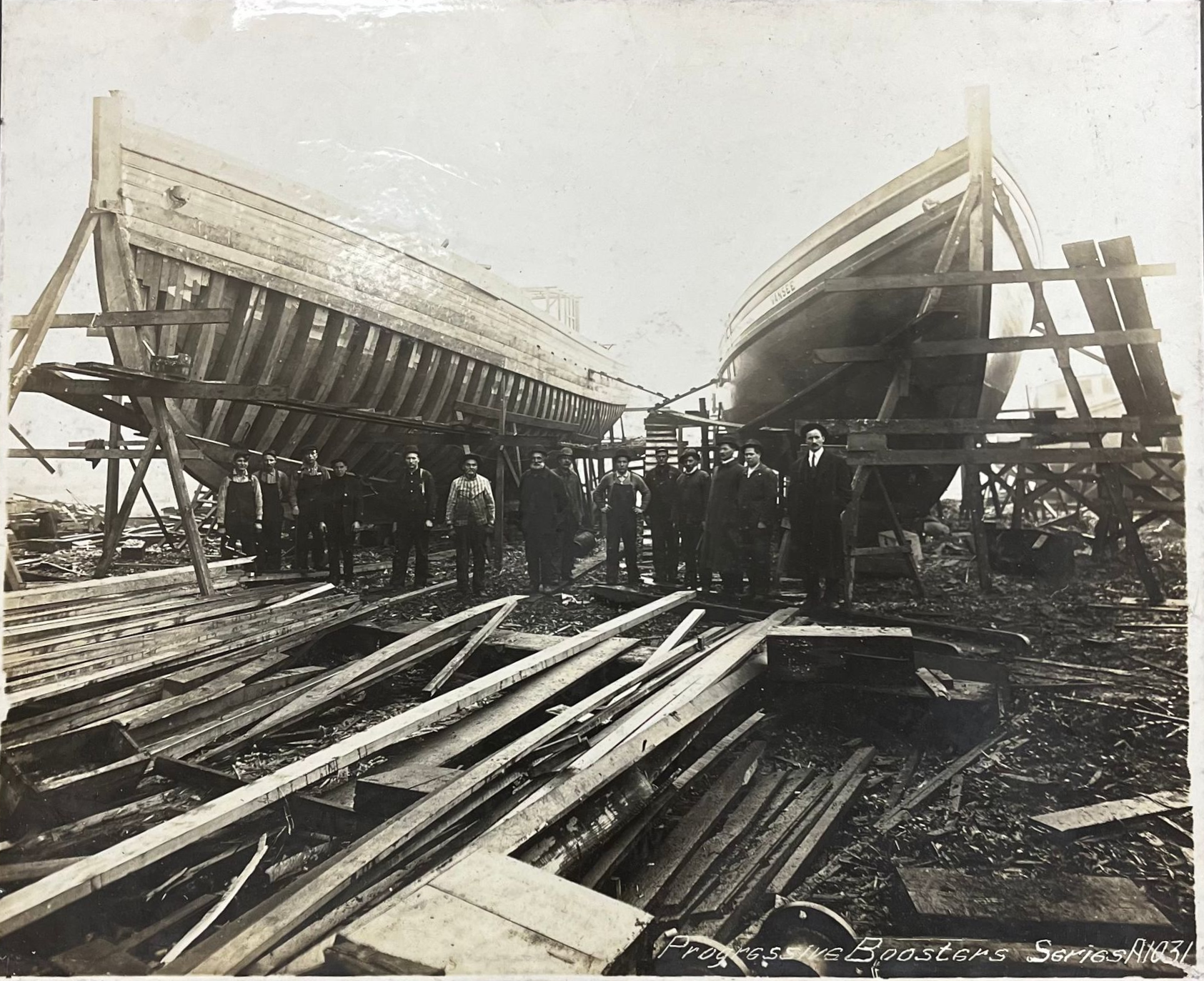
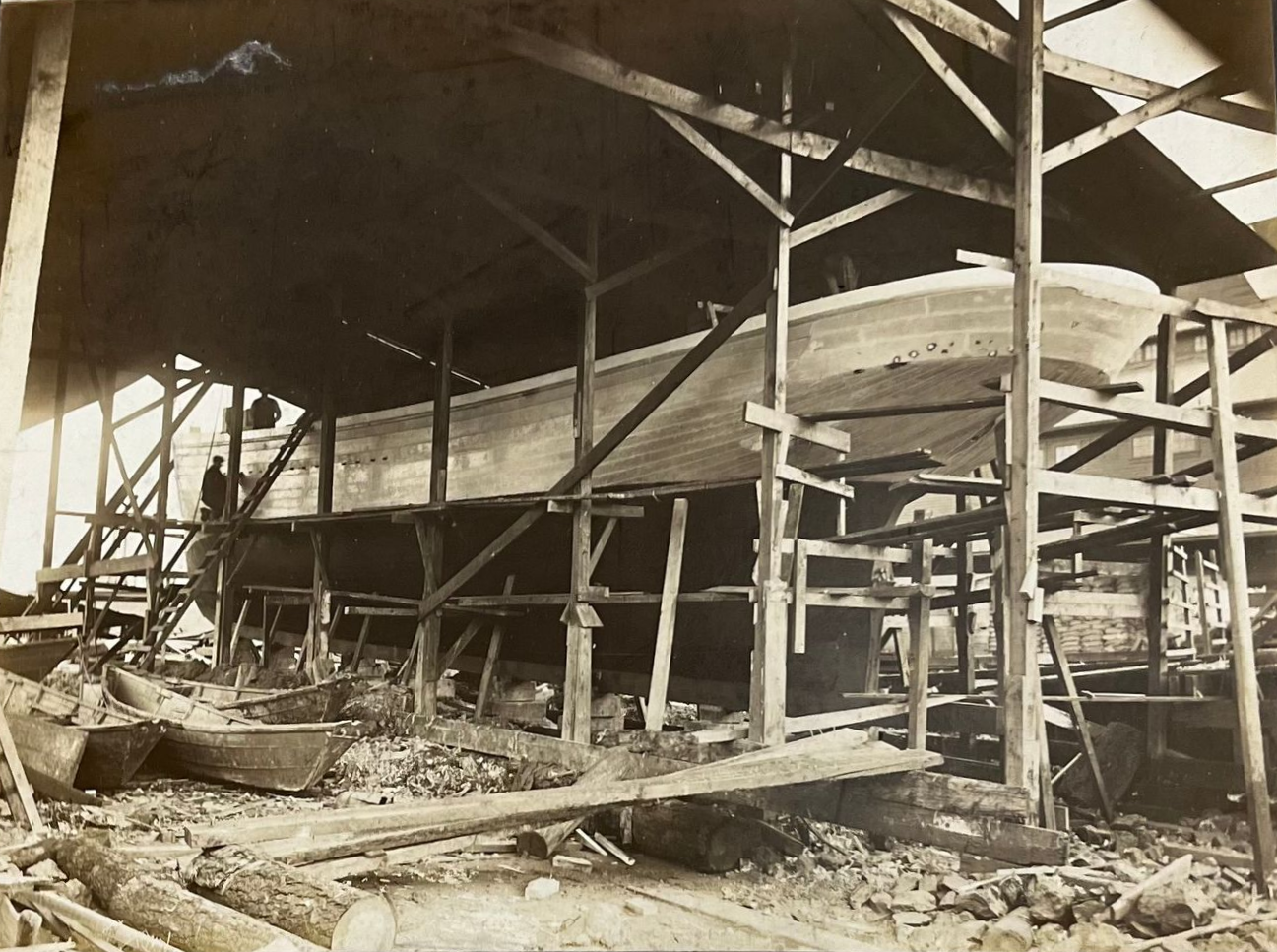
Builders: Seymour, Polaris, Vansee, Grant
Photo Caption: Polaris and Vansee under construction by John Strand in Seattle, around 1913. Photo from the Port Townsend Shipwrights collection (Progressive Boosters Series A1031).
No end to the work
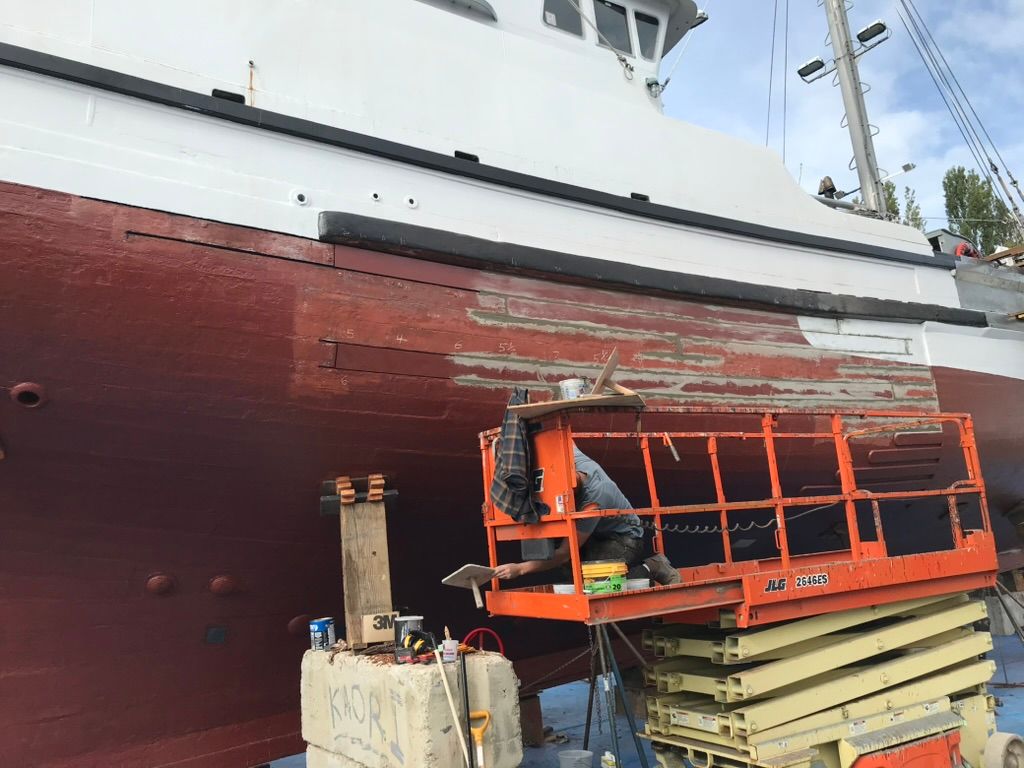
Each schooner hauls out at the Shipwrights every year, for anywhere from two weeks to two months. The fishing crews sand and paint the topsides, the part of the hull above the waterline, while the Shipwrights take on the bigger jobs.
Planning starts long before the boats arrive. Each March, Brad meets with the owners to talk through the next year's projects, write estimates and collect deposits before the boats head north in April. That lets him line up the right people for each job in the fall, when all four schooners are in the yard. Even so, plans change. "Inevitably, the jobs morph over the fishing season," Brad says. A strong season can make room for a bigger project, and a lean one can push work to the next year.
The Shipwrights also try to get the boats back in the water quickly. Out of the water, a wooden hull's planks dry out and shrink. "The shorter amount of time you can keep boats out of the water, the better," Brad says.
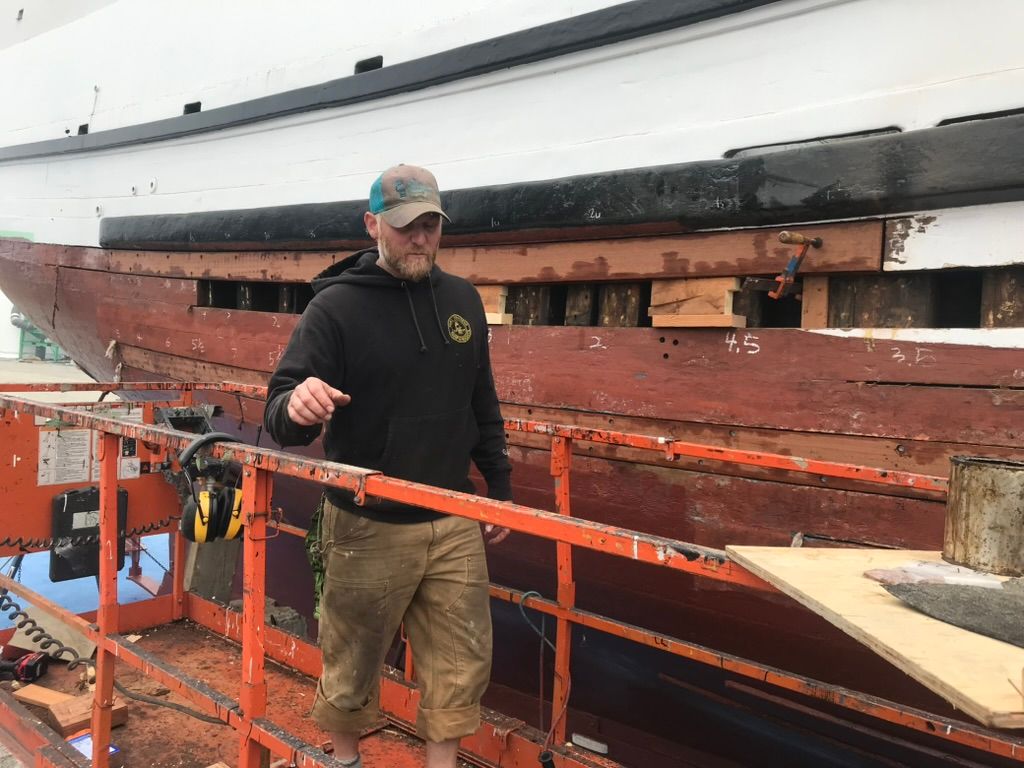
Seymour has her own list every year. "They all leak, no matter how much maintenance you do," Pete says. "There's so many seams between the planks." Over a season, some seams soften and let in a little water. The crew pumps it out and keeps an eye on it, and the Shipwrights fix it at the end of the fishing season.
Photo Caption: Shipwrights replacing planks along Seymour's hull in past years.


John decides what gets done by priority. "There's no end to the amount of work to be done," he says. "You just have to prioritize, so it remains safe, functioning and profitable."
The new water tank shows how that works. The Shipwrights built it in 2022, and it sat on top of a shipping container in front of Building 3 for four years. Every year, John told Brad that other jobs came first. "They were very accommodating," John says. "They didn't give me a bad time about it." In 2025, the forward break timber took priority. In 2026, the tank finally went in. The crew lowered it through the fish hold and slid it into place under the galley. The last time John replaced it was 1985.
Photo Caption: Pete Rust, a partner at Port Townsend Shipwrights, worked with Paul, Matt, Mariano and Zach to install Seymour's new water tank in 2026. Looking into Seymour's fish hold, where the new tank went in.
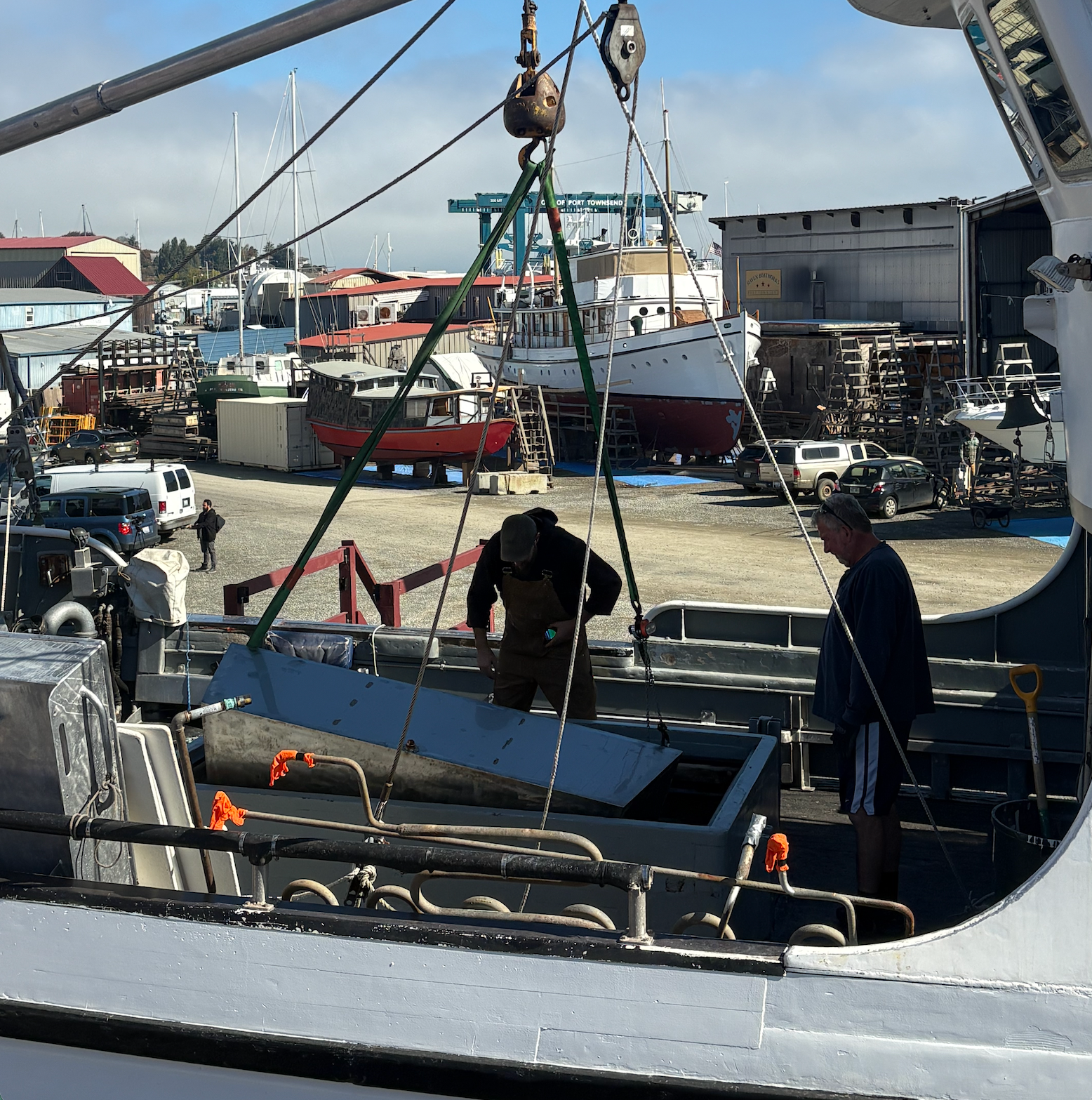
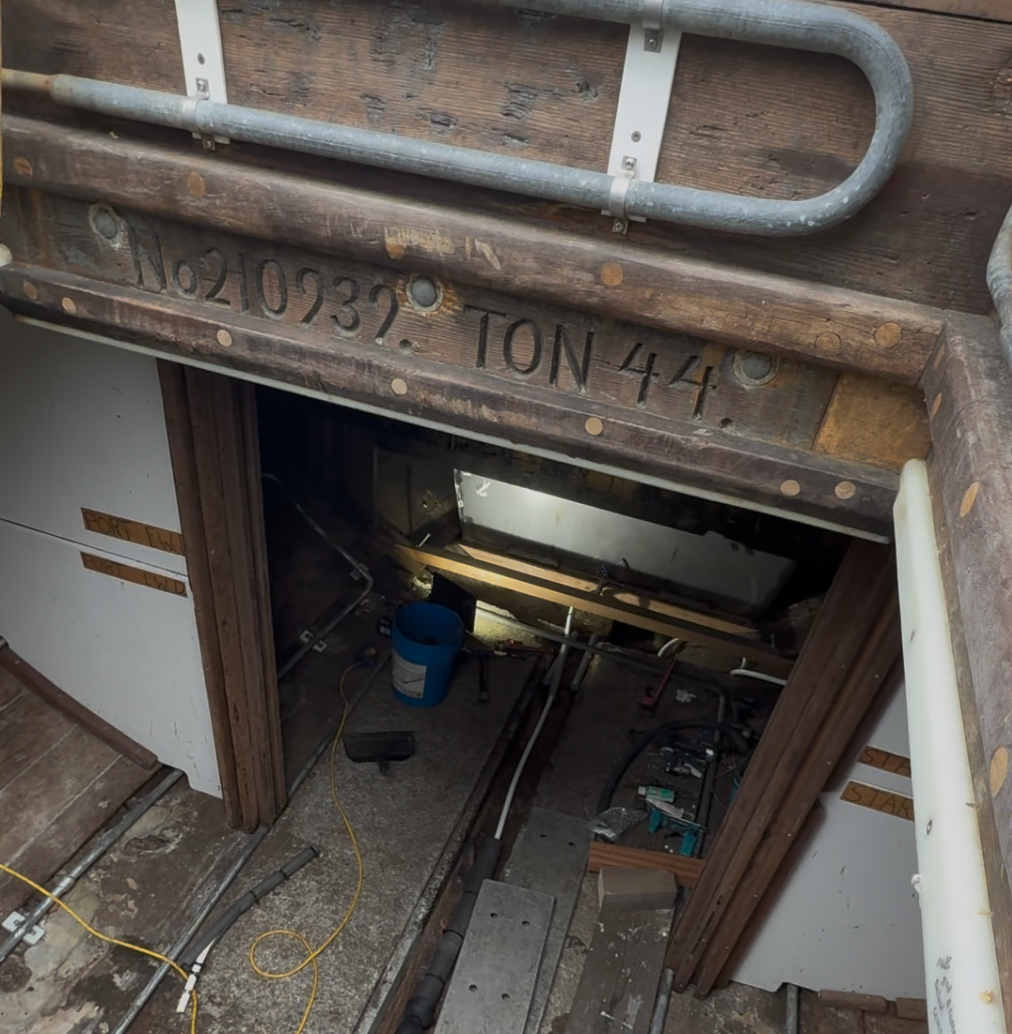
The Shipwrights used that job to do more than swap a tank. While the old tank was out, they replaced the bulkhead in the fish hold, inspected the keel underneath and refastened it. "It went really smooth. There wasn't any issues with it," Pete says.
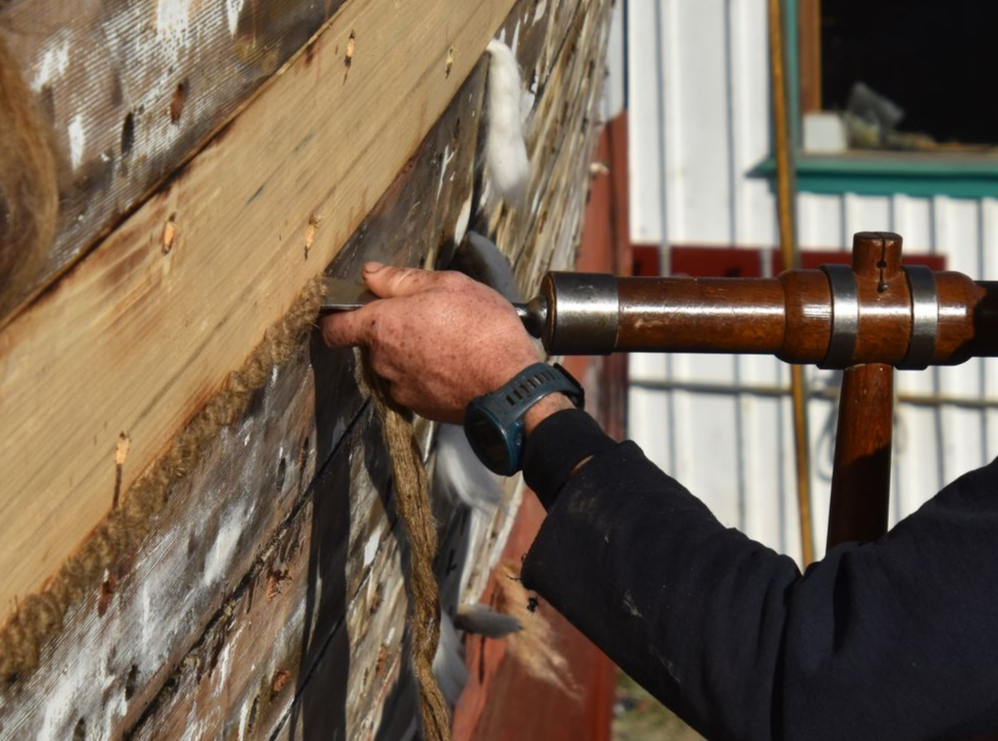
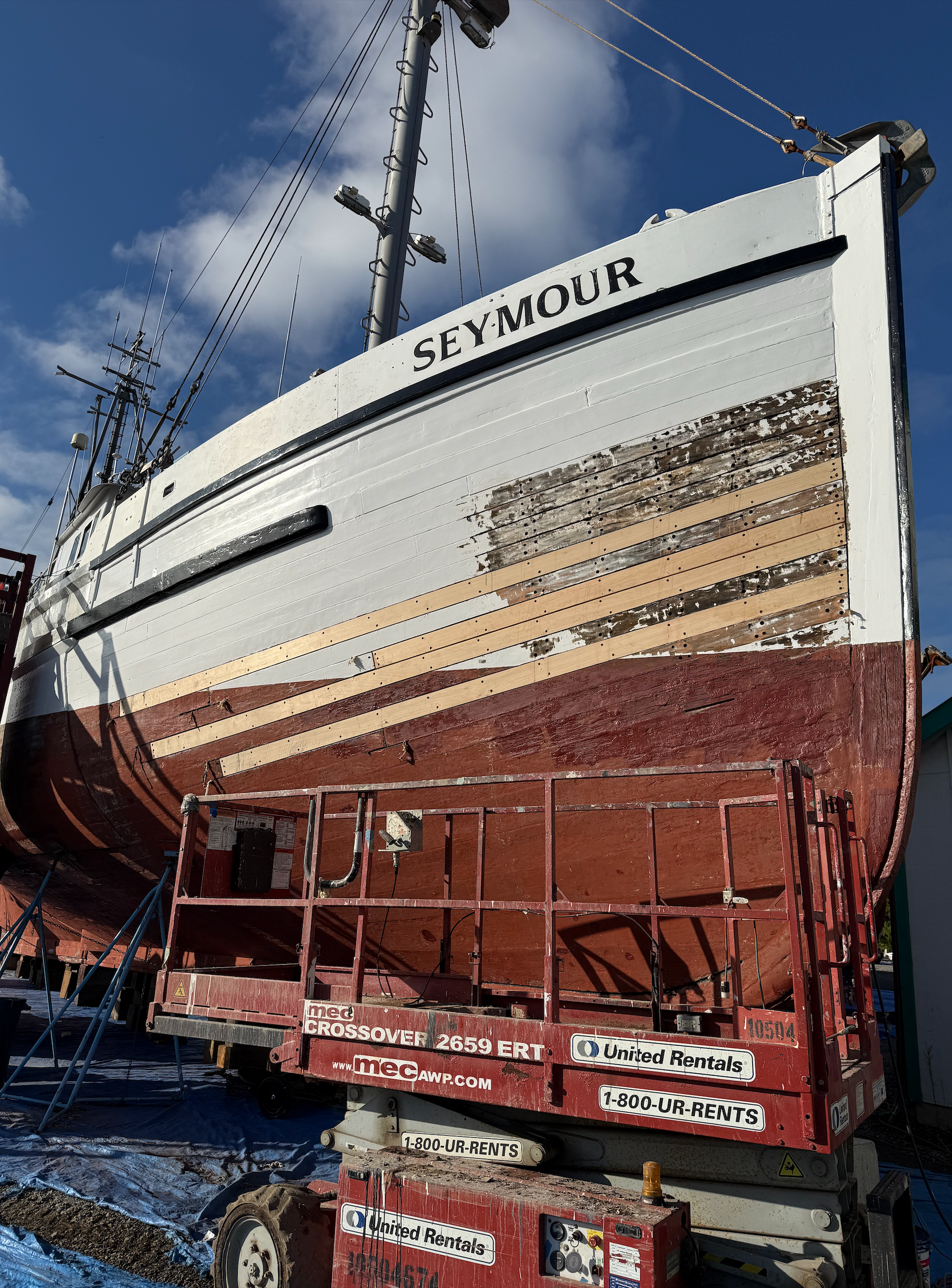
Also in 2026, the Shipwrights replaced four planks on
Seymour's starboard bow, then refastened and recorked that section, packing the seams between the planks with a combination of cotton and oakum, a tarred fiber, so they stay watertight.
Over the decades,
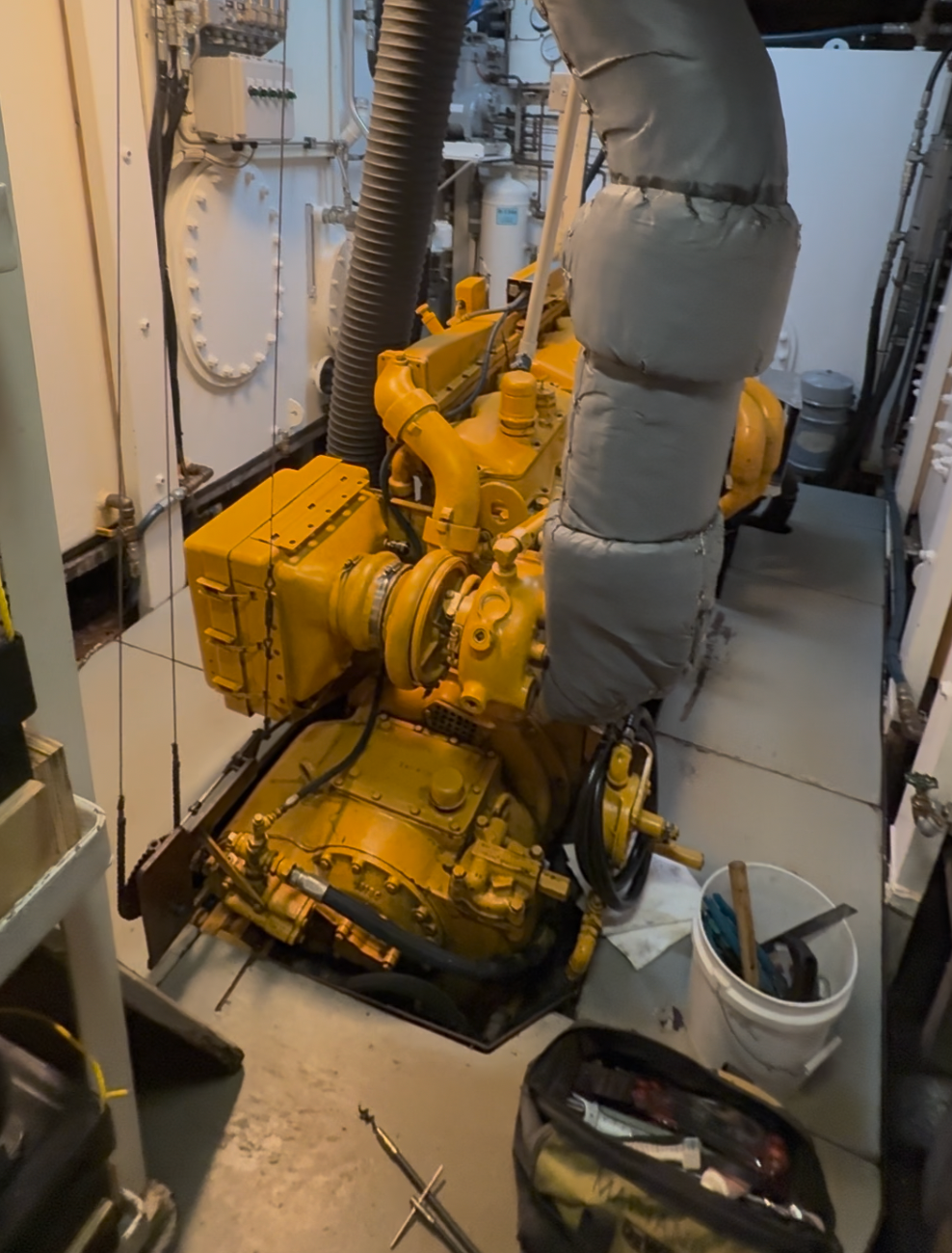
Seymour has been refastened and had much of her planking replaced. She now has a diesel engine, an aluminum wheelhouse and aluminum masts. In 2018, Bill upgraded her engine room in Seattle with new fuel tanks and extensive improvements. Pete shares that John puts a lot into
Seymour to keep her going: "He is doing nice big upgrades, not just cosmetic stuff. He is just overall taking care of the boat." Pete explains, "I think part of that is, he would like to see it continue on."
Photo Caption: Seymour's engine and fuel tanks, the engine room was upgraded in 2018 by Bill Gardner in Seattle. Four planks were replaced on Seymour's starboard bow in 2026 by Moses, Matt and Dan.
Replacing the break timber
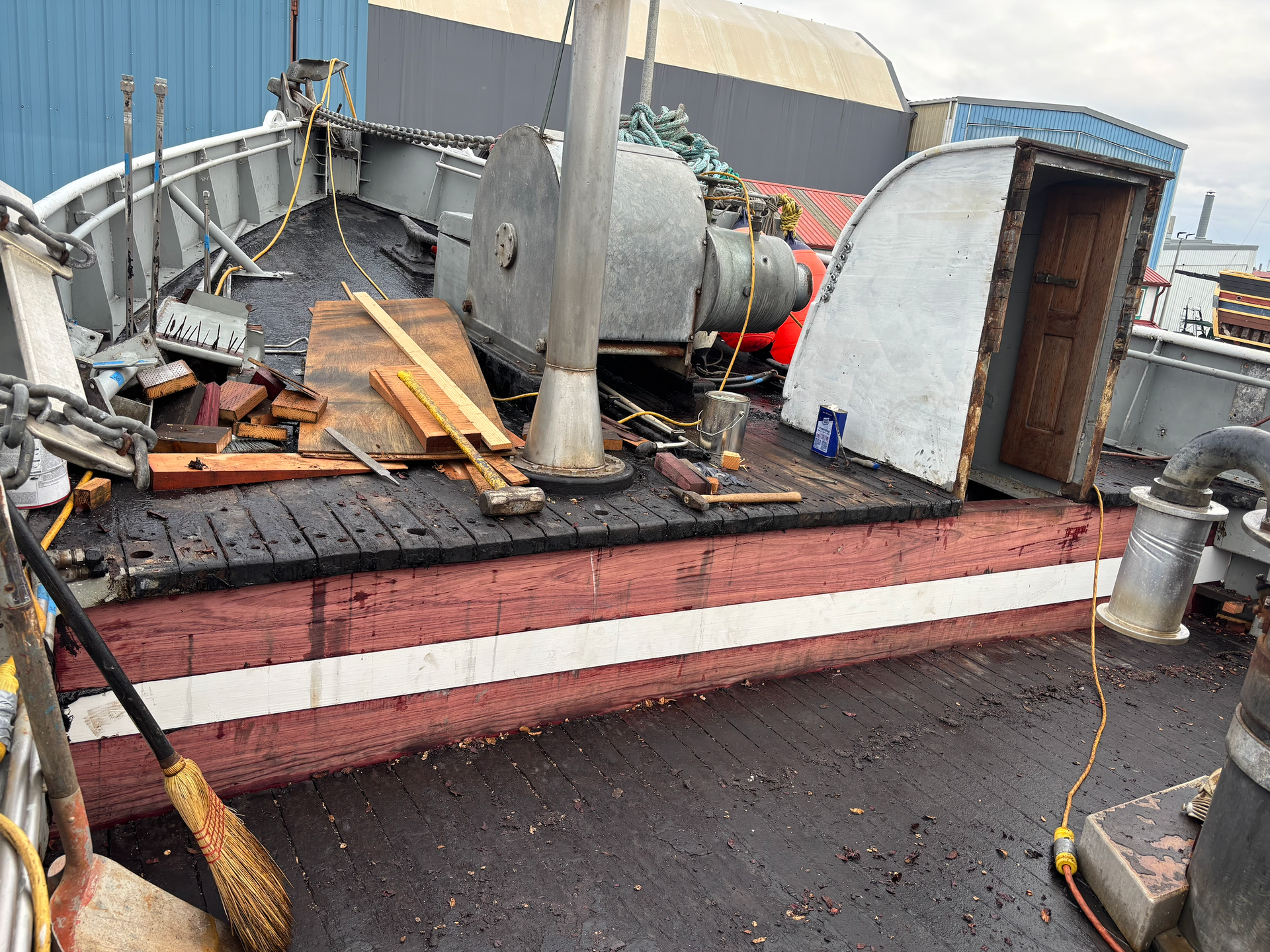
Every halibut schooner has a well deck, the low working deck in the middle of the boat where the crew hauls in the gear and brings the fish aboard. It sits close to the water, and openings called scuppers let seawater drain off fast. Forward of the well deck, the deck steps up toward the bow, and aft of it, it steps up again toward the stern. Those higher decks help protect the boat from waves. The break timbers are the heavy stacked timbers that form each step.
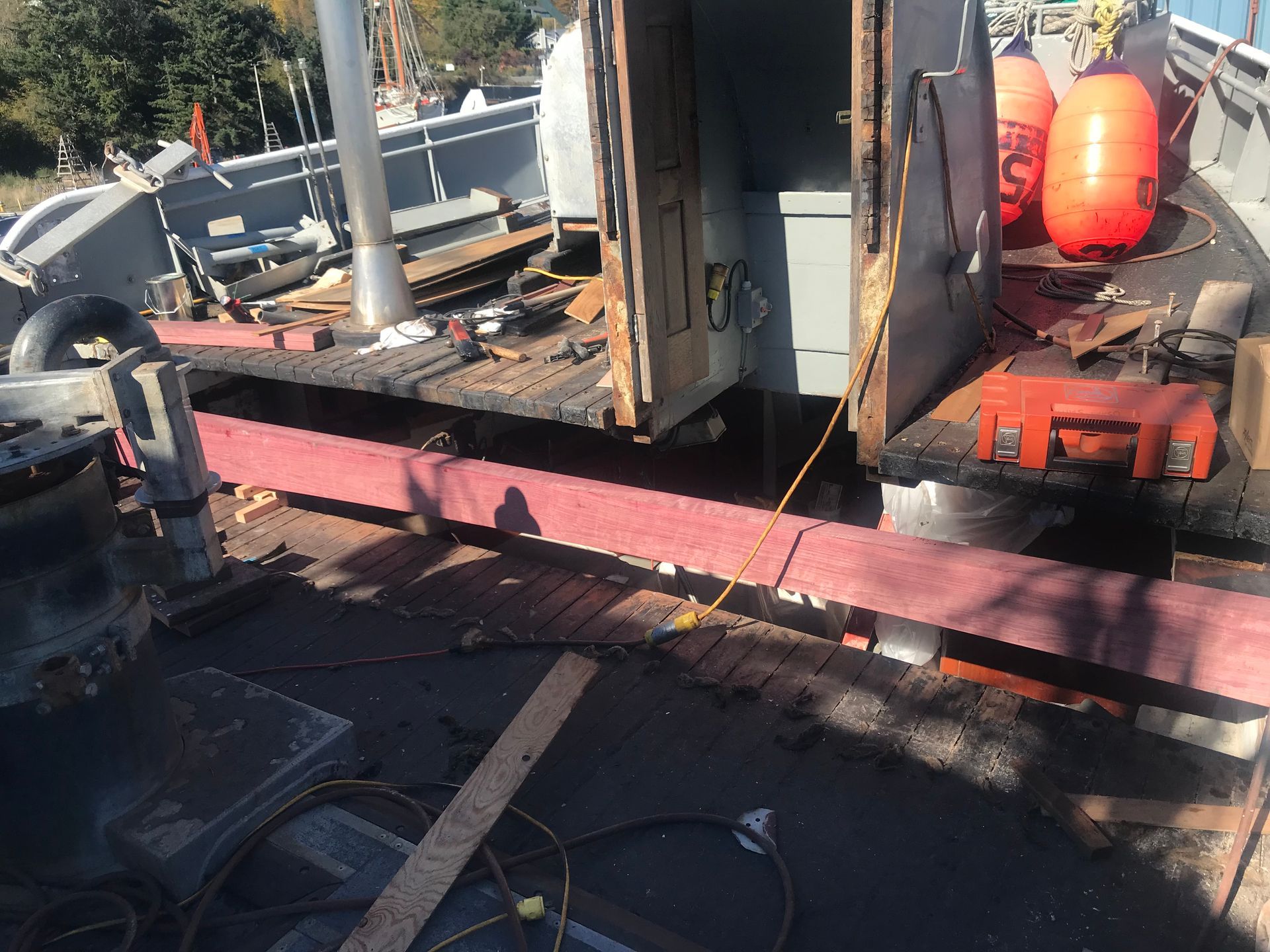
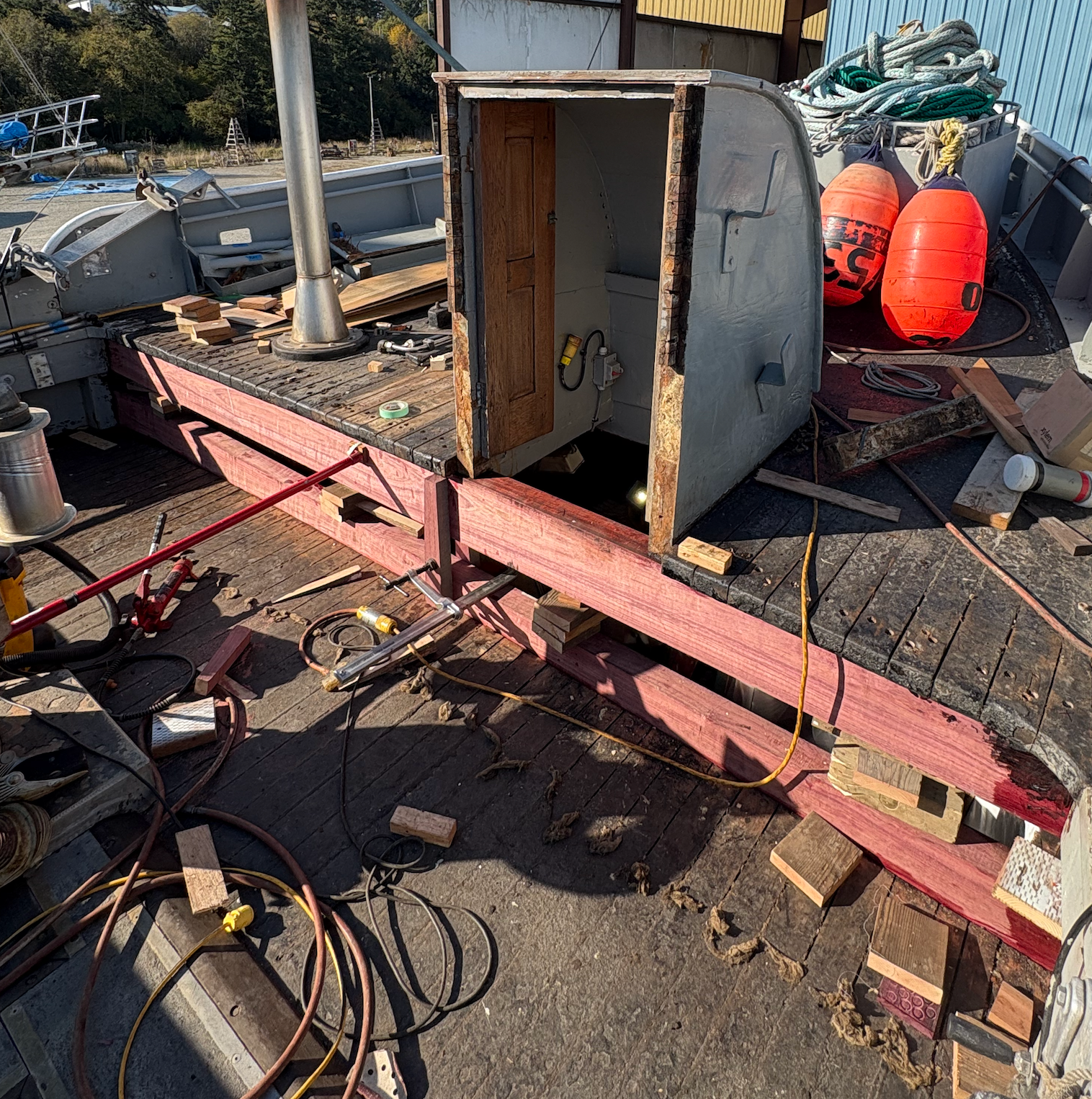
On Seymour, the forward break timber is a stack of three timbers, between 16 and 17 feet across. The year before it was replaced, the Shipwrights patched a rotten spot with a Dutchman, a small piece of wood routed in to replace a damaged section. But the timber was starting to go, so in 2025 they replaced it with purpleheart, a dense tropical hardwood.
The deck has camber, a slight curve from side to side so water runs off. That means the bottom timber has to be curved on the bottom and the top timber curved on top. To fit them, the crew cut a window in the hull planking right where the timber sits. They slid in the top and bottom pieces, then drove a wedge-shaped center piece between them. "It forces the adjoining timbers up and down, making everything super tight," Brad says. Then the whole stack is bolted together.
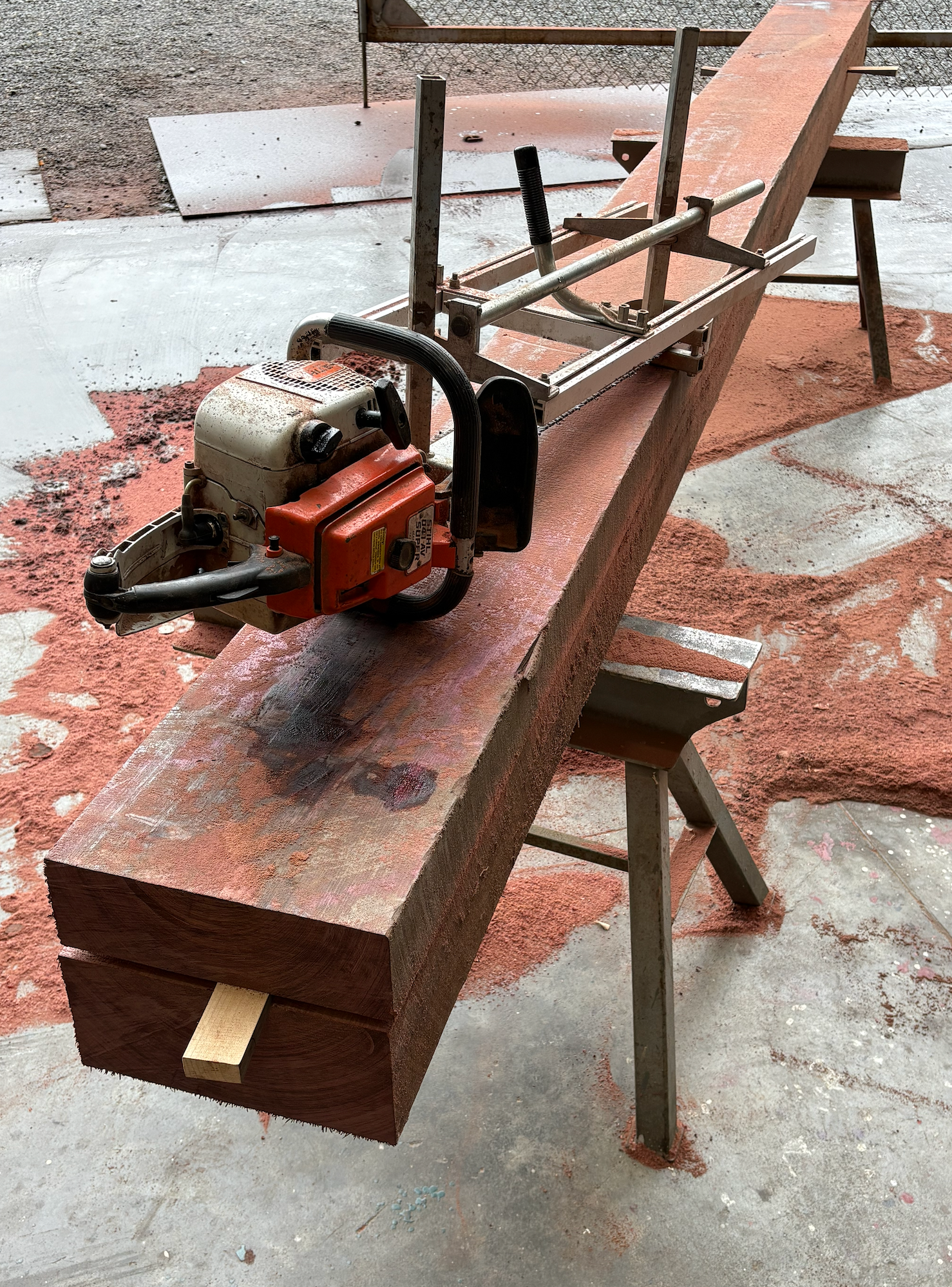
Ossian Smith, then a Shipwrights employee, did a large part of the work on the break timber. Brad and Ossian met as roommates at the Northwest School of Wooden Boatbuilding in the early 2000s and have worked together off and on ever since. Ossian now runs his own business in Port Townsend, Seamount Boat Repair. While working on the break timber, Brad helped rip the purpleheart beam in half with a chainsaw.
John sent us photos of the finished job. "These are a testament to the good work the Shipwrights do here," he says.
Photo Caption: Ripping the purpleheart timber in half with a chainsaw, the new timber on deck, fitting it into place, and the finished break timber. Break timber photos courtesy of John McHenry.
The next 25 years
Boats like Seymour don't do well sitting still. "When we come home from Alaska, everything's working okay," John says. "Then over the course of the winter at the dock, it seems like everything breaks. They don't like to not be used. They like to be out in the ocean getting twisted around."
For John, keeping Seymour all these years started as a practical choice. "Customarily, you wouldn't keep something that long," he says. "But it worked out. It was cost effective." And like any relationship, he adds, "you're gonna get attached to it a little bit."
Pete enjoys fishing on Seymour, seeing it as both a livelihood and a piece of history. "It's a good living," he says. "And for the most part, I enjoy the lifestyle of it. Then there's the boat herself, and all the history that comes with it."
John's hope is that a young fisherman will come along with the drive to take her over. Fewer young people are getting into the work than in the past, and some boats like her have already been broken up. John would rather see Seymour keep going.
"Hopefully," he says, "a young man or woman decides that they want to take it over and become a fisherman."